Duty Cut Not Warranted On Gold, Pulses And Edible Oil Imports
· Free Press Journal
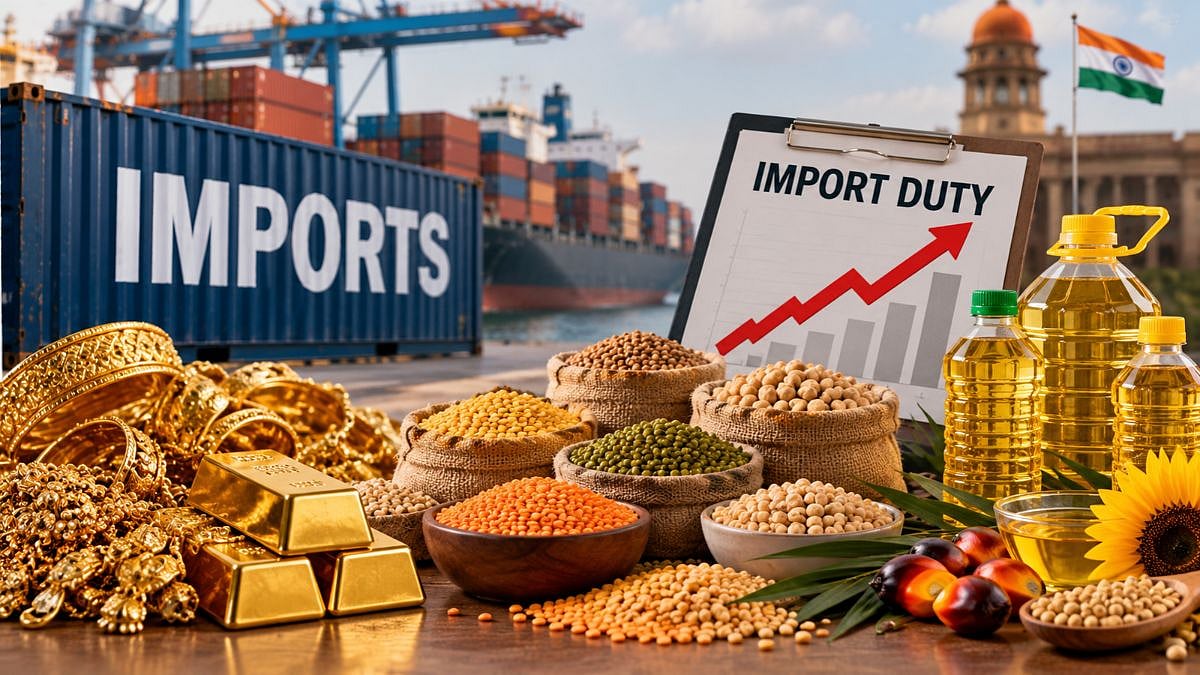
Traders of three different commodity groups representing gold, pulses and edible oils are currently lobbying the government for a reduction or abolition of import duty. New Delhi should not succumb to lobby pressure, as there is no merit in their demand. Let’s see how.
Visit freshyourfeel.org for more information.
Gold: No Justification For Duty Cut
In May this year, the government raised customs duty on gold from 6% to 15%, comprising 10% of basic customs duty plus 5% of the cess for the agri-infrastructure fund. It was necessary because of the widening trade deficit and rapidly depreciating rupee. Generating revenue for the exchequer was another consideration.
Traders opposed this duty hike, saying it would encourage illicit imports (smuggling). Reports of smuggled gold imports have already started appearing in newspapers and electronic media. Large-scale smuggling appears to be more of a conjecture than an established fact. Unlike in the 1960s and 1970s, large-scale gold smuggling is currently not possible because of superior border control coupled with advanced surveillance technology, speedboats and so on.
In reality, gold jewellery sales are sharply down in our country. High international prices and a weak currency have resulted in demand destruction. Jewellers openly admit to lower sales and a rising demand for lightweight jewellery with lower caratage.
Even in the ongoing festival season, physical demand is weak. High prices discourage consumers, as gold is not an essential commodity like food items. In addition, rural incomes are hurt because of lower Kharif crop harvests following El Niño-induced dry conditions.
Consumers now prefer silver rather than gold. That’s why the government recently liberalised silver imports.
The demand to reverse the duty hike on gold imports lacks justification. Customs duties generate revenue for the exchequer, and there is no need to sacrifice revenue for a demerit commodity. In any case, admittedly, physical demand is weak. New Delhi should not succumb to pressure from investors or speculators who are demanding a duty reduction.
Pulses: Wait For Harvest Assessments
In Kharif 2026-27, India’s pulse production is estimated to be well below the season’s target of 84 lakh tonnes and even below the last Kharif production estimate of 76 lakh tonnes. This is the result of a moisture deficit caused by poor distribution of the southwest monsoon. India’s pulse imports are set to surge by over 20% to 75 lakh tonnes this year.
The government has already allowed duty-free imports of tur/arhar (pigeon pea) and urad (black matpe) until March 2027. There is every likelihood that the duty-free import policy will be extended. At the same time, imports of masur (lentil) attract 11% duty, yellow pea 30% duty and chana (desi chickpea) 10% duty.
There is now an attempt by a section of traders to get duties on lentil, yellow pea and chickpea reduced or abolished, citing food inflation concerns.
At this point in time, a duty reduction is premature, as Kharif harvests are under way. Policymakers must review the situation sometime in January 2027. By then, the final picture of the Kharif harvest will have become clear and a likely scenario for the Rabi crops (chickpea and lentil) will have crystallised.
Admittedly, the risk to Rabi crops is real, with El Niño conditions expected to become more severe during the October-December quarter. Yet, any demand for a duty reduction at this point in time is premature.
Vegetable Oils: Focus On Refined Imports
All crude vegetable oils generally attract a basic customs duty of 10%. Our major imports include crude palm oil, degummed soybean oil and crude sunflower oil. On September 24, New Delhi slashed the basic duty by half to 5% on soy and palm oils. On sunflower oil, the duty was reduced to zero.
Now there is a move seeking the abolition of existing duties on crude oils. Again, there is hardly any justification for it. The Kharif oilseeds harvest is currently under way. If the government wants to augment availability and support consumers with reasonable prices, it should encourage refined oil imports (rather than crude oils) by cutting customs duty sharply. Refined oils can be distributed among consumers without a time lag or delay and will help contain inflation.
Policy Must Be Data-Driven
The government does not have any ‘advance information’ about expected imports of gold, pulses and edible oils. It is critical that policy interventions are made proactively on the basis of relevant data. For this purpose, close monitoring and regulation of imports—for example, gold, pulses and edible oils—is necessary. Otherwise, policy interventions will be knee-jerk and reactive, with inadequate outcomes.
G. Chandrashekhar is a senior journalist specialising in commodity markets. Views are personal.
To get details on exclusive and budget-friendly property deals in Mumbai & surrounding regions, do visit: https://budgetproperties.in/