Himachal Congress’s 2027 Test: From Organisational Repair To Mission Repeat
· Free Press Journal
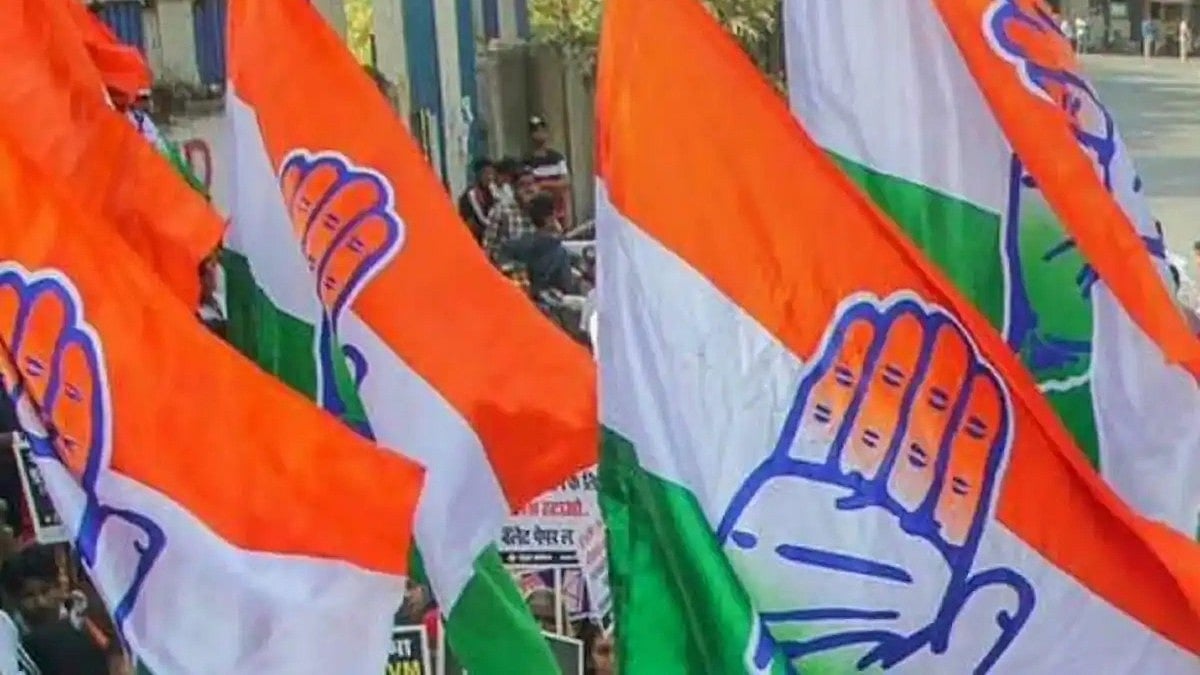
With barely a year left before the 2027 Assembly elections, anti-incumbency could hit the Himachal Pradesh Congress government hard, while the lack of coordination between the government and the party organisation threatens to add fuel to the fire. The twin challenges could prove costly unless corrected without further delay. Retaining power will demand more than political slogans and assurances; it will require visible governance, a revitalised grassroots network and a leadership capable of bringing the government and the organisation onto the same page. For the Congress, the countdown to 2027 has begun, and the window to repair its weaknesses is rapidly closing.
The Congress’s renewed emphasis on taking its campaign to all 68 Assembly constituencies marks an acknowledgement that electoral battles cannot be fought from Shimla alone. The real contest will unfold in villages, panchayats, towns and local political networks, where voters assess the government through their everyday experiences rather than official announcements. The party must therefore move beyond periodic meetings and establish a sustained mechanism for communicating its achievements, identifying public grievances and preparing workers for the coming electoral test.
Visit newsbetting.club for more information.
The proposed strategy, described as “Mission Repeat”, is consequently as much about organisational correction as electoral mobilisation. The question is whether the Congress can convert its preparations into a cohesive political movement before the BJP consolidates its challenge.
The Organisation Must Reach Beyond Shimla
Rajani Patil, the All-India Congress Committee in-charge for Himachal Pradesh, shared her views with this writer and emphasized that the party’s electoral preparations require the government and the organisation to function in a coordinated manner. Her recent interactions with district unit presidents and other office-bearers have focused on assessing organisational activity and identifying areas where the party machinery needs greater attention.
District leaders have been expected to remain actively engaged in their respective areas, while inactive office-bearers may have to make way for workers prepared to devote time and energy to strengthening the organisation. Such a reassessment could help the Congress distinguish between a structure that exists on paper and one that can actually mobilise voters.
This distinction is fundamental. A political party may have office-bearers at every level, but their presence does not necessarily translate into effective public engagement. Workers must be able to explain government policies, communicate local achievements, identify dissatisfaction and carry feedback from the electorate to the leadership. Without these links, even a government with a defensible record can find itself politically isolated which is being witnessed in Himachal Pradesh.
The gap between the Secretariat and the polling booth is often where electoral fortunes begin to change. Administrative decisions do not automatically generate political support. Their benefits must be visible, understood and communicated through a credible organisation. Equally, the party as well as government must be willing to acknowledge shortcomings instead of expecting workers to defend every decision without explanation.
For Patil, the challenge is to ensure that Mission Repeat becomes a working arrangement across the state rather than another slogan introduced in the run-up to an election.
Government–Party Coordination: The Missing Link is visible.
The change in the state Congress leadership, with Vinay Kumar taking charge of the Pradesh Congress Committee, offers an opportunity to establish a more effective relationship between the party organisation and Chief Minister, Sukhvinder Singh Sukhu’s government which was lacking earlier in the state. Whether this opportunity is fully utilised by Vinay with the full total support of Patil, could prove decisive in the months ahead.
The party and the government perform different but complementary functions. The government is responsible for administration, policy implementation and public service delivery. The organisation must remain connected to citizens, explain decisions, identify emerging concerns and alert the leadership when a policy or administrative intervention is failing to produce the intended results. When these responsibilities operate in isolation, both sides lose political effectiveness.
Patil has stressed the importance of discipline while recognising that disagreements are inevitable in a large political organisation. District presidents have raised concerns about coordination with block-level units, and the party leadership has indicated that such grievances need to be addressed. These complaints may appear routine, but unresolved disputes can weaken the organisation precisely when it needs to be most active.
A consistent approach to indiscipline would help prevent personal rivalries and organisational friction from becoming liabilities during the election campaign. However, discipline should not be confused with suppressing legitimate criticism. Workers who identify administrative failures or local discontent must have a reliable channel through which to communicate their concerns.
The challenge is to encourage internal discussion without allowing every disagreement to become a public confrontation. Differences can be managed through dialogue and organisational mechanisms; when they spill into the media, they can create an impression of disunity that opponents will readily exploit.
The Congress will therefore have to demonstrate that coordination is more than a stated objective. It must become visible in regular consultations, timely decisions, clear responsibilities and a common political message.
Electoral Promises Must Become Visible Achievements
Organisational mobilisation can carry a government’s record to voters, but it cannot compensate for a record that fails to meet public expectations. This is where the Congress faces its most consequential challenge.
As the next election approaches, the electorate will increasingly distinguish between poll guarantees , schemes implemented and benefits actually received. Employment opportunities, functioning public services, development works, welfare commitments and the handling of natural disasters are likely to influence how voters evaluate the government.
The Congress government must therefore identify commitments that remain unfulfilled and establish a credible timetable for addressing them. The closer the election gets; the less persuasive general assurances will become. Voters will want to know what has changed in their own localities and whether the government has delivered on the expectations it created.
Employment deserves particular attention because young people often judge political parties by the opportunities available to them rather than by the language of government programmes. Delays in recruitment or limited employment prospects can create frustration that opposition parties may convert into a wider narrative of administrative failure.
Public services and development projects are equally important. In a hill state, connectivity, healthcare, education, local infrastructure and disaster preparedness have direct consequences for daily life. The government will need to demonstrate progress in these areas while explaining the constraints that may have delayed implementation.
The organisation’s responsibility is to communicate genuine achievements, not to manufacture a favourable impression. Where delivery has fallen short, workers must be equipped to explain what went wrong and what corrective action is being taken. An organisation that cannot answer difficult questions will struggle to persuade a dissatisfied electorate.
Every Constituency Requires a Different Political Map
The decision to extend organisational attention to all 68 Assembly segments is significant because Himachal Pradesh does not present a uniform electoral landscape. Each constituency has its own local leadership, social equations, development priorities, influential groups and political grievances.
A statewide campaign may establish a common message, but it cannot replace sustained engagement at the constituency level. The Congress will have to identify where its organisation remains strong, where workers have become inactive, where local leaders are at odds and where voters feel neglected.
Such an assessment should go beyond counting meetings or reviewing the formal strength of party units. It must examine whether workers maintain contact with voters between elections, whether local grievances reach decision-makers and whether government schemes are reaching their intended beneficiaries.
The party also needs to pay closer attention to younger voters and changing patterns of political communication. Social media can help the Congress reach people directly, respond quickly to criticism and explain its policies without relying entirely on traditional campaign structures. Yet digital outreach can supplement, not replace, personal contact. Online visibility does not necessarily translate into votes unless it is supported by a credible presence on the ground.
Mission Repeat will be judged by the quality of this constituency-level work. A party that understands local concerns early has more time to correct mistakes. One that discovers them only during the campaign may find that public dissatisfaction has already hardened into an electoral preference.
Cabinet Expansion and the Question of Political Clarity
The proposed Cabinet expansion has acquired significance beyond the administrative allocation of responsibilities. With the election approaching, any induction or reshuffle will be examined for what it reveals about the government’s priorities, internal equations and ability to function as a cohesive team.
Patil has indicated that Chief Minister Sukhu has not yet submitted a formal proposal on Cabinet expansion to the party high command. This appears to be at odds with Sukhu’s public announcement at a rally that Sunder Singh, an MLA, would be inducted into the Cabinet. Singh’s recent role in presiding over an Independence Day function in Lahaul-Spiti has also drawn attention to the possibility of his elevation.
The difference between a public indication and a formal proposal underscores the need for clarity. Cabinet decisions involve administrative considerations, regional representation, political balancing and the distribution of responsibilities. They also affect the expectations of legislators and party workers who may believe that their contributions deserve recognition.
With limited time remaining before the election, the government needs to project collective responsibility and decisiveness. Prolonged uncertainty over ministerial appointments could encourage speculation about internal differences and distract the leadership from the more urgent task of governance.
Any expansion or reshuffle should therefore be assessed not merely in terms of who receives a ministerial position, but also whether the resulting arrangement improves administration and strengthens the government’s capacity to deliver. Political accommodation may be necessary, but it must serve a wider purpose than managing competing ambitions.
BJP Sees an Opportunity in the Congress’s Vulnerabilities
The BJP is unlikely to allow the Congress’s organisational difficulties or incomplete commitments to pass without political challenge. The principal opposition has several potential advantages: an established cadre, substantial organisational resources, support networks associated with the Rashtriya Swayamsevak Sangh and the opportunity to capitalise on anti-incumbency.
For the BJP, the task will be to turn individual grievances into a coherent statewide narrative. Delayed promises, recruitment concerns, administrative shortcomings and signs of internal discord can be presented as evidence of a government that has failed to meet expectations. Whether this narrative succeeds will depend partly on the Congress’s own response.
The BJP, however, cannot assume that anti-incumbency alone will secure its return to power. It must also present a convincing alternative, maintain cohesion within its own ranks and demonstrate that it understands the concerns of Himachal’s electorate. An opposition party may benefit from dissatisfaction with the government, but converting that dissatisfaction into a majority requires effective campaigning and credible leadership.
Nevertheless, the Congress would be making a serious mistake if it underestimated the challenge. A strong opposition can exploit even relatively small organisational weaknesses when these coincide with voter frustration. The ruling party must therefore treat the coming months as a period for correcting deficiencies rather than simply defending its record.
The most immediate priority remains the fulfilment of outstanding electoral promises. If the government can demonstrate tangible progress, the organisation will have a stronger case to present. If delivery remains uneven, even an energetic campaign may struggle to overcome the gap between political promises and public experience.
Mission Repeat Will Be Decided on the Ground
The Congress still has time to strengthen its position, but that time must be used purposefully. The party needs to align three essential elements: a government capable of demonstrating results, an organisation that remains connected to voters and a leadership able to maintain unity while resolving internal differences.
A failure in any one of these areas could weaken the entire electoral effort. Government achievements that are poorly communicated may go unrecognised. An active organisation cannot indefinitely defend unmet promises. And a government with a reasonable record may still lose public confidence if internal disputes dominate its political image.
Patil’s proposed emphasis on all 68 constituencies offers a framework for addressing these weaknesses. Its success, however, will depend on execution rather than the number of meetings held or declarations issued. District and block units must become functional, constituency-level concerns must reach the leadership, and government departments must respond to legitimate grievances with greater urgency.
The coming months will reveal whether Mission Repeat becomes a sustained campaign of organisational renewal or remains an exercise confined to reviews, appointments and political assurances. The Congress needs to demonstrate that it has understood the demands of incumbency: voters expect not only promises but also performance, not merely leadership but accessibility, and not simply a party structure but one that works when they need it.
For the Congress, the 2027 election will not be decided in Shimla alone. Its real test will unfold across Himachal Pradesh, in the constituencies where public expectations meet the government’s record and where the effectiveness of the party organisation will ultimately be measured at the ballot box.
(Writer is a senior political analyst and strategic affairs columnist based in Shimla. He is also Contributing Editor with The South Asian times from New York)