Meet OpenAI's "dots" — a new AI assistant meant to take on Meta's Muse.
· Axios
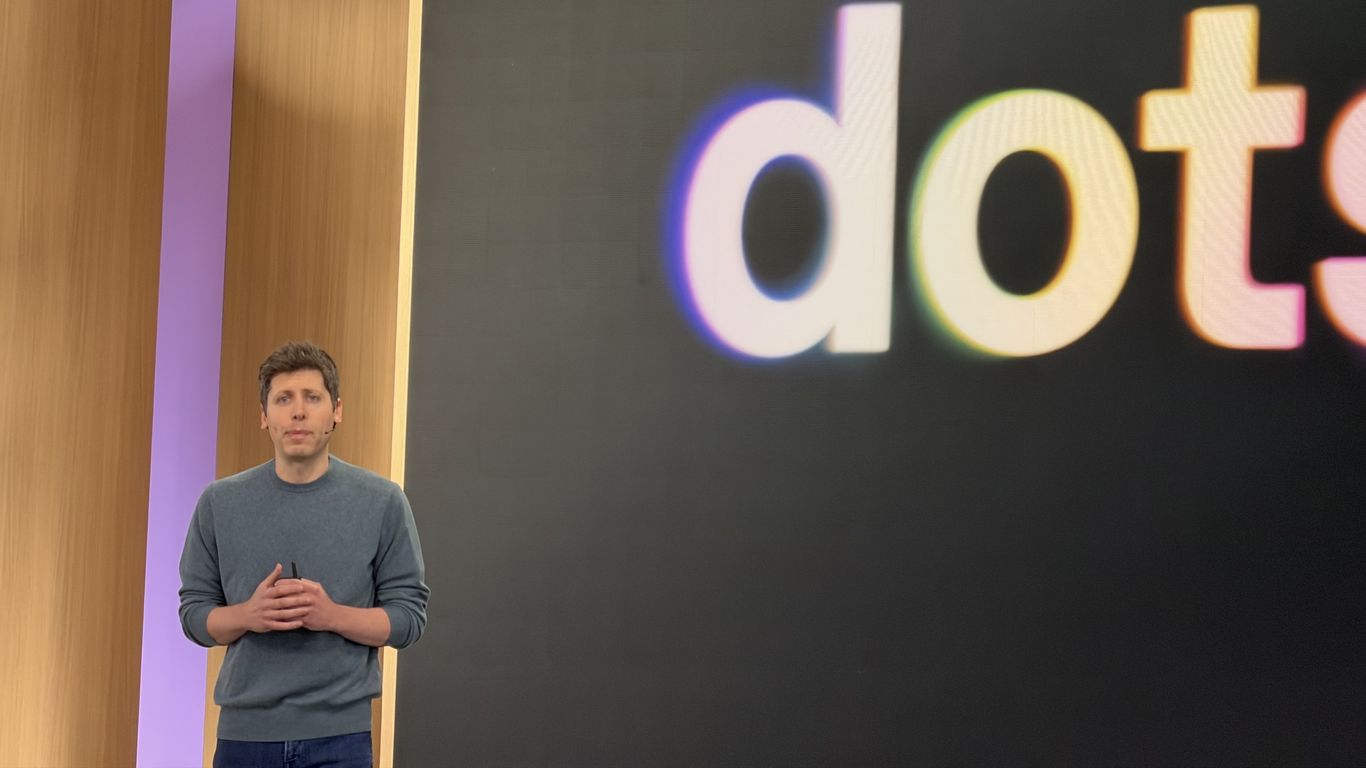
OpenAI launched dots, its take on the AI assistant and an answer to Meta's Muse, a personal agent that has gone viral and moved markets since its release.
Visit newsbetting.bond for more information.
Why it matters: ChatGPT defined the chatbot era, but that status will have to be earned again as the world shifts from talking with AI to making it go out and do things.
What they're saying: "This is the real deal version of AI we've always imagined," Altman said of dots at the OpenAI developer event, adding that it is inspired by the "cool" examples of AI assistants we've all seen in movies for years.
Driving the news: Dots, as OpenAI calls them, are agents that can be instructed to perform a wide range of tasks.
- Users provide a goal to a dot and set boundaries for what it can do on its own. The assistant can keep work moving in the background and reach out when it needs attention or more detail to complete a task.
- Dots "are an extension of you," OpenAI says, and are meant to compete with a growing crop of consumer-focused AI assistants that people have used to book travel, cancel subscriptions and for all manner of other tasks.
The big picture: Agents are all the rage, and while the technology or goal is often the same, the approaches and capabilities vary, especially for Meta and OpenAI.
- Meta dove head first into the consumer market, launching Muse widely to its massive multi-billion-number user base, with the app topping the download charts in its early days of availability.
- OpenAI is targeting high-end subscribers, mostly developers, at least in the beginning.
- Apple's AI isn't really at the agent stage, but given its prominence on the iPhone, the newly revamped Siri will still be part of the conversation. Other start-ups, such as Instinct, are also taking aim at this space.
Zoom in: Dots are available to Pro, Business and Enterprise users, with one dot per user to start. OpenAI says it eventually envisions teams of dots working together.
- Powered by GPT-6 Astra, each dot has its own cloud computer and can work across connected apps, Codex and ChatGPT Work to research, analyze data, prepare documents and build software.
- OpenAI also debuted GPT-6.1 Sol, which it says delivers near-Astra performance at one-fifth the cost.
- The company is lowering usage caps for new $200-a-month ChatGPT Pro customers. Existing customers will be able to keep their limits for an unspecified time.
As OpenAI moves toward power users as a first-adopter strategy, Muse is moving towards the workplace. Earlier Tuesday, Meta announced Muse now can connect to a range of tools used by small businesses.