Pride Month 2026: Has Queer Theatre In India Finally Moved Beyond Representation?
· Free Press Journal
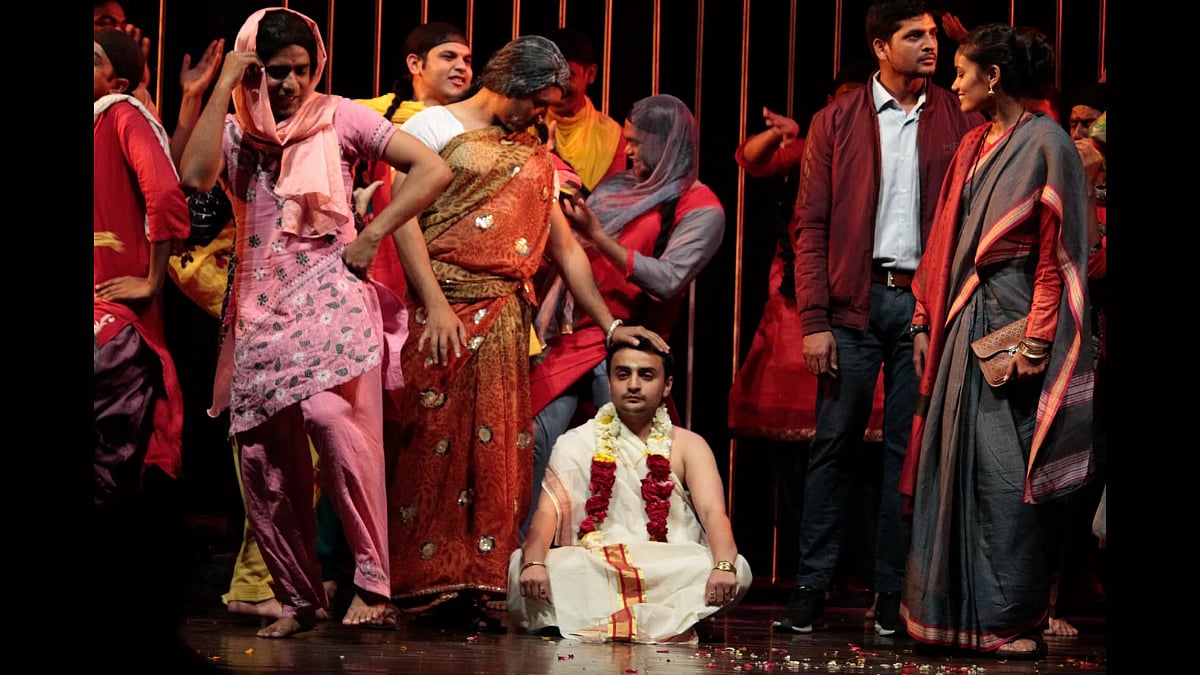
In the mid-1990s, when playwright Mahesh Dattani’s show On a Muggy Night in Mumbai was first staged, merely putting homosexual characters on an Indian stage was an act of courage that faced immediate institutional resistance. When Dattani adapted it into the film Mango Soufflé a few years later, cinemas flatly refused to screen it, terrified of the violent backlash that had targeted Deepa Mehta’s film Fire in 1996.
Visit newsbetting.club for more information.
Thirty years later, the landscape appears somewhat altered. Queer-themed plays routinely sell out opening nights, and regional spaces are opening up to localised narratives. Dattani’s recent production, The Monk & The Warrior, which opened at the National Centre for the Performing Arts (NCPA) in Mumbai, was met with overwhelming warmth from the community. “In spite of extreme right-wing political governance, thanks to social media, we do have a stronger queer culture supporting plays that reflect their lives and concerns,” Dattani observes.
However, things are not so black and white. As Indian theatre navigates the realities of modern cultural consumption, a critical question emerges - Has queer representation truly evolved into a self-sustaining artistic language, or is it still fighting just to justify its own existence?
Parallel streams of visibility
To understand how far the medium has travelled, one must distinguish between two historic tracks. As veteran director and producer Sunil Shanbag points out, queer performance has always existed in parallel streams. “There is work that happens within the community, and work that happens in public spaces,” Shanbag explains. “A fair amount has always happened around the community itself, invisible to the larger public.”
The breakthrough into mainstream public venues took decades of legislative and social chipping away. Early milestones include Vijay Tendulkar’s Marathi play Mitrachi Goshta in the 1980’s, described as one of the first modern Indian plays dealing with lesbian themes or same-sex attraction and Chetan Datar’s No. 1, Madhavbaug - a poignant monologue of a mother discovering her son’s queer identity - circulated intensely through dramatic readings within community circles. The latter also formed the meta-textual setting of Sachin Kundalkar’s Dreams of Taleem – directed by Shanbag - which placed two gay theatre workers center stage.
The rights movement
Actors rehearse for the play CockToday, modern productions are proving that queer narratives command a fierce box-office draw. Actor and producer Shweta Tripathi recently revived Mike Bartlett’s award-winning play Cock, which graduated from the youth festival Thespo to become the closing act at the prestigious Prithvi Theatre Festival. For Tripathi, the play’s enduring pull lies in its rejection of neat, lazy categorisations. “Beneath all the labels, it is a very human story about a person trying to understand who they are, caught between expectation and desire,” she says, adding that human emotions are messy and confusing. “The audience responds strongly to well-told stories regardless of identity.”
However, Sharanya Ramprakash, a Bangalore-based director who has worked extensively alongside the community, cautions that queer theatre risks getting stuck in an educational rut. “Queer representation has remained just that - representation,” Ramprakash notes. She points out that too many scripts are still trapped in a defensive cycle of explaining and justifying queer lives to a cis-heteronormative audience. She connects this stagnation directly to political instability. With legal realities like the Transgender Persons Amendment Act 2026 keeping artists on edge, the creative community is continually dragged back into the language of survival. “Each of these rulings puts you back into advocacy and convincing people that this is a legitimate identity. The language of the arts can only emerge when there is breathing room for people to do what they want,” she says.
Regional voices
This tension is deeply tied to language, class, and geography. In metropolitan hubs like Bangalore, vibrant subcultures thrive on Indiranagar’s high-street venues or in progressive pockets, filled with drag shows, cosplay, and performance art. Yet, these liberating spaces often exist within a highly specific, English-speaking class and caste bubble. Breaking that bubble requires taking these narratives into regional languages. Ramprakash points to Karthik Hebbar’s Amma Mathu Suhail, a queer story staged in Kannada, which cracked open the narrative to an entirely different socioeconomic demographic. Similarly, when Ramprakash directed Nava in 2019 - a production featuring nine transgender women from the Arvani Art Project who survived through begging and sex work - the impact trickled into unexpected spaces.
Moving past tokenism
Sharanya Ramprakash's NavaAs cis-gender allies increasingly produce and direct these narratives, the line between genuine exploration and exploitation remains razor-thin. Ramprakash warns fiercely against the “saviour enterprise” that treats trans individuals as props to boost a production’s progressive credentials. “The “I will save you by putting you on stage’ attitude has no creative juice. Art happens when people hang out. New structures and possibilities emerge.”
Shanbag admits that his approach to directing Dreams of Taleem all those years ago, was a bit naïve. However, their recent productions, such as Sapan Saran’s Be-loved and Ottam, have been backed by a rigorous and nuanced understanding achieved through deep research and conversations with the community. Shanbag notes that for Saran, it was crucial that the entire cast and crew share the same political and cultural context before stepping onto the stage. This intensive prep work ensured that the team understood the weight and sensitivity of the voices they were representing, making the final performance both authentic and responsible.
Tokenistic gestures during Pride Month are no longer enough. As Tripathi insists, the need of the hour is sustained, year-round institutional funding. Cultural organisations, curators, and producers must step up and recognise that enriching the stage with diverse voices is the only way to build a complete understanding of our shared human experience.