'Don’t Just Listen To Music, Experience It': Amruta Kolatkar On Her Return To Singing
· Free Press Journal
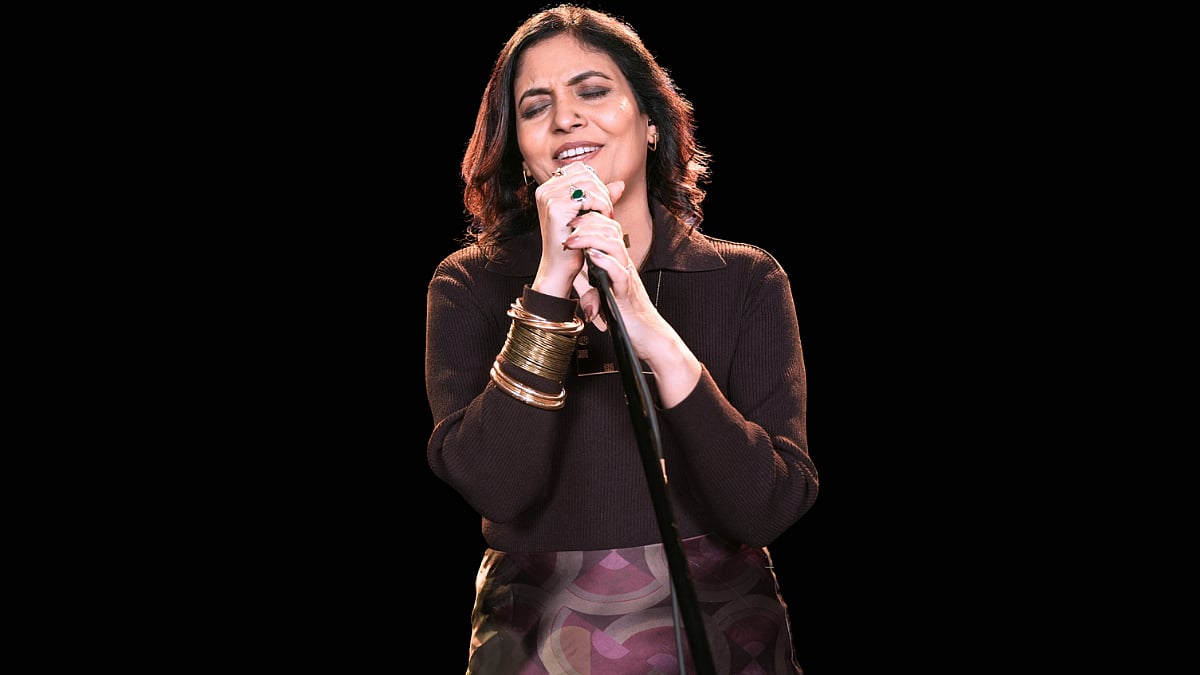
Amruta Kolatkar, a classically trained vocalist, digital-first artist, and senior APAC Administration & Operations leader at an IT firm in Pune, seamlessly bridging the precision of corporate leadership with the sensitivity of a performing artist. Trained from the age of five in the Kirana gharana under Dr. Shailatai Pandit, with additional guidance in the Gwalior tradition from Usha Chiplunkar, she carries a deep-rooted musical foundation. After stepping back from regular performances, the pandemic became a turning point, drawing her back to music and a growing digital presence. This interview traces her journey of return, reinvention, and music as lived experience.
Excerpts from the interview:
Visit extract-html.com for more information.
What does music mean to you personally, and how has that relationship evolved over the years?
For me, music is far more than a passion or profession; it is a way of experiencing life. It has the power to transcend language and connect directly with our emotions. In the Indian tradition, concepts like Naad, Sur, and Laya remind us that music is ultimately about harmony, expression, and inner experience.
My relationship with music has evolved significantly over the years. As a student, I focused on learning from my gurus and understanding how great musicians expressed emotions through their art. Over time, the journey shifted from imitation to self-discovery and from asking, “How was this sung?” to “What do I want to express?”
Today, I see music not as a pursuit of perfection, but as a medium for connection and expression. The more I learn, the more I realize that music is not something outside of us; it is something we experience within ourselves. It remains a lifelong companion, teacher, and source of inspiration.
You began classical training at the age of five but stepped away from regular performances while building a corporate career. What inspired you to reconnect with music during the pandemic?
I began my classical training at the age of five, and music was always a part of my life. However, as my corporate career grew, my focus shifted toward professional responsibilities, and regular performances gradually took a back seat.
Looking back, I think I took music and perhaps even my own voice for granted. When something has always been with you, you sometimes fail to realize its true value. There was also a certain hesitation in putting my art out into the world, as sharing something deeply personal requires vulnerability.
The pandemic changed my perspective. It reminded me how fragile and unpredictable life can be and made me reflect on the things we often postpone for “someday.” I realized that if we are blessed with a gift, we have a responsibility to share it.
I also felt immense gratitude towards my parents, family, and gurus, who invested years of love, faith, and guidance in my musical journey. Reconnecting with music was my way of honoring their contribution and giving back.
For me, it was never about fame or recognition. It was simply about singing, creating, and sharing what I had been fortunate enough to receive. The pandemic reminded me that life is
temporary, and that realization brought me back to music as an expression of gratitude and purpose.
Your rendition of Zindagi Ke Safar Mein has crossed 24 million views. Why do you think that particular song resonated so deeply with audiences across generations?
I believe Zindagi Ke Safar Mein resonated so deeply because of the timelessness of its message. The song speaks about loss, memories, change, and the people and moments that never return, emotions that every generation can relate to.
What makes it special is that listeners connect it to their own life stories. Over the years, I’ve received countless messages from people sharing how the song reminded them of a loved one, a cherished memory, or a significant phase of life. That emotional connection is what gives the song its lasting impact.
While my rendition may have offered a fresh perspective on a beloved classic, the true credit belongs to the beauty of the composition and the depth of its lyrics. When music reflects human experiences so honestly, it becomes more than a song–it becomes a memory people return to again and again.
I don't think people come back to the song because of the singer; they come back because somewhere within those words, they find a piece of their own life and a connection they build with the voice, music and lyrics.
As someone trained in the Kirana and Gwalior traditions, how do you balance preserving classical roots while creating content for a digital-first audience?
Classical music taught me that true creativity is not the absence of boundaries; it is the art of expressing yourself uniquely within them. My training in the Kirana and Gwalior traditions has shaped my musical thinking, though I say with humility that my knowledge is limited compared to those who have devoted their lives to classical music.
I often compare classical training to academic education; there is theory, and then there is application. It gave me a foundation in melody, expression, and the architecture of music that continues to influence every creation, even when I'm not consciously applying classical techniques.
The most valuable lesson has been the balance between structure and freedom. In a raga, defined rules and boundaries coexist with immense creative possibility. Every artist can explore and express the same raga in their own unique way. I carry that philosophy into every song, working within the framework of composition and melody, while bringing my own interpretation and subtle variations, without losing respect for the essence of the piece.
For me, classical music was never about fixed formulas. It was about learning a way of thinking; that creativity flourishes where discipline and freedom coexist.
The rise of platforms like YouTube and Instagram has democratised music. How has this digital shift changed opportunities for independent artists today?
The greatest gift of the digital era is that it has shifted power from gatekeepers to creators and audiences. If your art connects with people, the world can find you. The rise of digital platforms has transformed what's possible for independent artists. Speaking personally, without these platforms, someone like me with a full-time corporate career and family responsibilities, could only have dreamt of sharing my work with a wider audience.
Traditionally, artists needed labels and industry networks to reach listeners. Today, that barrier has largely disappeared. You can create on your own schedule, choose your own repertoire, and connect directly with audiences, becoming the custodian of your own creative journey.
What makes this era truly special is inclusivity. Audiences care less about background or industry backing; what matters is emotional connection. The audience has become the ultimate decision-maker. Technology has not replaced talent. It has simply given talent a much larger stage.
You lead a demanding corporate role while nurturing a successful music career. What lessons from one world have helped you navigate the other?
Music taught me how to feel, but corporate life taught me how to build. The combination of both has shaped the journey I am on today. People often see these as two separate worlds, but I have found they complement each other more than most imagine. Corporate life taught me patience, consistency, and long-term thinking; that sustainable growth comes from discipline rather than momentary bursts of success. The same principle applies to music as well.
It also taught me to be methodical. An artist today is not just a performer but also a project manager, strategist, and marketer. Planning releases, managing budgets, and collaborating with teams all require the same principles of execution I developed professionally.
The most important shared lesson is the value of people. No meaningful achievement is truly individual; whether in a boardroom or a recording studio. Music gave me expression. My corporate journey gave me execution. Together, they have made me a more complete person.
Your repertoire often features soulful Bollywood songs and ghazals. What draws you to music that is rooted in poetry and emotion rather than fleeting trends?
I believe trends have their place, but by nature they are temporary. What draws me is something more timeless– the power of poetry, emotion, and meaningful storytelling.
Before presenting any song to an audience, I need to connect with it myself. If I am not emotionally convinced, it is difficult to do justice to it. That is why I naturally gravitate towards soulful Bollywood melodies and ghazals– they carry layers of meaning that reveal more with every listen.
One of the most heartwarming things is reading comments where listeners simply write "sukoon." That single word means more to me than any statistic. It tells me that someone found comfort through a song. I don't choose songs based on trends. I choose based on what moves me. And emotions, unlike trends, never go out of fashion. Trends may capture attention for a moment, but emotions stay with us for a lifetime.
Many aspiring artists struggle to pursue their passion alongside professional responsibilities. What advice would you offer to those trying to balance both worlds?
My advice would be very simple: don't think of balance as splitting time equally between two worlds. Think of balance as avoiding extremes. Having a career, family, and a creative passion doesn't weaken your artistic journey– it strengthens it. Each aspect of life gives you perspective and experiences that enrich your art.
The digital world offers flexibility. You don't have to choose between being a professional and an artist. Build your creative journey gradually and sustainably. There will be phases when one priority demands more attention – that is perfectly natural.
Most importantly, build a life you control rather than one controlled by circumstances or trends. When you have stability and clarity, creativity flows from freedom rather than pressure. Don't sacrifice your life for your passion. Build your life in a way that your passion can thrive within it for decades.
Marathi music has a rich tradition of poetry and emotional storytelling. As a singer and composer, how do you see Marathi music
Marathi music holds a special place in India's cultural landscape– deeply rooted in poetry, literature, and emotional storytelling. Marathi listeners have a refined appreciation for music, valuing not just melody but meaning and expression.
What excites me most is that great music transcends language. Emotions are universal. A heartfelt composition can touch people regardless of whether they speak that language fluently. As platforms become more global, regional music is no longer confined to regional audiences– a beautiful Marathi composition today can reach listeners across the world.
Marathi is blessed with an extraordinary legacy of poets, composers, and storytellers. That strong literary foundation continues to inspire artists, and I believe the future of Marathi music is extremely bright. Languages may be different, but emotions are universal. And Marathi music has an extraordinary ability to turn those emotions into poetry.
Looking ahead, what role do you see artists playing in keeping meaningful, lyrical music alive in an era dominated by short-form content and rapidly changing trends?
Trends will always come and go. What remains constant is the human need for emotional connection. We consume hundreds of pieces of content every day, but very few stay with us. Every once in a while, a song becomes part of our lives; we return to it in moments of joy, loss, or solitude. That is the difference between content that is consumed and art that is remembered.
The role of artists is to continue creating those lasting experiences. Technology may change and formats may evolve, but the human heart continues to respond to sincerity and truth. As long as creators believe in crafting music with depth and meaning, meaningful lyrical music will always find its audience. People may forget what they watched yesterday, but they rarely forget a song that helped them understand a piece of their own life.
If there is one message you would like to share with music lovers, what would it be?
My message is simple. Don't just listen to music, experience it. In a world moving faster every day, music gives us the opportunity to pause, reflect, and reconnect with ourselves. Make time for music that nourishes the soul, not just the ears. Cherish the songs that have stayed with you through life's joys and challenges– because those songs become a part of who we are. For me, music is not just entertainment. It is gratitude, expression, peace, and a way of experiencing life itself.