India’s Accidental Century
· Free Press Journal
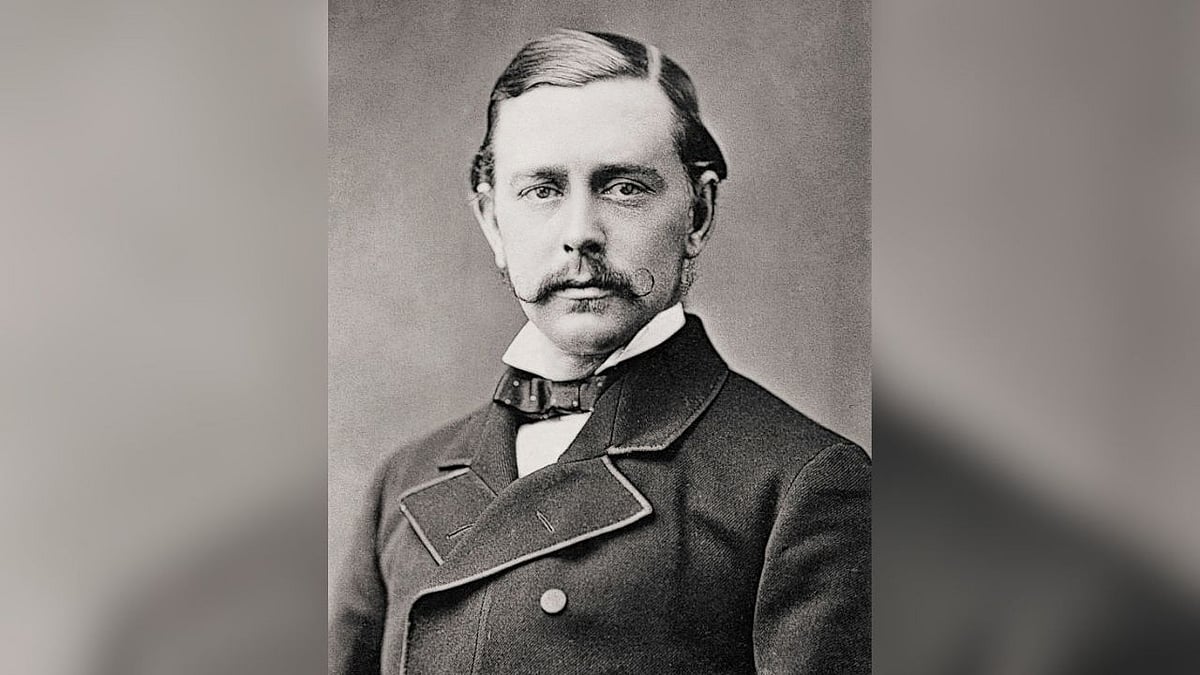
One hundred years ago (May 31, 1926) today India made her first appearance at the Imperial Cricket Conference as the International Cricket Council was then called. But if every journey begins with the first step, this indeed was a tiny one and largely unheralded.
Visit asg-reflektory.pl for more information.
But here’s the catch India’s representatives were two Englishmen representing the exclusive (strictly for Europeans), Calcutta Cricket Club (CCC). The club is thought to be the oldest cricket club in history, even older than the venerable Marylebone Cricket Club (MCC; founded 1787) which back then controlled English and even world cricket, out of its HQ at Lord’s Cricket Ground.
To add to the intrigue, Indian cricket at the time did not even have a national body the Board of Control for Cricket in India would not be founded until two-and-ahalf years later, in December 1928—with an Englishman (RE Grant Govan) and a Karachi-born Goan (Anthony De Mello) at the helm.
So why were Murray Robertson, the secretary of the CCC, and Sir William Currie, a Calcutta-born businessman who was in England at the time, present at Lord’s for the first meeting on May 31 and the second at the Oval on July 29? In fact the sole purpose of the two CCC officials was to request MCC to send a cricket team to tour India, which it duly did in the winter of 1926-27.
Between 1889-90 and 1902-03 three private teams from England toured the Indian sub-continent, while the first ‘All India’ team to visit England was in 1911, which followed Parsi touring teams in 1886 and 1888. India’s inaugural official Test match came at Lord’s during the 1932 tour. But the MCC tour of 1926-27 had the imprimatur of the all--powerful English cricket establishment and so enjoyed both clout and prestige. Until 1993 the President of MCC was automatically the President of ICC, such was MCC’s influence. Lord Hampden as MCC President was in charge of ICC in 1926.
But as luck—for the CCC and India— would have it, Lord Harris, a former Test captain and former MCC President, was also representing England at the meetings. Harris (full name George Robert Canning Harris), while Governor of Bombay from 1890 to 1895, did much to encourage Indian cricket in its infancy. To the extent that contemporary accounts describe him as the ‘Father of Indian Cricket’. He has also been described as the most influential man to be involved in cricket, both as player and administrator. Such was his soft spot for Indian cricket and cricketers and the power he wielded that he was in a position to invite the two CCC officials as India’s representatives which is how they are described in the official minutes of the two meetings which this writer has examined.
This may have been bending the rules as only representatives of official governing bodies were supposed to attend the meetings. But then Lord Harris’ word was law and no one dared challenge him. Joining India at the ICC meeting in 1926 were representatives of New Zealand and West Indies, both of whom unlike India had national governing bodies and both of whom would play official Tests before India. They joined the three original members of ICC (founded 1909), England, Australia and South Africa. The MCC side was captained by Arthur Gilliga who had captained England in the Ashes in Australia in 1924-25. The tour’s stated aim was to gauge the standard of cricket in India which would help decide whether it deserved Test status and when. Undefeated over five months and 34 matches, Gilligan nonetheless was suitably impressed with what he witnessed, especially the performances of CK Nayudu, DB Deodhar and Syed Wazir Ali.
Kingston 1976 ‘Bloodbath’: The Test That Forced Cricket To Confront Its Darkest TacticsIt was at his urging that a meeting of cricket officials, including Grant Govan and De Mello, was held at Delhi’s Roshanara Club towards the end of the tour in February 1927. This meeting laid the basis for the formation of the Board of Control for Cricket in India which eventually happened in December 1928. Gilligan at that initial meeting promised he would put in a good word for Indian cricket on his return, which he did. And less than a year after BCCI’s founding, India were in August 1929 granted membership of ICC and official Test status that went with it with Lord Harris once again in the pivotal role. The plan was for an English team to tour India in 1930-31 for the inaugural Test matches. But Mahatma Gandhi had launched his Non CoOperation Movement against the British Raj and with the political situation in India at boiling point, the tour was called off.
India thus had to wait till 1932 to make her official Test debut, fittingly under the captaincy of CK Nayudu. That first small step taken 100 years ago has today seen India and the BCCI calling the shots in world cricket with the massive Indian market contributing approximately 75 per cent of world cricket revenue. Messrs. Robertson and Currie would no doubt have been astounded to learn what they set in motion back then, albeit inadvertently.
Gulu Ezekiel is a senior freelance sports journalist, historian and author. With inputs from Alan Rees (MCC) and Jeremy Lonsdale)