GTA VI Takes Capitalism Seriously
· Jacobin
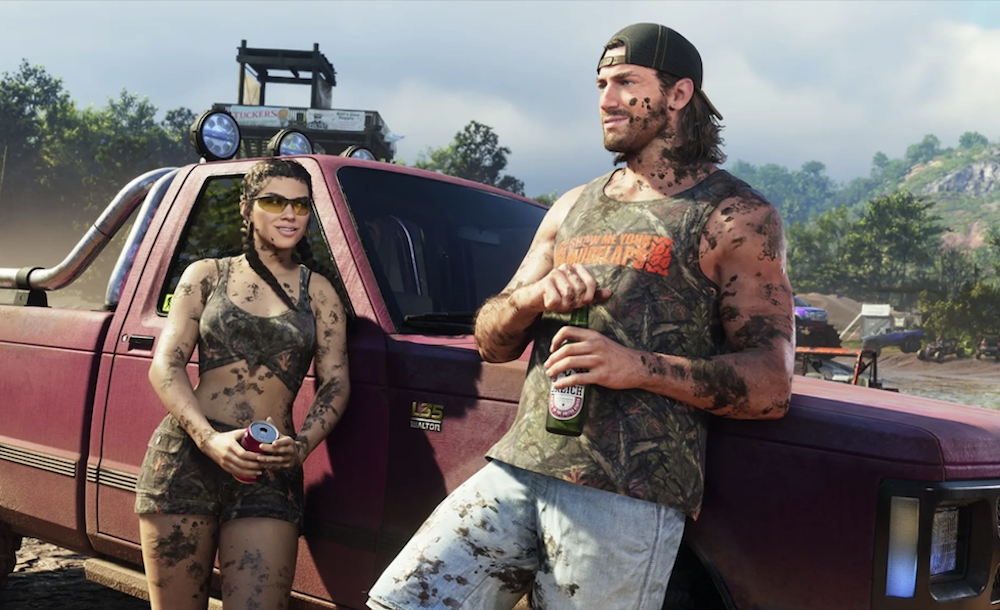
In the first twenty-odd hours of playing Grand Theft Auto VI, the long-awaited latest installment in developer Rockstar’s open-world simulations of contemporary America, I chased a hovercraft with a helicopter, raced Jet Skis around a superyacht, and shot my way out of a hospital in a wheelchair — though not before spending all my stolen cash on medical bills. I also fixed the leaky roof of my apartment, bought flowers for my incarcerated girlfriend when I learned she was about to be let out on parole, and wiped an unexpected tear from my eye as I watched her jump into the arms of a friend who — for a moment — seemed to be on the brink of tears herself.The blockbuster game’s more slice-of-life-oriented gameplay and sentimental, relationship-focused story are relatively new additions to this franchise, especially compared to the detached and bombastic satire of its immediate predecessor. But while journalists have given GTA VI perfect or near-perfect reviews, many right-wing gamers are outraged. To audiences of millions, they complain that Rockstar has replaced the testosterone-fueled wish fulfillment of previous games with what pro-MAGA streamer Zack Hoyt (Asmongold) called a “cuck simulator” and, by doing so, become the latest company in this once exclusively and unapologetically masculine industry to go woke.Responding to this outrage, progressives like Hasan Piker were quick to point out that — actually — the franchise has always been woke. I agree but also believe that such responses shut the door on another, equally interesting discussion. By focusing on GTA VI’s portrayal of masculinity, public discourse has yet to appreciate how the game engages with another topic central to its identity: capitalism. In line with today’s circumstances, Rockstar has ditched the more overtly comedic parodies of games past, opting instead to portray the everyday struggles of its working-class protagonists in a more serious and sympathetic light. As a result, the gap between its world and the real one has never been smaller.A Franchise Built on ParodyGrand Theft Auto became both famous and infamous for the way it enabled and even encouraged its (often young) players to engage in violent, antisocial behavior, from stealing cars and robbing stores to creatively and indiscriminately murdering the AI-generated NPCs — non-player characters — that populate the franchise’s increasingly lifelike cities. What recurring moral panics around the corruptive influence of these games never seemed to grasp, though, is that the developers deliberately matched this gameplay with stories that explored how violence isn’t just random or personal but integral to the structure and functioning of neoliberal society.In each game, the violence committed by its usually marginalized main characters is placed in favorable contrast with the violence committed by their cop, politician, and billionaire opponents. The ensuing conflicts show that the line separating legal from illegal is mostly arbitrary, and wealth impossible to accumulate without a willingness to hurt others. Every new installment approaches this conceit from a slightly different angle. Inspired by hood films and hip-hop, GTA: San Andreas (2004) is steeped in black street culture, while GTA IV (2008) tells the story of an immigrant who comes to Rockstar’s version of New York in search of a better life, only to find things almost as bad as where he came from.While GTA IV is remembered for having a darker, more cinematic tone, both games were fundamentally parodies, critiquing reality by exaggerating it to such a degree that — despite their ever-increasing immersiveness — there always remained a distance between player and player-character. This approach reached its undisputed zenith with GTA V (2013), whose unprecedentedly interactive open world went hand in hand with Rockstar’s most comedic, absurd, and cynical story yet. One of its three protagonists, an unhinged maniac, was specifically designed to serve as a superconductor for the audience’s ability to create carnage and chaos but offered little in the way of reflection. As with The Wolf of Wall Street, released the same year, the game’s excesses were intended to nauseate. Instead they mostly proved either addictive or desensitizing.From Satire to SincerityThe over-the-top, larger-than-life energy that was everywhere present in GTA V can still be found in its sequel, only it is now relegated to a supporting role. One side character — an erratic drug runner — quickly gets the player into trouble when he starts a turf war with swampland rednecks. His actions lead to some exciting and explosive early missions, but unlike in GTA V, they are not without consequence. Toward the end of the game’s opening act, this emblem of the franchise’s more carefree and lighthearted legacy is — spoiler alert — literally fed to the pigs. It’s a subtextual warning for the rest of the game, as well as the setup for a genuinely touching moment of mourning for a death that previous games would have simply laughed off.GTA V was developed during the optimism and relative stability of the Obama administrations, when — for many middle-class Americans — the perils of capitalism were far enough away to be mostly spiritual rather than material, manifesting in a vague desire for meaning and authenticity. GTA VI’s thirteen-year-long development, by contrast, spanned both Donald Trump terms: a period during which the struggles of its characters — their inability to find stable employment, unfair treatment by institutions, and lack of upward mobility — have become more relatable than ever, imbuing them with a gravity and intimacy they did not possess before.GTA VI’s move from satire to sincerity corresponds with a broader trend in mass media. As the hosts of the Critics at Large podcast at The New Yorker discussed in an episode released in April, more and more of today’s mainstream entertainment — from Hollywood films to reality TV shows — is shedding the trademark cynicism and irony of postmodernism in favor of a post-postmodern embrace of earnestness and empathy. Not just because, in times as precarious as now, escapism is a luxury that people can no longer afford, but also because we turn to art to feel emotions that regular life doesn’t readily provide.A New Front in the Culture WarGTA VI is not the first game to be turned into a major battleground of the culture wars. Another long-standing franchise, God of War, about a Spartan general who fights and kills gods, has likewise angered conservatives for reinventing its nihilistically sadistic protagonist as a caring father and thereby distancing itself from the gratuitous violence and sex appeal of older games. Rockstar, too, has chosen reformation. Not simply for the sake of profit, but also because its developers realize that GTA bears great responsibility for creating the persistent notion that games are and should remain a space where toxic masculinity and political incorrectness are perfectly okay.Studying the right-wing response to GTA VI helps us understand how culture war controversies around media properties are shaped by, and in turn shape, politics. Many criticisms of the game verge on the conspiratorial, with content creators and commentators believing gaming journalists are in Rockstar’s pocket, while Rockstar itself is brainwashing gamers on behalf of the woke elite. At the same time, they also echo populist and fascist narratives of nostalgia and decline: the franchise’s original creators have been pushed out by foreign agents and corrupted GTA from the inside, feeding a longing for a lost golden age of originality and excellence.Though currently dismissed as fringe, the reactionary backlash to GTA VI — the single biggest media event in recent memory — could well fuel a conservative resurgence in the future. At the same time, if the game is truly the cultural barometer that everyone says it is, it also gives plenty of reason to be hopeful. Reflecting, and to some extent perhaps even explaining, recent left-wing electoral victories, Rockstar’s vision of the country is one in which the oppressed choose solidarity and compassion over despair or alienation, and the desire for a better, more equitable future is worth taking seriously.This article originally appeared in Jacobin, a democratic socialist magazine publishing long-form essays and analysis on politics, economics, and culture. Subscribe to the print edition for $20 a year.
Visit mchezo.life for more information.