The Weimar Republic Still Haunts Our Political Imagination
· Jacobin
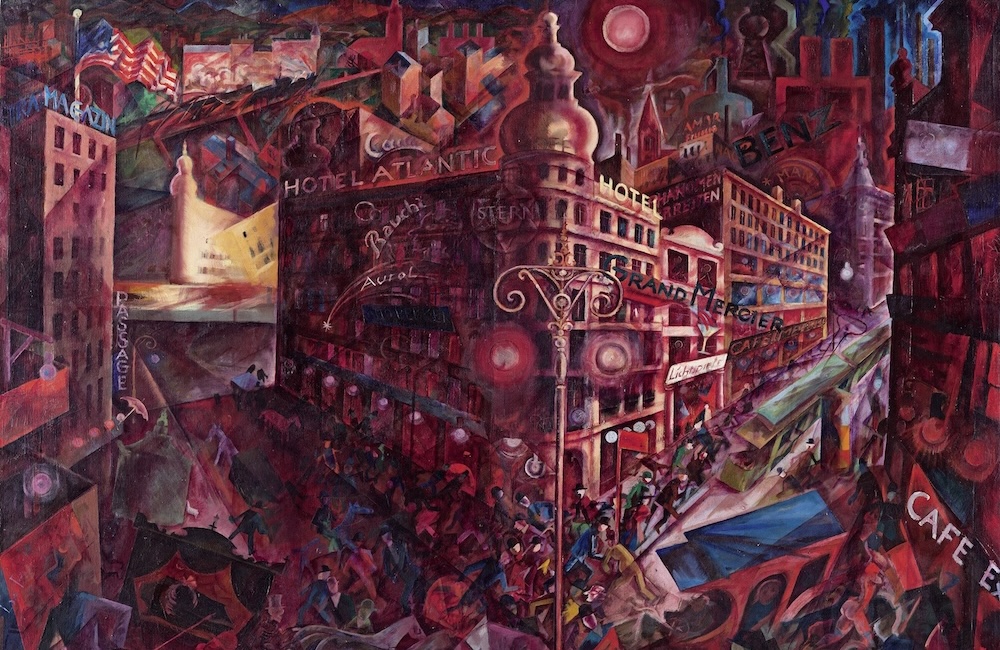
There has been a wave of books recently on the Weimar Republic and its fall. While publishers love centenaries, and it’s now a hundred years since the “roaring twenties,” there may be more to the current Weimar wave than that. Are we currently living in a “Weimar moment”?The current crop of books on the end of Weimar includes Timothy W. Ryback’s Takeover: Hitler’s Final Rise to Power, the German historian Volker Ullrich’s Fateful Hours: The Collapse of the Weimar Republic, and French historian Johann Chapoutot’s Les Irresponsables (“The Irresponsible Men”), not yet translated into English.These accounts focus on the end of the republic and the choices that members of Germany’s conservative elite made that enabled Adolf Hitler to become chancellor on January 30, 1933. They also suggest parallels with the rise of the far right today: Donald Trump and MAGA in the United States, the Alternative for Germany, and the National Rally in France.Now we also have Katja Hoyer’s Weimar: Life on the Edge of Catastrophe and Victor Sebestyen’s Weimar Germany: Death of a Democracy to add to the shelf on the Weimar Republic.On the EdgeKatja Hoyer has recently become one of the best-known commentators on Germany and German history in Britain, where she now lives. Born in East Germany in 1985, she achieved prominence with a book on the German Democratic Republic (GDR) entitled Beyond the Wall, which was dedicated to the unsurprising but apparently still controversial proposition that there was more to life in the GDR than the Berlin Wall.Hoyer’s new book tells the story of the German town of Weimar, which lent its name to the newly founded German Republic after its founding constituent assembly was held there in 1919. The book covers the history from that year to 1939 and the outbreak of World War II, and there is an epilogue that deals with the wartime years.Writers on German history have often remarked on the incongruity of the images with which Weimar is associated. Having been famous for its connections with German classical humanist high culture and figures such as Johann Wolfgang von Goethe and Friedrich Schiller, the town also hosted one of Nazi Germany’s most notorious concentration camps, Buchenwald, on its outskirts. Today a number 6 bus can transport visitors from the Goetheplatz in the center of town to the Buchenwald memorial site in about twenty minutes.It will be clear to readers of Hoyer’s book that the simple binary opposition of German high culture and Nazi barbarism is not as clear-cut as is sometimes assumed. Members of Weimar’s cultural elite, such as Carl von Schirach, the former director of Weimar’s Grand-Ducal Court Theater (later the National Theater), supported the Nazi Party. Schirach joined the party as early as 1926, when the Nazis were still on the fringes of German politics. His son, Baldur, later became the national leader of the Hitler Youth.Then there was Elisabeth Förster-Nietzsche, sister of the late philosopher Friedrich, an admirer of Benito Mussolini. She had reservations about Hitler, but came to accept the patronage of his regime. When the Buchenwald concentration camp was opened in 1937 to enforce Heinrich Himmler’s plans for the “racial” and social reshaping of Germany’s population, the respectable, cultured bourgeois citizens of Weimar could observe the arrival of brutalized prisoners at the town’s railway station.Of course, Weimar has already attracted the attention of many historians, and Hoyer clearly draws on their work. Her achievement is to provide a highly readable narrative, often full of novelistic incidental detail and local color, that describes the twenty years in the life of the town through the eyes of a selection of its citizens.Finding LessonsThe figure she follows most closely, thanks to his voluminous and detailed diaries, is one Carl Weirich, a bookbinder and owner of a stationer’s shop in Weimar. It is often said that history is written by the victors, but if you leave good diaries behind, you have a better chance of being quoted in it. Hoyer describes the privations of Weirich’s family in World War I, when the British blockade caused widespread malnutrition in the civilian population. This resulted in the death of his infant daughter, and his first wife also died from tuberculosis after the war’s end.Having seen his small business narrowly survive both the hyperinflation of the early 1920s and the Great Depression that followed with just a few years’ respite in between, Weirich voted for the Nazis. For a while, he was even a paid-up “sponsoring member” of the SS. But he later became disillusioned with the Nazi regime, especially when he learned that his house was scheduled to be demolished to make way for a grandiose new Nazi Party building project.The Weimar Republic’s most celebrated diarist, Count Harry Kessler, also gets frequent mentions in Hoyer’s account, partly because of his friendship with Elisabeth Förster-Nietzsche, another regular character who left a rich paper trail. Kessler was a famously liberal aristocrat and a well-connected patron of the arts (and gay). He died in exile in France in 1937.For more political balance, Hoyer also traces the life of a local Social Democratic Party leader, Kurt Nehrling, who sought to stay in contact with former comrades in order to maintain some capacity for resistance after 1933. He was executed in Dachau in 1943. In addition, there is a moving description of the fate of one of Weimar’s Jewish families, the hotel-keeping Schmidts, torn apart in the Holocaust.Another figure who Hoyer follows is Walter Gropius, whose Bauhaus school for architecture and design found a home in Weimar until 1925, when a right-leaning government of the state of Thuringia cut its funding. The legacy of the Bauhaus in Weimar includes the surprisingly modernist lettering on the concentration camp gate of Buchenwald, which bore the slogan: Jedem das Seine — “To each his own.” It was the handiwork of Bauhaus alumnus Franz Ehrlich, who was detained there.Hoyer’s narrative is consistently readable but light on analysis. Her history is the sum of decisions by individuals and she aims to help her readers see events through the eyes of those individuals to make those decisions more comprehensible. Such an understanding of individuals and their interaction with society and the events of the time may, she hopes, help the reader to “find lessons to safeguard democracy and freedom in our own time.”The Compromise of November 1918Victor Sebestyen’s Weimar Germany: Death of a Democracy is also primarily a narrative history for a general readership. Sebestyen is a journalist and author of several books on Hungary and Eastern European history, and his book is packed with entertaining anecdotes and vignettes.Weimar Germany leans heavily into what some scholars have characterized as the “glitter and doom” vein of writing about Weimar — Otto Friedrich’s 1972 Before the Deluge is an acknowledged influence. The diaries of the indefatigable Count Harry Kessler are (inevitably) regularly quoted. Unfortunately, his book also contains a large number of factual errors (after the first hundred pages I stopped counting).Sebestyen’s book gives much more space to the genesis of the Weimar Republic and its early years than to its decline and end, which are telescoped into the last few chapters. He deals with the extent of big business support for the Nazi Party in two short paragraphs. Still, it is hard to disagree with his characterization of President Paul von Hindenburg, who chose to appoint Hitler as head of government in 1933, as “one of history’s guiltiest men.”Narrative accounts of the collapse of the Weimar Republic that focus on the decisions of individuals in key positions of power during its last couple of years omit important structural factors. The republic was founded on an unstable compromise between the right-wing leadership of the German labor movement and the essentially antidemocratic surviving elites from the Kaiser’s regime. This included a social compromise between the trade unions and heavy industry.The unions won recognition as legitimate bargaining partners in industrial relations, as well as the eight-hour day, a cherished goal of the labor movement since the founding of the Socialist International in 1889. The bosses of industry escaped the popular demand for socialization, especially of the mining, iron, steel, and armaments concerns that were widely viewed as war profiteers.For heavy industry in particular, the republic was a historical aberration. These interests had been closely identified with the Imperial German state order: when there were major strikes in the Ruhr in 1905 and 1912, the authorities obligingly sent the army in to quell them. They saw the social compromise of November 1918 as merely an expedient and temporary truce with the representatives of their workers.Industry Against DemocracyThe first nail in the coffin of the social compromise was the abolition of the mandatory eight-hour day at the end of the hyperinflation in late 1923. After a few years of post-inflation stabilization and rationalization enabled by American loans, heavy industry went on the offensive against organized labor even before the onset of the Great Depression in 1929. In early 1928, industrial conflict in the metalworking industry in Saxony saw industrialists locking out some 150,000 workers.Later that year, the bosses of heavy industry in Germany’s Ruhr industrial region locked out 250,000 workers in a concerted attack on both organized labor and the state arbitration system. The coal, iron, and steel barons of the Ruhr banded together in an organized cartel to prosecute their interests vis-à-vis the unions and the republic. Industrialists like Paul Reusch increasingly sponsored extreme-right, antidemocratic activists.At this stage, only a few individual big businessmen were giving significant financial backing to the Nazi Party, which was still on the political fringes, with just 2.6 percent of the national vote in 1928. This changed after the Great Depression set in, unemployment rose, and the ranks of the Communist Party started to swell with unemployed young workers calling for revolution on the model of the Soviet Union.The offensive of heavy industry against democracy was followed by the radicalization of the middle classes and the traditional right wing. The mainstream nationalist-conservative German National People’s Party became more militant under its new leader, the multimillionaire media mogul Alfred Hugenberg (Chapoutot gives a good account of this).Under the strain of the intensifying class tensions during the depression, amid widespread disillusionment resulting from the failure of the legacy middle-class liberal parties to alleviate Germany’s economic crisis, the voting bases of the established liberal parties melted away. At the same time, those parties themselves abandoned liberal precepts for more nationalistic and authoritarian politics. Chapoutot’s characterization of Germany’s economic elites as “liberal-authoritarian” is a little hard to follow, as most of them were not liberal on any level — the term seems to be aimed more at today’s neoliberal tech oligarchs.Under these conditions, the Nazis made a concerted effort to forge an alliance with big business and sections of the German elites. They captured the leadership of the peak German agrarian lobby group, the Reichslandbund, which represented the interests of Prussia’s large landowners, who counted President Hindenburg as one of their own.Guilty MenThese nationwide developments fall outside the scope of Hoyer’s local study, absorbing as it often is. Nor does Sebestyen’s colorful narrative do them justice. But narratives that focus on the decisions of a few guilty men do offer some timely lessons about the potential gravity of political decisions, and remind us that far-right parties have only ever come to power through deals with the ruling conservative elites.Conditions today are very different from those of Weimar — we are not (yet) in a great depression, and there is no mass revolutionary working-class movement marching in city streets. But the capacity of wealthy elites to turn on democracy when they perceive it is opportune to do so, and the willingness of sections of the middle classes to abandon liberal ideas when they feel under economic stress, are both recognizable across the span of almost a hundred years.This article originally appeared in Jacobin, a democratic socialist magazine publishing long-form essays and analysis on politics, economics, and culture. Subscribe to the print edition for $20 a year.
Visit asg-reflektory.pl for more information.