Bernie Sanders Says America Has the Highest Child Poverty Rate of Any Major Country. Here's What He's Leaving Out.
· Reason
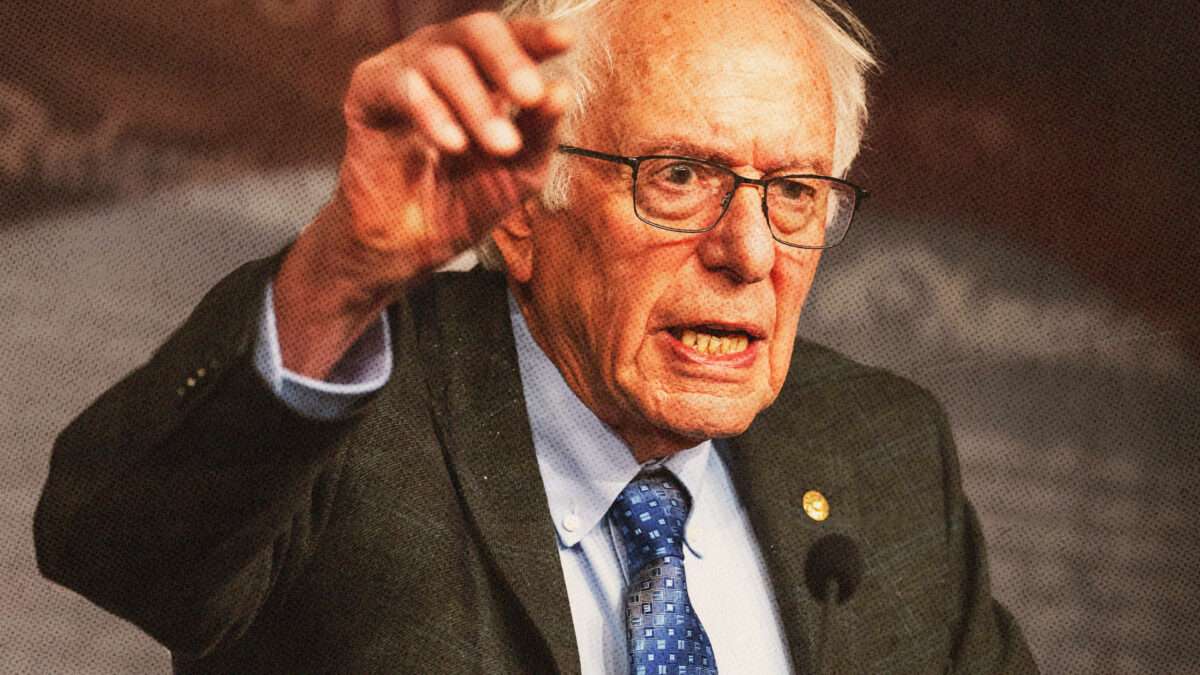
Following the Democrats' sweeping midterm wins, an elated Sen. Bernie Sanders (I–Vt.) has a new favorite talking point.
"We have the highest rate of childhood poverty of any major nation," said Sanders on MS NOW last week. The claim was repeated on CNN, where Sanders argued "this election was" a "crying out on the part of the American people for change" and that "we have the highest rate of childhood poverty of any major country on Earth." Sanders made the same claim in a pre-election video, arguing that Republicans "don't give a damn that we have the highest rate of childhood poverty of any major country," and again in an op-ed in The Guardian, where he argued for Sen. Chris Van Hollen (D–Md.) to replace Sen. Chuck Schumer (D–N.Y.) as Senate majority leader. Sanders uses these striking statistics to make the case for a much bigger role for government in various areas, including in healthcare.
Visit afsport.lat for more information.
It is an effective political talking point, and one that Sanders has used since at least the 1990s. However, it doesn't tell the whole story.
The Organisation for Economic Co-operation and Development's (OECD) latest comparable figures place the United States fourth-highest in child poverty among developed countries, at about 22 percent, which is behind Costa Rica, Israel, and Spain. While this certainly isn't the "highest," as Sanders claims, it is still pretty high, and would be cause for concern if it weren't for the fact that it is a measurement of relative poverty. The OECD defines relative poverty as "living in a household with an equivalised post-tax-transfer income below 50% of the national annual median." In other words, a child is considered poor if their household earns less than half the median income in their own country.
However, the problem is that relative poverty tells us little about how living standards compare internationally—an American child might be considered poor under this metric, but have a higher standard of living than much of the world.
A 2019 report from the National Academies of Sciences, Engineering, and Medicine (NASEM) compared childhood poverty rates in five developed countries using both relative and absolute poverty measures (the latter of which measures whether someone's income falls below a fixed poverty threshold, rather than how their income compares with others in their country). In relative poverty, the United States (20.1 percent) lags behind Canada (17.8 percent), Australia (13.7 percent), Ireland (10.1 percent), and the United Kingdom (8.1 percent). However, America's absolute childhood poverty rate was 12.5 percent. When adjusting for purchasing power, the United Kingdom had a higher childhood poverty rate than America, at 13.5 percent, while Ireland (11.3 percent), Canada (10.3 percent), and Australia (8.1 percent) had lower rates. So, America's childhood poverty looks rather different when children's household incomes are compared against the same standard instead of each country's national median.
The reason for this massive disparity between absolute poverty and relative poverty is simple—America is a far richer country. In the NASEM study, the same absolute poverty line was equivalent to 40.2 percent of median household income in America, compared with 40.3 percent in Canada, 40.7 percent in Australia, 55.5 percent in Britain, and 51.8 percent in Ireland. Americans earn far more than their British and Irish counterparts, so the income threshold needed to be considered "poor" under a relative measure is much higher.
A more recent 2022 study using Luxembourg Income Study data reached similar conclusions. Comparing absolute childhood poverty across 23 countries using the same purchasing-power-adjusted U.S. poverty threshold, researchers found that 12 percent of American children lived in poverty, compared with 14.2 percent in Britain, 15.5 percent in France, 29.4 percent in Israel, and 36.1 percent in Italy.
So what does the data show us? While the U.S. may not be a top performer in all poverty metrics, it is certainly not performing nearly as poorly as Sanders says it is. On other metrics, the U.S. is a top performer—it's ranked fourth out of 132 countries in the Archbridge Institute's social mobility index and was the third-most innovative economy in the World Intellectual Property Organization's 2026 Global Innovation Index. The U.S. was also named the best country for startups and entrepreneurs in StartupBlink's 2026 Global Startup Ecosystem Index. One of America's greatest advantages is that, regardless of background, children grow up in a country with extraordinary opportunities to succeed and achieve some of the highest incomes in the world.
Indeed, the U.S. has one of the highest median disposable household incomes in the developed world, according to the OECD, even after adjusting for differences in purchasing power. The bottom 10 percent of Americans have higher average annual disposable incomes ($10,700) than the OECD average (though they are behind income earners in some "similarly wealthy countries"), according to data in an analysis by the Center on Budget and Policy Priorities.
In fact, the U.S. is so rich that Americans who are functionally illiterate earn the same as average British workers, according to the Financial Times.
Interestingly, middle-income Americans enjoy the second-highest disposable household incomes in the OECD. In 2024, Americans in the middle 20 percent had an average annual disposable income of $45,010. This is higher than the incomes of comparable households in Switzerland, Norway, Canada, Britain, France, and Germany. In America, you can earn six figures managing a chain restaurant—Panda Express, for example, advertises annual compensation packages of over $100,000 for general managers.
Over time, American children have become considerably wealthier, including those in the poorest households. A 2024 report from NASEM found that the inflation-adjusted average household resources of children in the bottom 20 percent increased by 80 percent between 1967 and 2019. Meanwhile, Columbia University research found childhood poverty fell from 29.8 percent to 9.8 percent between 1967 and 2024, measured against a fixed standard of living (even though relative childhood poverty went up over the same period).
Childhood poverty data tell a more complicated story than what Sanders is presenting. While one metric would tell you the U.S. is lagging behind the rest of the developed world, others tell you it is far exceeding expectations. What is indisputable—and what Sanders ignores—is that American children have more opportunities to create wealth and prosperity than almost anywhere else in the world.
The post Bernie Sanders Says America Has the Highest Child Poverty Rate of Any Major Country. Here's What He's Leaving Out. appeared first on Reason Magazine.