When People Keep What Surgeons Remove
· Time
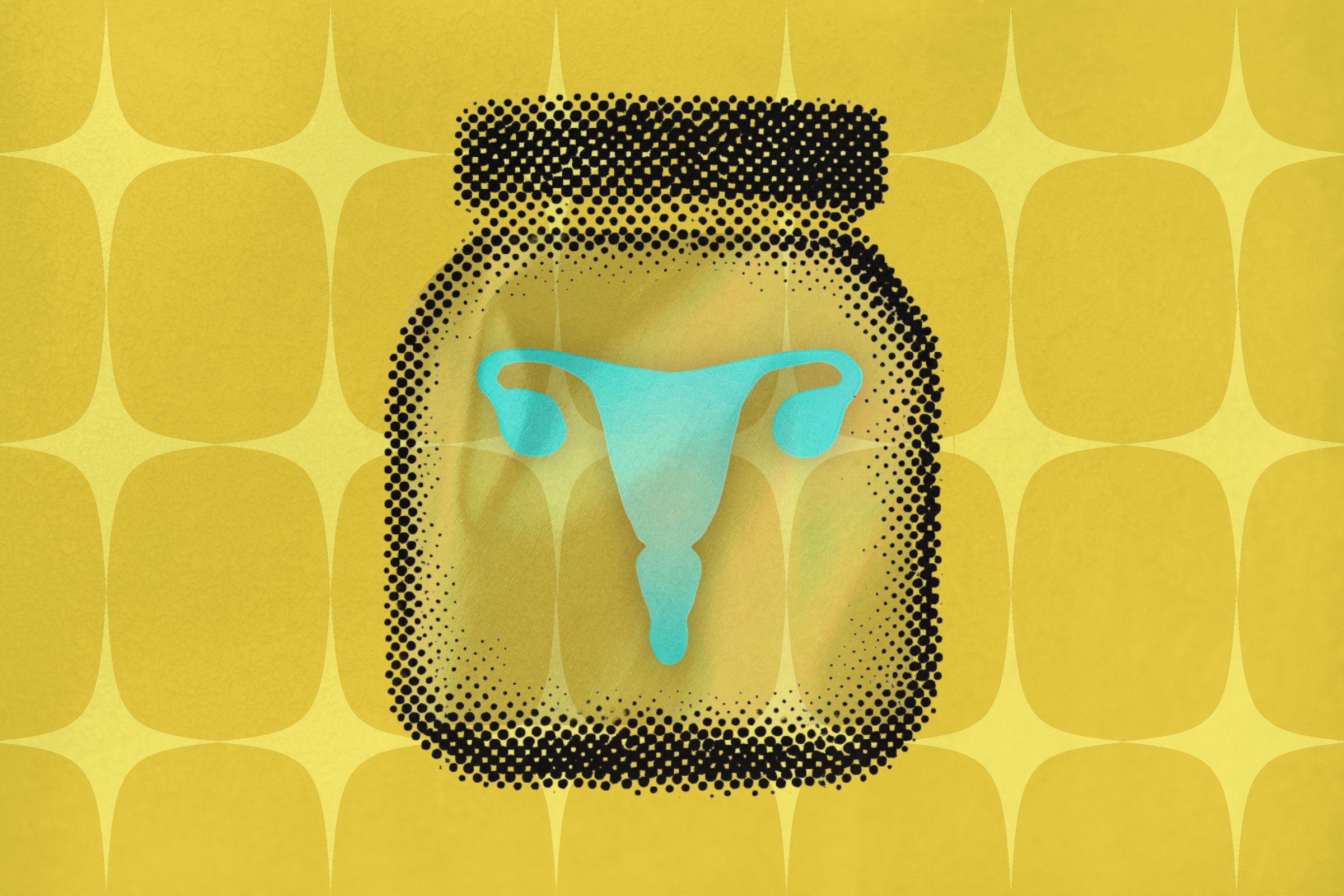
Emily likes her uterus much better in a jar than in her body.
Visit moryak.biz for more information.
The 20-year-old, who asked to be identified by her first name to protect her privacy, keeps it in her bedroom, on what she calls her “dead things table,” among animal skulls and other specimens. After years of difficult symptoms, she had a hysterectomy at 19—and made arrangements to bring the organ home. Her mother supplied a sticker that borrows a lyric from a popular Taylor Swift song: “It’s me, hi, I’m the problem, it’s me.”
Keeping it is a kind of revenge, Emily explains: “You tortured me, and now you’re chopped up in little bits.”
It’s also a bit of inspiration. “There’s a lot of things I know that I can’t control and I cannot fix,” she says. Her uterus, though, “was something I could get fixed.”
Other patients have found their own reasons not to part with their body parts. One artist turned his wisdom teeth into calligraphy tools; a man gave a piece of his removed medical tubing to his future wife. Surgeons field requests for everything from breast implants to eyelid skin.
Patients have been asking to keep what surgeons remove for decades: Medical literature addressed returning tissue samples as early as 1995. But research on how often it happens remains limited. A 2019 study found that 22 patients signed specimen-release forms at one Arizona medical center from 2015 to 2017. When researchers interviewed eight of the people, they revealed motivations ranging from curiosity and a desire for a souvenir to honoring cultural beliefs and finding comfort after a loss. The authors described the practice as “poorly tracked and underreported,” and their study did not establish how common it was nationally.
Whatever draws patients to these keepsakes, getting one home can require more than asking the surgeon to save it. What makes people want to keep something they need to have removed—and who decides whether they can?
Why people keep body parts after surgery
Leah Paul had mixed feelings about having her fallopian tubes removed. But she didn’t need to think twice about bringing them home.
The 39-year-old Miami-based midwife had spent years living with debilitating Stage 4 endometriosis. She and her surgeon, Dr. Robyn Power, planned an operation to remove endometriosis tissue and her fallopian tubes while trying to preserve her ovaries. Paul wasn’t planning to have more children, but she still needed to talk the decision through with her loved ones. “These fallopian tubes carried the one egg that became my beautiful, incredible 21-year-old daughter,” she says.
In her work at Tree of Life Midwifery in Fredericksburg, Va., Paul routinely asks patients whether they want to save their placentas. “You grew that organ, it’s yours,” she says. Keeping a piece of her own body felt right to her. She and her fiancé are artists, and she wanted to turn her tubes into something meaningful. “Dr. Power didn’t even blink,” she says.
Paul’s experience with families keeping placentas reflects a practice researchers have documented. In a 2013 survey of perinatal pathologists in the U.S. and Canada, 22 of the 36 respondents said they allowed placentas to be released to families. (These are specialists who examine placentas and other tissues to help understand conditions affecting pregnancy and newborns, like infections or problems with fetal growth.) The most common reason patients requested their placentas was burial. For some families, that practice carries cultural meaning: In Māori tradition in New Zealand, for instance, burying the placenta in a significant place affirms a child’s connection to the land.
Power, a gynecologic surgeon with Pelvic Rehabilitation Medicine in South Florida, makes room for these types of conversations when preparing patients for surgery. Some feel little attachment to the tissue being removed. Some want it gone. For others, it’s part of their identity, and letting it go can be difficult even when they want the surgery. “It means something different to everybody,” she says.
Only a small percentage of her patients pursue taking specimens home: Power estimates that in the past year, about five expressed interest and completed the necessary paperwork. But she’s noticed more patients asking whether it’s an option in recent years. She suspects greater public awareness of endometriosis and conversations about changing reproductive rights have encouraged patients to ask more questions about their bodily autonomy and reproductive organs.
Sometimes, patients want something to show for what they’ve endured, she adds. Power has fielded requests to take home pieces of endometriosis tissue—a physical reminder of the pain that disrupted their lives. “It’s proof,” she says.
Even tissue that’s caused misery can be hard to part with. Dr. Elvira Lang, an interventional radiologist and author of Managing Your Medical Experience, recalls a patient who began crying after a procedure to shrink her uterine fibroids. They had caused problems, but they were still part of her body. The experience prompted Lang to start talking with other patients about how they might feel about losing tissue, even when treatment would help them.
When Lang had her own hip replaced, she asked to see the removed portion so she could thank it. She didn’t want to bring it home. She wanted a goodbye. “Thank you very much. You did good,” she remembers telling it. “But you know it was time to go.”
Sometimes, seeing is enough. In a small British study in 2005, 33 of the 47 patients who had undergone hysterectomies at Walsall Hospitals NHS Trust in England said they wanted to take a look at their removed uterus, although only 14 visited the laboratory. All 14 who did said the experience helped them understand why they had needed surgery and what happened to the tissue afterward.
For comedian Joe Tidd, a piece of medical tubing became an unlikely romantic keepsake. After a serious rugby injury and a subsequent infection, he needed a PICC line to deliver antibiotics, with daily hospital visits to have a pump changed. Hoping to cheer himself up—and perhaps find some stand-up material—he downloaded Tinder and set his search radius to a mile. Maybe he’d meet a nurse.
He met his future wife instead. She wasn’t a nurse; she just happened to be passing by the hospital as he was busy swiping.
Shortly before their first date, his line came out. After staff stepped away, Tidd says, he retrieved a piece from the trash and saved it. Later, once they’d fallen in love, he gave it to her. “It was a weird thing to do, but she still has it, so I don’t know,” he says. To him, the connection was clear: “My struggles are what led me to her,” he says. “She should have that.”
What people do with their medical souvenirs
As Anthony Elder prepared to have his wisdom teeth removed at 35, he started considering their potential. There was a family precedent for keeping teeth: His mother had saved his baby teeth in a pill bottle, intending to make a necklace. She never got around to it, he says, but the idea made his own request feel less unusual.
Elder, an artist and calligrapher who describes himself as an “oddities appreciator,” asked to keep his teeth at his consultation, then made sure the staff remembered on extraction day. As he came out of anesthesia, he had one pressing question: “Where’s my teeth?”
He took them home and figured out how to turn one into a pen. He found writing with something that used to live inside his head uniquely satisfying. “I don’t know how many people have done this,” he says.
Tooth keepsakes are familiar territory for Dr. Liel Grinbaum, a pediatric dentist in New York. Some parents save a child’s first lost tooth alongside a lock of hair and a record of their age; others do the same with the last baby tooth, marking the passage out of childhood. He recalls one mother who made tooth earrings, necklaces, and bracelets.
His younger patients are often enthusiastic about taking an extracted tooth home, too. Grinbaum helps them write a letter to the tooth fairy and supplies a special box. He also has an incentive ready: “If I had to take it out, the tooth fairy usually pays double.”
Adults’ requests extend well beyond the mouth. Dr. Frank Agullo, a plastic surgeon in El Paso, Texas, says patients ask to keep removed breast implants, excised moles, excess eyelid skin, and tissue removed during labiaplasty. Some want to see the specimen or a photograph, and that’s enough, while others are already clearing space on their shelf at home. “I’ve stopped being surprised by the people who actually want their tissue or silicone, and if it’s something that’s doable, I’m happy to comply,” he says. Why do patients make these requests? “The reasons are really endless.”
Can you take body parts home after surgery?
Instead of resting or mentally preparing the day before her endometriosis surgery, Paul, the midwife who brought her fallopian tubes home, spent the day on the phone. She recalls being transferred between hospital employees, waiting for callbacks, and explaining, once again, her request to take her fallopian tubes home. She understood that the institution had protocols and concerns about liability. She was willing to sign paperwork, she said, but she couldn’t accept leaving without her tubes. “If they can’t be inside of me,” she recalls telling a hospital representative, “I’m taking them with me on the outside.”
She explained their connection to her daughter, as well as the art she wanted to make. She asked what would happen if she didn’t take them home, and says she was told they would go to pathology and eventually be incinerated. That possibility made her more determined. “I do not consent,” she recalls saying, “to any of that happening to my organs.”
Power says she intervened on Paul’s behalf, helping secure permission from hospital administrators and the pathology team. In her experience, getting tissue released has required advance conversations and paperwork, with requirements varying among the hospitals where she’s worked. A surgeon’s agreement alone hasn’t always been enough.
At Ochsner Health in Louisiana, returning specimens is a familiar request, says Dr. Rebecca Phillips, chair of pathology and laboratory medicine services. Most patients don’t ask, but the system has a process for those who do. The first priority is completing the medical work: examining what was removed, making a diagnosis, and getting that information to the patient’s care team. “We want to make sure that we provide a diagnosis, we take care of whatever they need, and then we move forward to how can you keep it and how is that safe,” she says.
Patients should make their wishes known in advance, Phillips says. At Ochsner, requested specimens are set aside in a lockbox rather than sent through the usual disposal process. Patients—or someone authorized to collect the material for them—must show identification and complete the required paperwork. Other hospitals may handle the process differently. “You won’t find the exact same standard operating procedure from hospital to hospital,” she says.
Taking tissue home also raises a separate question: Should it be examined for signs of disease first? Paul says she declined pathological examination of her tubes, a decision Power confirms. Power says the possibility of missing a malignancy was one of the hospital’s concerns about releasing unexamined tissue. Paul’s arrangement was specific to her care; keeping a specimen and deciding which tests it needs are separate questions to discuss with your medical team.
Having tissue examined doesn’t necessarily mean losing the chance to keep it. Pathologists are physicians who examine specimens to help diagnose disease and guide care. They may open an organ, cut it into sections, and take small samples to look at under a microscope, Phillips explains. If tissue remains after the necessary testing, it may be available to return. A small biopsy, however, might be used entirely for diagnosis.
There’s also a distinction between leftover tissue in a specimen jar and the tissue blocks and microscope slides prepared for testing. Phillips says Ochsner holds leftover specimens for two weeks after the pathologist completes the diagnostic report, in case additional questions arise. Its accreditation requirements call for keeping slides and tissue blocks for 10 years. Those materials may be sent to another medical institution for further evaluation, she says; they aren’t simply handed over as keepsakes.
On the morning of Paul’s surgery, two nurses approached her in pre-op with a question: Why did she want to keep her fallopian tubes? “I’m gonna make a really badass art project,” she told them.
When Paul woke up after surgery, she had a question: “Where are my tubes?” Her fiancé showed her the containers. “They’re right here, baby,” she recalls him saying.
A couple of days later, Paul sat with her daughter and her fiancé’s daughter and opened the containers. They looked at the tubes together. The young women, she says, were fascinated.
How surgical souvenirs are preserved
Preserving a body part can mean bringing a hazardous chemical home. Agullo says he’s returned removed tissue in containers of formalin, a preservative containing formaldehyde that can irritate the eyes, skin, and airways and is toxic if swallowed. Some patients later told him they kept the jars on a bookshelf or dresser. He tells them to keep the containers closed and out of children’s reach.
Ochsner takes a different approach. Its laboratory uses formalin to preserve tissue for examination, but removes that chemical before returning a specimen. Staff follow a written procedure to treat the material, rinse it, and transfer it into saline, Phillips says. “We don’t let it go home,” she says of formalin.
Paul’s tubes went home in saline, which Power emphasizes is not a preservation medium. Paul says she has since dehydrated them. Her artwork is still in progress: a clear, shadow-box-style frame incorporating the tubes, dried tropical flowers she gathers on her morning walks, and some of her menstrual blood. Her fiancé is collaborating with her.
They haven’t chosen where to display it, but Paul wants it “someplace good, like really visible.” When she imagines looking at the finished piece, she thinks of her daughter—and what it took to bring the tubes home. “Fighting to keep them because they’re mine and nobody else’s and I get to keep them,” she says. She also feels “gratefulness for these badass women” who supported her along the way.
Power hopes more clinicians will take these requests seriously. “If it’s an important thing to them,” she says, “it should be an important thing to us as providers as well.”
For Emily, the jar on her bedroom table is “like a hunting trophy”—but instead of something dying, it’s a reminder of what she survived.