Harold Cruse, the Loneliest Black Radical Intellectual
· Jacobin
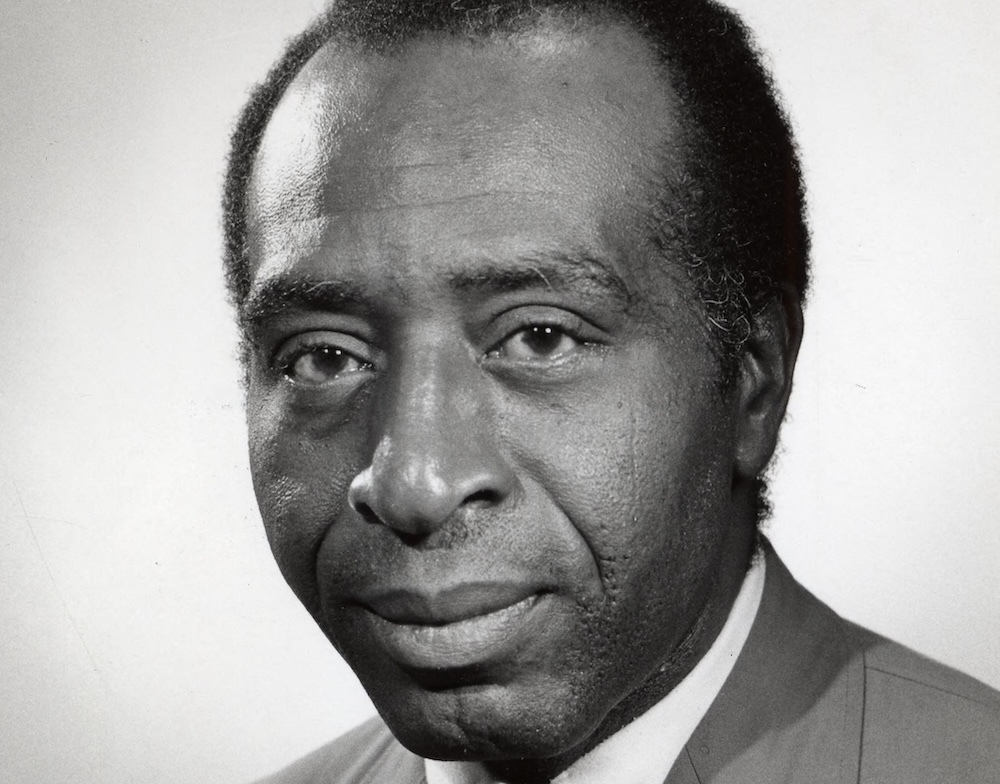
Harold Wright Cruse (1916–2005), my colleague at the University of Michigan for decades, may have been the most flamboyantly paradoxical radical intellectual ever to roam our institution’s halls. An astonishing autodidact with a wealth of knowledge about cultural and political history, Cruse authored a foundational work in black studies: The Crisis of the Negro Intellectual: A Historical Analysis of the Failure of Black Leadership (1967). Now, two decades after his death, a short, pacy biography by Villanova University theologian and Africana studies scholar Vincent W. Lloyd titled Harold Cruse: Critic, Writer, Teacher captures many of Cruse’s idiosyncrasies to present a riot of contradictions.Cruse, a high school dropout with no college degrees, was recruited to the Michigan history department one year after the publication of Crisis, which quickly became a standard classroom text, often cited alongside Frantz Fanon’s The Wretched of the Earth (1961) and The Autobiography of Malcolm X (1965). Cruse’s book was a six-hundred-page tome bursting with insight and erudition but also ornery opinions about racial integration, black nationalism, and communism, not to mention uncharitable generalizations about women, Jews, and Caribbean immigrants. These were voiced, on and off the page, with absolute certainty and self-righteousness.His most scathing criticisms were aimed at leading African American activists and thinkers, and his style stood out for his penchant for hurling rhetorical grenades. His targets included civil rights organizations such as the National Association for the Advancement of Colored People (NAACP) and Martin Luther King Jr’s Southern Christian Leadership Conference, which he saw as “motivated by selfish class interests, because the main objective of the Negro middle class is a status and a social position approximating . . . the great Anglo-American middle class.” But more often, such “Cruse missiles” were launched at the very black leftists I was teaching and admired.Richard Wright, for example, my cultural lodestar since high school, was depicted, in language redolent of far-right Judeo-Bolshevik conspiracy theories, as “so ideologically blinded by the smog of Jewish-Marxist nationalism that he was unable to see his own clearly.” Lorraine Hansberry, James Baldwin, and Paul Robeson were part of a long list under fire for naiveté and a lack of independent, sophisticated thought. Hansberry, Cruse said, was the “Joan of Arc of People’s Integration,” and Baldwin “a rather innocent and provincial intellectual.” Robeson’s 1958 autobiographical manifesto, Here I Stand, was described as “a weak, muddled, sentimental book, suffused with innocent idealism and lacking a single paragraph of original thought on Negro problems.”Cruse’s overall literary legacy, consisting of three books and numerous essays, left an erratic track record: a baffling mix of acuity, wide reading, personal grudges, and dubious hot takes. He used Marxist terminology but was not a Marxist, for he saw the United States as a battleground of competing racial and ethnic groups more than a conflict between economic classes. He advocated black self-determination, but at the center was culture, not land, and his notion of culture was black art, theater, literature, and media, not the less elitist anthropological definition. For Cruse, Harlem was to be the center of black autonomy, even as over 90 percent of the black population lived outside Harlem with a vastly different cultural experience.Most problematic, as the late Trinity College Professor Jerry Gafio Watts observed in Heroism and the Black Intellectual (1994), is that he “wanted to frame the issues of black intellectual life and politics along a rather simpleminded axis between black nationalism and integrationism.” It was a questionable either-or version of the old race and class debate that still roils the Left in new forms.Cruse’s belief that black Americans should operate as an organized ethnic interest group to bargain for power failed to challenge the capitalist foundation of American society. Was there no way for a fight for cultural self-determination, racial pride, and democratic rights against a racially oppressive system to blend with class struggle, aiming at a society with economic and social justice for all? Lloyd even speculates that, until the end of his life, Cruse wrestled with the question: “What if separate but equal was not such a bad thing?”Portrait of a PersonLloyd’s approach to Cruse is more that of a storyteller than a historian. His focus is on the portrait of a person, not on defending or disputing Cruse’s political theories. Through a narrative based on numerous interviews and some original documentation, we soon learn that there were many Harold Cruses. That’s because Lloyd makes every effort “to allow the people who knew Cruse to speak for themselves.” People’s perceptions of memorable individuals vary by age and context, and the man who ultimately emerges from Lloyd’s portrait was not to everyone’s taste.As an authoritative spokesperson for a particular brand of African American self-determination in the 1960s and ’70s, Cruse was both adored by acolytes and despised by those with whom he differed or whom he had offended. Many, including me, admired his ambition, his ability to pose challenging questions, and his desire to promote African American intellectual thought. We liked that he didn’t pitch softballs but were flummoxed by shortcomings in his thinking — too many grandiose claims followed by superficial analysis.Lloyd himself is less drawn by any agreement with Cruse’s stances than by what he sees as the “critical dimension” and “spirit” of Cruse’s thought. Nevertheless, for those of us who knew Cruse, all this was complicated by how to negotiate a personal relationship with an imposing figure marked by a titanic but fragile ego.In five chapters, Lloyd offers a rather chatty survey that begins with Cruse’s working-class family background in Virginia, his hardscrabble youth with relatives in Harlem, and his military service in World War II. Then come a half-dozen years in the Communist Party USA (CPUSA) as a journalist and librarian, followed by life as a Greenwich Village bohemian with literary aspirations in theater and fiction. Cruse next shifts into black nationalist activism and social criticism with the Liberator Magazine and the Freedom Now Party. When Crisis becomes a national publishing sensation, he is hired as a visiting black studies instructor at the University of Michigan. He retires fifteen years later as a full professor, an “elder,” and something of a legend.Lloyd’s is a kind of magpie method, with proleptic leaps from the outset, but it proves surprisingly helpful in certain areas because, previously, only uneven source material had been available for many facets of his subject’s life. Lloyd knows how to distill the essential from the inessential and never allows archival minutiae to submerge the core concern.Moreover, Lloyd is no slouch in the revelation department. Cruse was ostentatious about name-dropping and telling tales of his army experiences in North Africa and Italy, as well as his 1960 trip to Cuba sponsored by the Fair Play for Cuba Committee. But he was mostly tight-lipped about his personal and emotional past. This left some of us wondering how dark his secrets might be.As it turns out, most of Cruse’s closeted skeletons are the familiar human ones — a love life Lloyd can’t untangle and some problematic episodes with alcohol. On the other hand, there is the revelation from Freedom of Information Act records that Cruse “named about a dozen of his former [Communist] party associates as Communist Party members” to the FBI, even as he would later deny any such cooperation. Sometimes not all the facts in a person’s life are convenient, and often the lies we tell about the past seem necessary to live in the present. Still, this is a whopper that will leave many of his acquaintances with the taste of ashes in their mouths.Otherwise, what Lloyd unravels is a long life with many loops, interludes, and repetitions. At times, it’s something of a detective story as he tries to figure out whether Cruse was ever legally married, whether he abandoned a son in Europe, and whether the sweep of Cruse’s career reads more like a rise and slide than a rise and fall. After a twenty-year wait and many false starts, his final book, Plural but Equal: A Critical Study of Blacks and Minorities and America’s Plural Society, appeared in 1987. Instead of a late-life powerhouse performance, it was judged to add little to his thesis that the United States was a society of competing ethnic blocs, and it has been effectively out of print for nearly four decades.We learn about many elements of Cruse’s baroque personality — highly complex, dramatic, extravagant, and emotionally intense. With ramrod posture and a face often set in a dignified pose, he projected brooding bitterness and the aura of a man who felt personally wronged. At Michigan, he seemed to swing between episodes of immense energy and passion and periods of existential rumination, with students both benefiting and suffering. Through it all, Lloyd is remarkably nonjudgmental. He rightly seems to accept the mysteries of the shadowlands of human motivations. He has no desire to canonize a saint and recognizes that Cruse was somewhat intoxicated with his own sense of self-importance. I would also add that, intellectually, Cruse was the type who always needed to have a foil.The Boundary CrosserFor me, the arc of Cruse’s life felt awe-inspiring. A true boundary crosser, he was catapulted from plebeian marginality to superstar fame, mainly through ulcer-producing hard work and an authentic, self-authored identity that I associated with my own Marxist-existentialist aspirations. Lloyd, however, shows that certain fortuitous friendships (a Jewish couple with publishing connections) and political coincidences (a black student revolt at the University of Michigan) also helped his rise. Yet despite our fundamentally different political orientations, some of us on the Left were attracted to Cruse’s intellectual stridency, not to mention the exciting charge of his transgressive opinions. Attacking orthodoxies and stomping on taboos — what’s not to like? After all, I, too, was working on a book-length call to arms for a new approach based on a critical reassessment of the Left’s past record on culture and intellectuals. That my focus was on Jews, and that I was Jewish, never seemed to be a problem for him, despite his oft-expressed wariness of Jewish Marxist intellectuals.Moreover, having read much C. L. R. James and George Breitman’s 1967 book, The Last Year of Malcolm X, I was open to the idea of an independent black liberation movement as a vanguard catalyst that did not need to subordinate itself to a conservatized white working class. To be sure, I was hardly an expert on the chameleon ideology of nationalism, but I sympathized with anti-colonialism and opposed expansionist and chauvinistic nationalism. One could be suspicious of any claims of nationalist belonging and yet reject the facile stereotype of all varieties of nationalism as equally essentialist and ethnocentric.I felt most politically at odds with Cruse on the centrality of intellectuals, ultimate economic goals, and the black movement’s relationship to the white working class. As for his treatment of the CPUSA, my own research had convinced me that one can be correct about its Stalinist politics but wrong about almost everything else. Cruse had grossly misrepresented both the sincerity and the impact of the CPUSA members’ commitment to anti-racism, and in this regard Crisis read too much like a pulpy novel of revenge.Lloyd’s interview findings match my own experiences with Cruse. I first met him at events sponsored by Michigan’s Center for Afroamerican and African Studies in 1975, just after his brief term as an early director. After several discussions about his CPUSA experiences, he gave me an autographed copy of a long and remarkable course description for “Marxism and the Negro Question,” a class he took at the CPUSA’s Jefferson School in the late 1940s. Then, in the fall of 1979, he requested a favor: Would I take over some reviewing assignments he had promised the socialist newspaper In These Times? This would start with James Baldwin’s new novel Just Above My Head (1979), which he found “unreadable.” As an untenured nobody, I was quite flattered, and this review led to eight more, on writers such as Hansberry, W. E. B. Du Bois, and my fellow English department member Gayl Jones.For the next fifteen years, during which time he officially retired in 1984, we continued our association, although I mainly queried him for information on his CPUSA comrades with little reciprocal curiosity. Then, in the spring of 1992, I invited the emeritus Cruse to address two sessions of a seminar I had organized on the cultural left in the 1950s; the plan was to juxtapose chapters of Crisis against one of Cruse’s objects of criticism — the novel Youngblood (1954) by the pro-Communist leader of the Harlem Writers Guild, John Oliver Killens. Cruse seemed pleased, and I opened the first class with a fulsome introduction, including a biographical sketch with highlights of his career that I thought he might have been too modest to mention himself. To my surprise, the discussion that ensued around Killens was stilted and relatively unproductive.When I met with Cruse afterward, he gave me a sharp dressing-down; nothing I had said was inaccurate or disrespectful, but he had wanted to represent himself, not have me do it for him. This was followed by a letter explaining that he would not return to the seminar, but for a different reason: “To be honest, I never finished reading Youngblood after it was published. For me, the novel possessed no literary merit.” Sheesh, I thought, why didn’t he say that in the first place?Lloyd’s biography, however, discloses a history of similar behavior — walking offstage, hanging up mid-conversation, and precipitously dumping a graduate student — and I likely got off easy. Just four months later, we were back in dialogue. He wanted to learn what I had heard about Van Gosse’s book in progress about the Fair Play for Cuba Committee, although he did manage to stick in an admonishment about my allegedly teaching Youngblood as a “masterpiece.”The point is that Cruse had an unsleeping vigilance for any possible slight, which was a significant element in his alienation from the CPUSA. As Lloyd reveals, Hansberry and others he saw as an insider group under CPUSA control rebuffed his aspirations to write for the theater in the 1950s. And as Lloyd convincingly argues, “Cruse’s ideas . . . grew out of Cruse’s life.” But too much of it was a synthetic certainty about the motives and achievements of a bricolage of black communist cultural dupes: “White intellectuals are unoriginal, imitative, and puerile, and black intellectuals are brainwashed by the whites.”Throughout his writing, he hammers this theme like Vulcan, rolling over it relentlessly from new angles — casting would-be African American radical intellectuals as betrayed by West Indians, manipulated by Jews, and undermined by black women. No wonder one of Cruse’s most impressive legacies has been highly sophisticated, well-researched refutations, starting with the concluding section of Winston James’s Holding Aloft the Banner of Ethiopia: Caribbean Radicalism in Early Twentieth Century America (1999).The longer one ponders Cruse, the more enigmatic his beguiling strangeness becomes. Yes, he was always available for discussion and consultation, yet this seemed tethered to a thirst for adulation. His inner life is not my story to tell, and he had a perpetually inscrutable aura. I quickly saw I would never be the yin to his yang — far from it. It was hard not to sense that his personality contained many combustible elements that, mixed at high velocity, might explode. I, and probably many others, handled him with kid gloves. But did I ever actually see him for who he was?Perhaps the crucial insight comes from a private letter to his mother that Lloyd quotes early in his biography: “I have grown up mostly alone. I have always been forced to be reliant on no one but myself.” Simone de Beauvoir, among others, has written about the deep emotional isolation that comes from complete self-reliance, but surely the price is tenfold for a working-class African American like Cruse aspiring to literary fame. His may superficially resemble the familiar radical individualism of those of us who reject what we believe are prepackaged identities handed down by others. But for Cruse, it was a new and self-owned identity agonizingly forged in the crucible of a white-racist and class-divided society.Cruse was no doubt as guilty as the rest of us at times in acquiescing to opportunistic acts of self-preservation. At Michigan, although he taught pioneering and successful classes, he was no ally in the activist campaigns against South African apartheid and US intervention in Latin America. He sneered at most campus activism. If he was not the leading man, he wasn’t going to play a supporting role.Moreover, his anti-communism fed Cold War myths, and many of his attitudes about gender were retrograde even by the standards of his generation. Although commonly regarded as a black cultural nationalist, he was hypercritical of the movement’s leaders and a splinter in its toe as well. Nevertheless, he is hardly alone among his generation in being disoriented by the Stalinist experience, and I see his obsessive writing as testimony to an undying struggle to define his own life and create his own meaning. The loneliness of the black radical intellectual was perhaps the most direct price he paid for this autonomy.This article originally appeared in Jacobin, a democratic socialist magazine publishing long-form essays and analysis on politics, economics, and culture. Subscribe to the print edition for $20 a year.
Visit moryak.biz for more information.