How Is Canada’s Military Buildup Going?
· The Atlantic
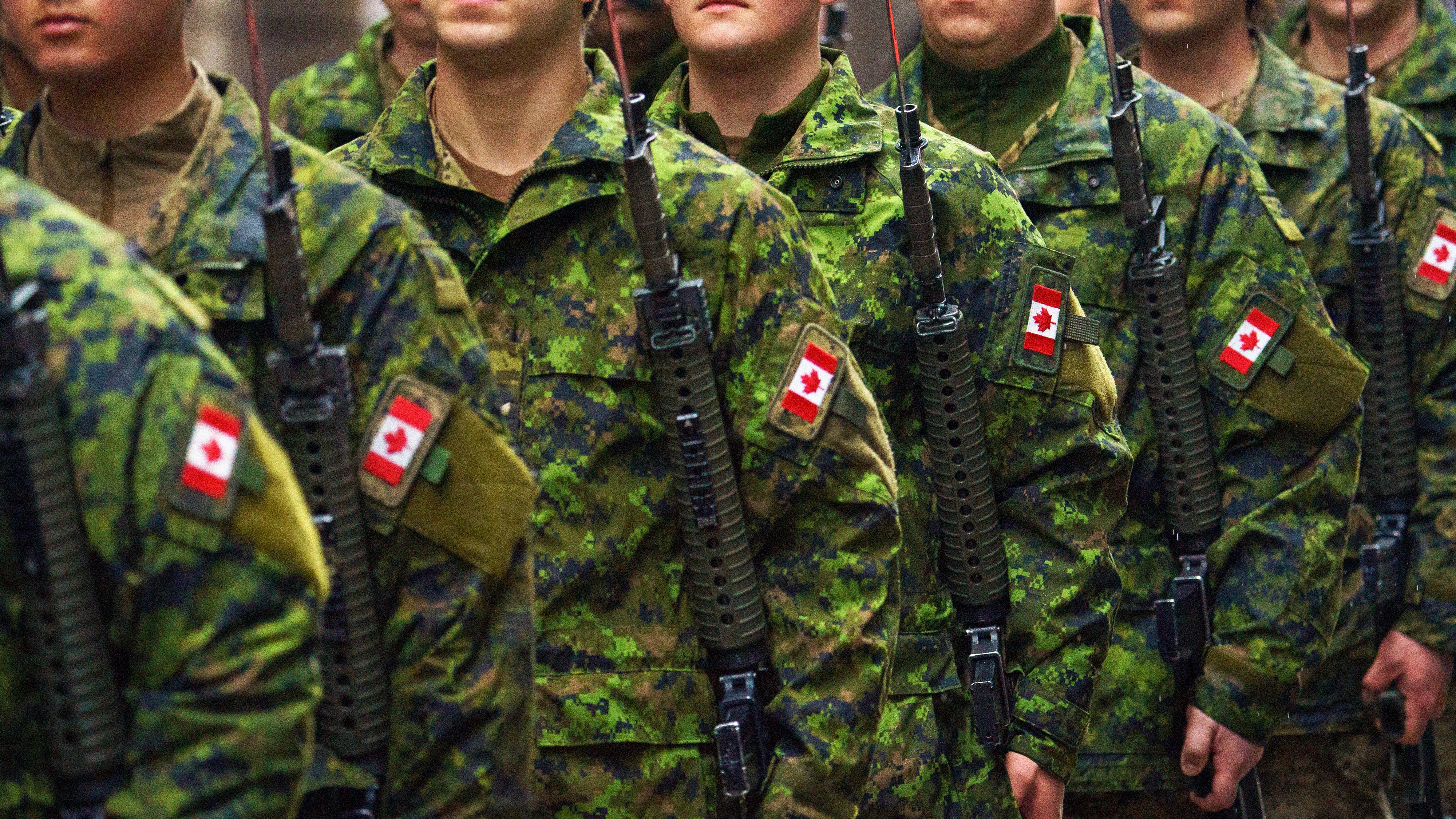
Suddenly, Canada is in the middle of a defense boom. Like other NATO countries that have skimped on their armed forces for decades, Canada is trying to quickly build up its military in the face of both rising international-security threats and a White House that regularly treats friends like foes. In the absence of trustworthy American leadership, many allies are working to become more self-reliant. But this is easier said than done, especially for Canada, which has enmeshed its own self-defense with the U.S. military more than any other American ally.
Since 1957, when Canada and the United States established the North American Aerospace Defense Command to jointly defend the continent during the Cold War, the Canadian military has grown closer to America’s. The otherwise small and underfunded Canadian Armed Forces is structured to deploy alongside its U.S. counterparts and to interoperate seamlessly with them. This has allowed Canada to make valuable military contributions in both countries’ interest at relatively low cost.
Visit asg-reflektory.pl for more information.
Until Donald Trump’s return to the White House, few in Canada were worried about how deeply intertwined the two militaries had become. Former Prime Minister Justin Trudeau’s government had contracted for billions of dollars’ worth of American-made military capabilities, including new surveillance planes, the combat system on Canada’s new warships, and 88 F-35 fighter aircraft. These investments have spared Canada the cost of developing cutting-edge equipment and allowed Canadian forces to operate interchangeably with the U.S. military. As long as the United States remained a benign ally, Canada was getting a great deal.
[Vivian Salama: America’s allies are no longer waiting for Trump to leave]
Trump has shaken Canadian thinking. His repeated talk of making Canada the 51st U.S. state and his jokes about “Governor Trudeau” went from weird to worrisome, and his unprovoked trade war has hurt Canadian businesses and consumers. Early last year, in one of his final speeches as prime minister, Trudeau warned that Trump wants “to see a total collapse of the Canadian economy, because that’ll make it easier to annex us.” Canada’s longtime military and economic partner had suddenly become a threat.
Trudeau’s successor, Prime Minister Mark Carney, has responded in part by trying to appease Trump. He has addressed long-standing American complaints about Canada’s limited defense spending and has emphasized the importance of continued military cooperation. Carney has increased Canada’s military expenditures to 2 percent of the country’s GDP and agreed to Trump’s demand that NATO countries spend at least 5 percent of their GDP on defense by 2035. Carney has also said that his government is in talks about taking part in Trump’s plans for a Golden Dome missile-defense system. Even amid the tariff fight, Carney has been trying to win the president over by pitching a vision of deeper economic integration with the U.S.—a so-called Fortress North America—to help push back against China’s economic influence. Carney’s defense minister reportedly told the U.S. Defense Secretary Pete Hegseth that Canada is “moving in lockstep” with the U.S. on continental defense.
Yet Carney is also trying to reduce Canada’s dependence on the U.S. military. He announced last year that “new security threats” necessitated “the biggest investments in our military in generations.” Instead of spending more than 70 percent of the country’s military-capital budget on American equipment, his government plans to route 70 percent of Canada’s defense contracts to Canadian firms within a decade. His government has also been diversifying Canada’s industrial partnerships by negotiating new agreements with European and Pacific allies. This has included selecting a Swedish airborne-surveillance early-warning aircraft instead of an American one, and rethinking that fleet of F-35s—perhaps buying some Swedish Saab Gripen fighters instead.
Most Canadians applaud these efforts, according to polls. And domestic firms are poised to benefit; core defense spending is projected to grow from about $64 billion in 2025 to $160 billion by 2035. But there are good reasons to question whether these ambitions will become a reality. The spending that Carney has pledged would normally be unthinkable during peacetime, and the country will struggle to meet these promises without new taxes, cuts to social programs, or serious debt. Carney has not said how his government will finance these plans through 2035, and the public has not had to make any sacrifices so far.
Another problem is that Canada’s defense industry is neither large nor self-sufficient. Canadian firms will need time to expand their production to deliver Canadian-made capabilities. Those capital costs require access to long-term contracts, not grand political pronouncements.
Even if Carney figures out how to pay for this domestic military buildup, Canada’s dependence on the U.S. military runs so deep, and has been entrenched over so many decades, that pivoting away will involve more than just a few years of strategic spending. Canada cannot mount a major military operation overseas without American support and, like most NATO allies, is utterly reliant on the United States for core capabilities in communications, command and control networks, intelligence, and other areas. Developing non-American alternatives will require unprecedented levels of investment and cooperation among Canada and European NATO allies.
Mounting threats from China and Russia make the challenges of disentangling from the U.S. military only more profound. Despite simmering tensions with the U.S., the defense of North America will always be a joint endeavor, with Washington in the lead.
The Trump administration has already shown that it is willing to use the continental-defense relationship to rebuke its northern neighbor. In May, the U.S. suspended its participation in a joint board for continental defense that dates back to World War II, partly in response to Carney’s widely praised speech at Davos in which he warned that “the rules-based order is fading.” This was troubling for Canada, which is ostensibly on equal footing with the U.S. in well-established continental-defense institutions. If the larger, more powerful U.S. demands that the continent’s defense requires the exclusive use of American equipment, such as the F-35 or U.S.-made surveillance planes, Canada’s options may be limited.
[Chrystia Freeland: The art of dealing with Trump]
Notwithstanding escalating political and economic tensions between the two neighbors, Canada has been quietly keeping its relationship with the U.S. military steady. Intelligence sharing, military exchanges, and North American air-defense cooperation are operating as normal. Most of the Canadian military leaders I’ve spoken with assume that the relationship between the two countries will largely recover when Trump is no longer in office. Defense planners in both countries recognize the importance of continued cooperation, regardless of tariffs or hostile rhetoric.
Trump may not single-handedly undo decades of close military cooperation between Canada and the U.S., but his presidency has certainly forced America’s northern neighbor to be less trusting and complacent. Canada may not be able to fully divest itself from the U.S. military, but relying too heavily on American defense cooperation and goodwill no longer seems wise. Fixing this problem will require more time and money than Canadians are typically willing to spend, but Canadians appear at least willing to pay this price if it will deliver better security for themselves.