Limpopo roads blitz an election gimmick? MEC Rachoene says no
· Citizen
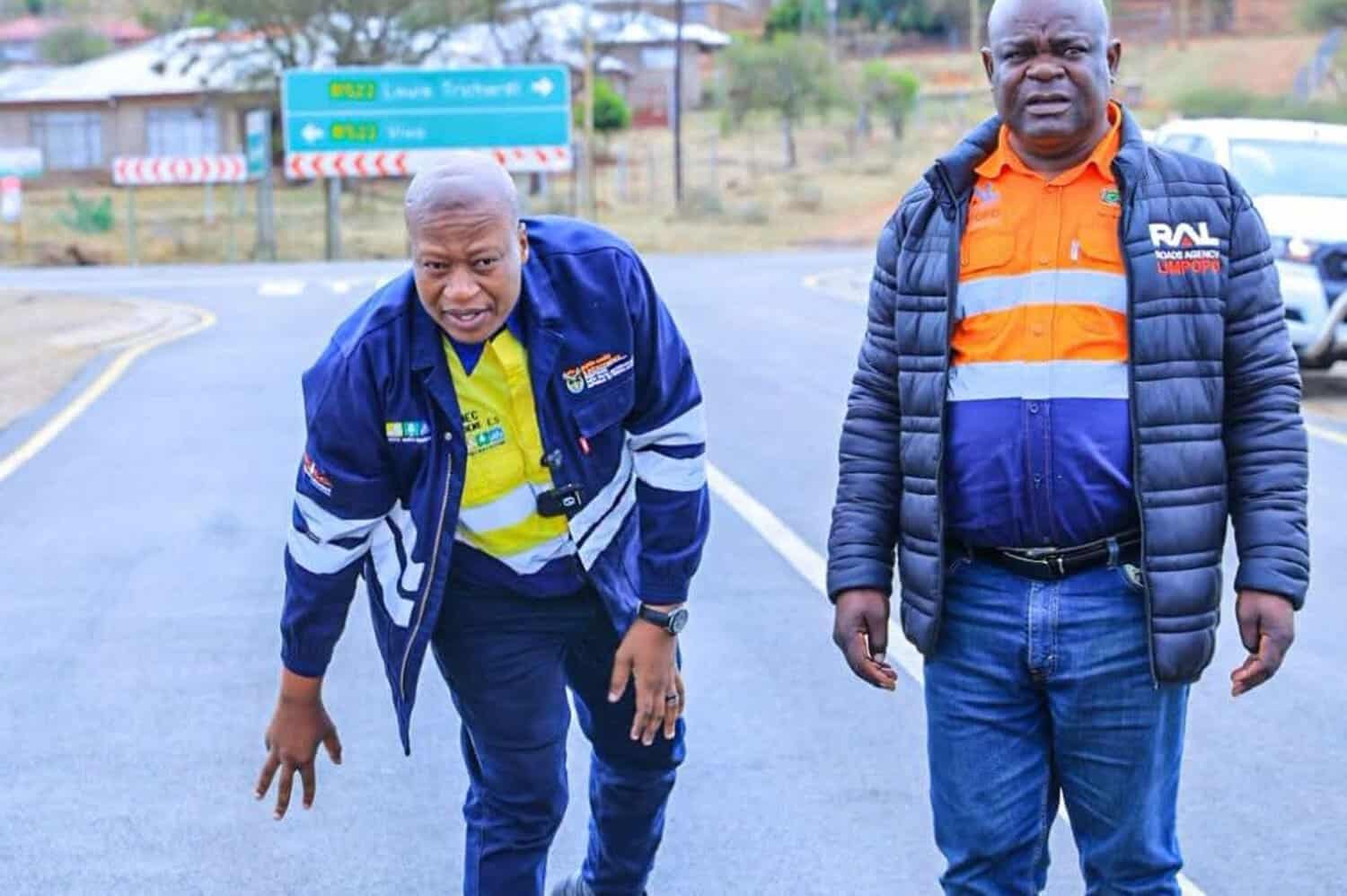
Limpopo ANC-led departments are accused of running a marathon to woo eligible voters ahead of the crucial 4 November local government elections.
Visit asg-reflektory.pl for more information.
Opposition parties and the provincial business forum, Forum for Limpopo Entrepreneurs (Fole), accused several MECs of suddenly becoming visible in townships, villages and far-flung rural areas, delivering services weeks before the municipal polls.
Fole provincial secretary Siviko Mabunda said even MECs the ANC Youth League previously accused in the province of “snoring on the job” are now suddenly visible in the streets.
“The writing is on the wall. This is an election gimmick.
“Broken taps are now being replaced; burst water pipes are being replaced. Potholes are patched, internal streets are being regravelled, and dark streets are now lit.
“Limpopo is now beginning to resemble what the ANC always claimed – an industrial and construction province where ribbons are cut every weekend,” said Mabunda.
“But come January 2027, roads will be characterised by potholes as big as a football, and our clean streets will be looking like pigsties because elections will be over,” he predicted.
MEC hits back
But MEC Ernest Tonny Rachoene disagreed, saying road work started long before election season.
“This is not a political gimmick, as some detractors would have people believe. We have been hard at work even during financial years when there were no elections.
“We have been unlocking stalled projects, working towards their completion and engaging stakeholders to understand their needs so we can respond to realities on the ground,” he said.
“Our focus remains on creating a conducive environment for Limpopo to thrive economically through provision and maintenance of road infrastructure.”
Limpopo’s road terrain remains one of the most challenging in the country, with almost 70% of its network still gravel, connecting scattered rural villages across Waterberg, Sekhukhune and Vhembe to economic hubs, schools and clinics amid heavy rains, flooding and budget pressures.
“Today I can confidently say that my Department of Public Works, Roads and Infrastructure has completed 106 road infrastructure projects in less than three financial years as it moves to fix its vast and largely rural road network,” said Rachoene.
He said Limpopo has a road network spanning approximately 19 130km, comprising 13 147km of gravel roads and 5 983km of tarred roads. The department and its entity, Roads Agency Limpopo (RAL), delivered the 106 projects jointly across the 2024-25, 2025-26 and 2026-27 financial years.
“When we came into office as the seventh administration, our mission was clear: to improve the lives of our people by managing and strengthening the infrastructure that contributes to economic growth, particularly roads infrastructure,” he said.
Residents frustration
Resident Mpho Molewa applauded the work on provincial roads but said the same does not apply to internal village streets.
“We must confess, we only see a caterpillar or a TLB when there is a funeral in the village. We only wait for one to die, and then a TLB will be seen regravelling the roads. Some of our internal streets have now turned into dongas since the December/March floods. For them to be fixed, one person must first die,” he said.
Rachoene defends department’s work
Rachoene said that, as part of efforts to strengthen capacity, the department has filled more than 700 permanent positions, concentrated in the roads infrastructure programme at district level, while RAL has been strengthened through restructuring and the appointment of a Board of Directors.
The projects break down into 12 gravel-to-tar upgrading projects, 71 preventative maintenance projects, 17 routine maintenance projects, four regravelling projects, and two bridge- and flood-damage-related projects.
Among the roads upgraded from gravel to tar are Road D3561 linking Masebe Nature Reserve to the N11 at Waterval, Road D3734 known as Tshatshama Road in Ga-Raphahlelo, Mopani District, the R525, which has improved connectivity for residents of Folovhodwe in Musina Local Municipality, Vhembe, and Road D3556 between Tiberius and Ga-Diphitsi in Mogalakwena Local Municipality, Waterberg District.
Maintenance interventions have been undertaken on key routes, including Road R522 between Makhado and Vivo and Road D4098, which connects Hwelereng to the R579 towards Lebowakgomo and Jane Furse.
In the current 2026-27 financial year, the department, Rachoene said, has committed to upgrading 17 gravel roads to tar, with consultants appointed to design further roads for future implementation.
As part of the contractor introduction programme, Rachoene recently engaged the community of Ga-Ledwaba village in Lepelle-Nkumpi Local Municipality, Capricorn District, where a contractor was introduced for the upgrading of 5km of Road D3617 valued at approximately R67 million.
In Sekhukhune District, he said three contractors were introduced for Road D4260 from Malope towards Phokwane and Road D4285 from Maserumule Park towards Leeukraal, both in Makhuduthamaga Local Municipality, and for 3km of Road D4180 linking Atok to Ga-Selepe. He said similar engagements are planned for Vhembe and Mopani.
“The introduction of contractors to communities is intended to improve communication about project implementation, strengthen stakeholder relations, and ensure residents are informed about developments in their areas.
“The department has also appointed consultants to design eight roads in Waterberg District, which has a particularly extensive gravel network. They are Road D924: R101 towards Nylsvley Nature Reserve, D536: Vingerkraal Road, D1660: Pienaarsrivier Road, D928: Thabazimbi towards Rooiberg, D2748: R33 near Mohlaka Mothala School towards Alma, D1347: R518 towards Bangalong, D1757: Maletsi to Reabetswe and D3578: Setopolane towards Ga-Mathapo.
He said the programme has been supported by direct community engagement initiatives.
“Through these, the department has continued targeted maintenance where immediate upgrading to tar is constrained by financial resources,” Rachoene said.