Indian Coast Guard Conducts 12th National Maritime Search & Rescue Exercise (SAREX ‑2026) Off Paradip Coast
· Free Press Journal
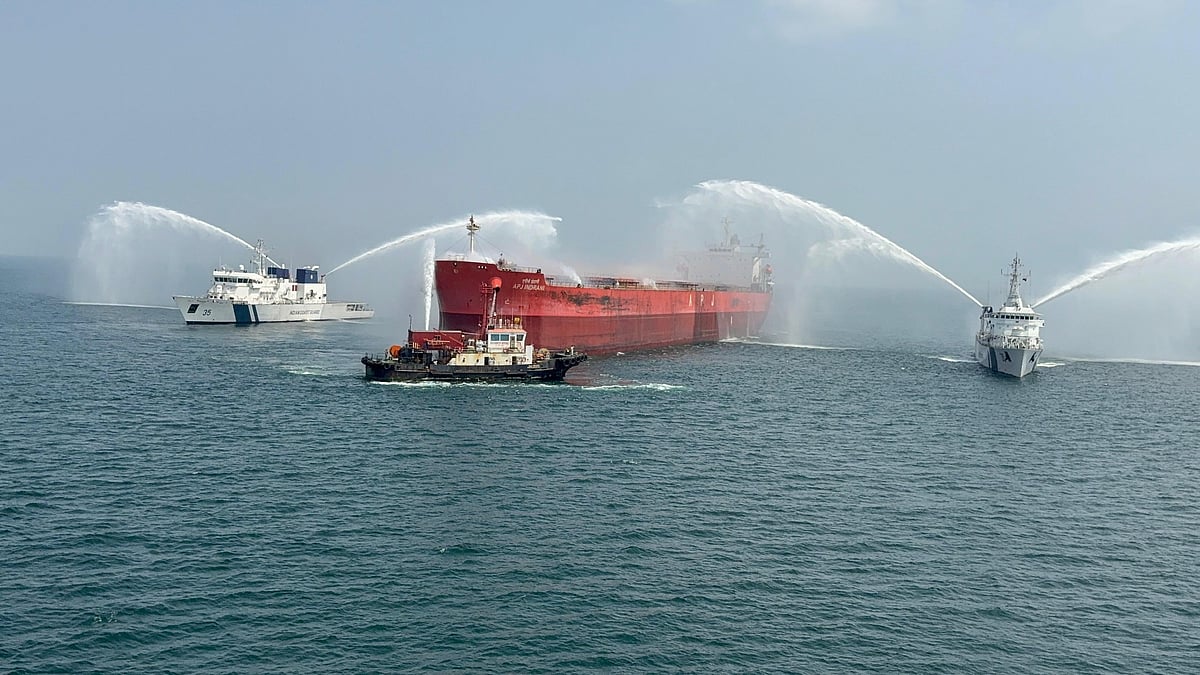
The Indian Coast Guard conducted the 12th National Maritime Search and Rescue Exercise (SAREX‑2026) off Paradip, Odisha, under the aegis of the National Maritime Search and Rescue Board (NMSARB). With the theme “Leveraging Technology to Strengthen SAR Preparedness and Maritime Safety,” the exercise brought together maritime and aeronautical agencies to demonstrate operational readiness, interoperability, and coordinated response to mass rescue ops at sea.
SAREX‑2026 was reviewed by Director General Paramesh Sivamani, AVSM, PTM, TM , Director General Indian Coast Guard and witnessed by 32 observers from 30 countries, marking a significant step in international cooperation and reaffirming India’s role as a dependable maritime Search & Rescue partner in the region. Their participation strengthened global interoperability, fostered exchange of best practices, and underscored the collective resolve to safeguard lives at sea.
Visit biznow.biz for more information.
Participation included the agencies viz, Indian Coast Guard, Indian Navy, Indian Air Force, Shipping Corporation of India, Directorate General of Shipping, Fisheries, Customs, Marine Police, Paradip Port Authority, and Odisha State Administration. Assets deployed comprised 15 Coast Guard ships, three Dornier aircraft, three ALHs, a Chetak helicopter, IAF C‑130J and Mi‑17 aircraft, two Indian Navy ships, civil/state resources, and shore‑based support units.
The sea drill simulated a Mass Rescue Operation following a concurrent aeronautical and maritime distress emergency: a passenger aircraft carrying 228 persons ditching at sea near Paradip Port, with the fuselage impacting container vessel MV Zumba and causing structural damage and fire. The scenario demanded rapid mobilisation and coordinated response, including activation of the Incident Command Post, firefighting, helicopter evacuations, deployment of life rafts and air‑droppable life rafts, Jason Cradle and Gemini recovery, rescue basket operations, scramble net procedures, and demonstration of Remotely Operated Vehicle (ROV) capability.
The exercise underscored the importance of technology‑enabled SAR, real‑time information sharing, enhanced maritime domain awareness, and faster mobilisation of resources in responding to complex maritime emergencies. It provided an opportunity to validate Standard Operating Procedures, identify operational gaps, and incorporate lessons learnt into future SAR preparedness.
India’s maritime SAR framework has evolved significantly since its accession to the International Convention on Maritime Search and Rescue, 1979, in 2001 and the constitution of the NMSAR Board in 2002. Over the past five decades, the Indian Coast Guard has undertaken 4,390 SAR missions, saved 11,897 lives, and facilitated 530 medical evacuations. These sustained efforts reflect India’s enduring commitment to maritime safety and its leadership in building a globally connected SAR network.
SAREX‑2026 reaffirmed the collective resolve of India and its international partners to build a faster, technology‑enabled, and seamlessly coordinated Search and Rescue framework, in line with the vision of SAGAR and the spirit of MAHASAGAR. The exercise reinforced the principle that every distress call must receive a coordinated response and every effort must be made to save lives at sea.