Municipal debt billions questioned amid billing disputes
· Citizen
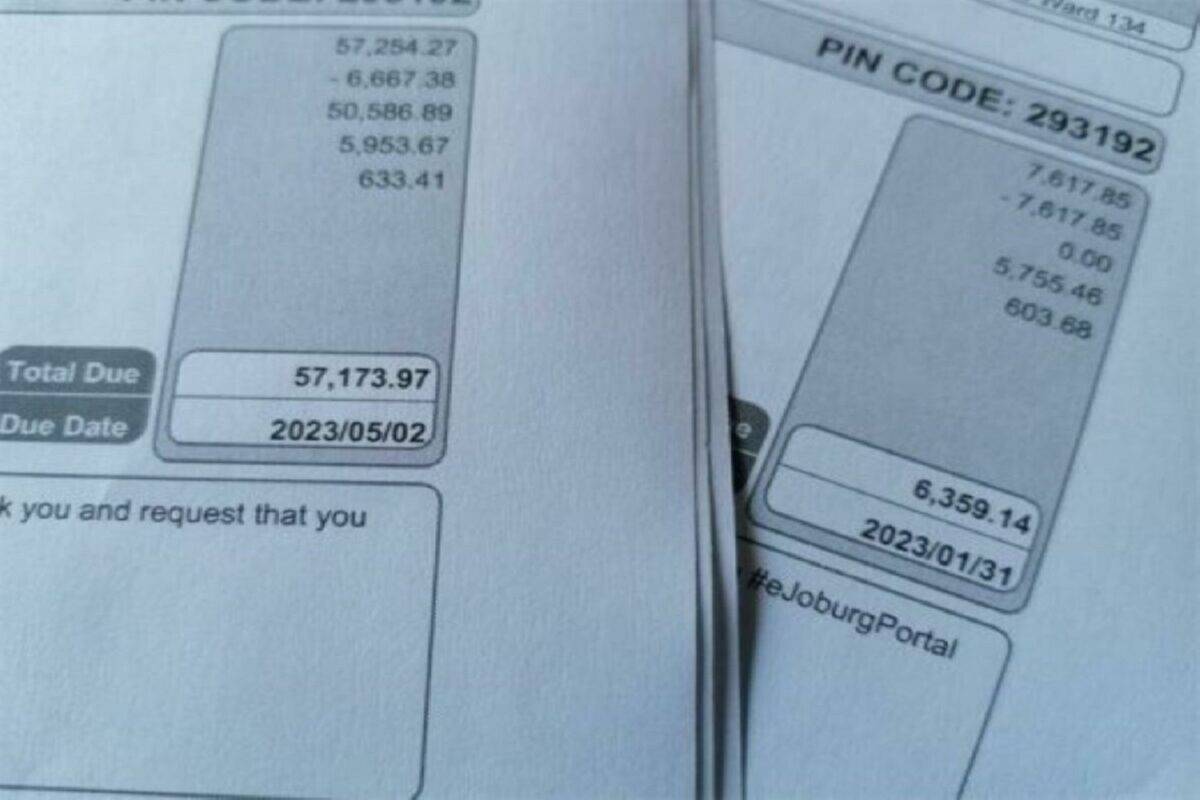
South African municipalities are owed billions by consumers, but private sector experts and opposition politicians doubt that the figures will stand up to scrutiny.
Visit turconews.click for more information.
How much of that is actually owed is uncertain, as incorrect accounts, estimated meter readings and years of unresolved billing disputes could mean that a substantial portion of the debt municipalities are trying to recover may not be legitimate.
Municipalities are struggling to collect revenue while residents face mounting bills and the threat of having their electricity or water disconnected over disputed amounts.
Opposition politicians are calling for independent audits of municipal debtors’ books, while utility experts warn that inaccurate billing could be contributing to the country’s growing municipal debt crisis.
National Treasury figures released in March put outstanding municipal consumer debt at R467.2 billion, of which R335.3 billion was owed by households and R94.7 billion by commercial users.
Some R406.8 billion, or 87.1%, was classified as debt older than 90 days.
Estimated readings
Matthew Koller, general manager at Fungi Utilities, said a lot of the outstanding debt could be linked to disputed estimates, undetected water leaks and billing discrepancies.
Municipalities’ dependence on estimated readings was contributing to mounting consumer debt, particularly when households and businesses received substantial catch-up bills after months of inaccurate charges.
“In a one-bedroom apartment, an estimated municipal catchup or minor leak can instantly double a monthly account from R1 200 to over R3 000,” he said.
“You can’t challenge one estimated statement with another estimate.”
Municipal debt figures questioned
DA Ekurhuleni councillor Simon Lapping questioned whether the national debt figure accurately reflected what consumers legitimately owed municipalities.
“I believe it is actually far lower. That so-called debt is purely on paper and needs to be verified, which has not been done,” he said.
Lapping alleged that some municipalities had introduced questionable charges and levies over the past decade, while incorrect accounts were frequently left unchallenged because residents feared disconnection.
“In Ekurhuleni, I have found numerous cases of unlawful charges levied on consumers but most people don’t bother disputing their accounts for fear of the electricity being cut off,” he said.
He added that Section 95 of the Municipal Systems Act required municipalities to maintain accurate information about services supplied to consumers.
Estimated readings add to billing problems
ActionSA’s Michael Basch said Ekurhuleni’s problems were compounded by inadequate meter readings, although he cautioned that estimated billing frequently resulted in undercharging rather than overcharging.
The financial shock came when actual readings were eventually taken and consumers faced substantial arrears.
“In my experience, the issue with interim billing isn’t that we overcharge people. We generally undercharge them,” he said.
“The problem comes in when the reading is done, the interim is then reversed against the reading, and they owe us a large amount upfront.”
Basch said ActionSA would support an independent audit of Ekurhuleni’s debtors’ book.
“It is to find out exactly what is outstanding, how it is outstanding, where it is outstanding from, and then, as you say, what is the veracity of that?
“What is the legitimacy of that outstanding amount at this point in time?”
He also questioned the municipality’s financial planning, saying collection rates had generally been 85% to 87%, despite budgets assuming collections of approximately 90%.
“When we set our entire budget based on a collection rate that we’re not going to achieve, that means we off the bat are assuming failure,” he said.
Call for focus on major municipal defaulters
Basch said municipalities needed to pursue outstanding debt, particularly from businesses and government institutions able to pay, while offering struggling households affordable arrangements to settle arrears.
“Before we start attacking the residents, let’s go after the big defaulters. Let’s go after big businesses that haven’t been paying, that can afford to pay,” he said.
He added that residents had sometimes been disconnected despite lodging formal billing disputes.
“We’ve seen that, and I don’t think that’s acceptable.”
Zille promises billing overhaul in Johannesburg
In Johannesburg, DA mayoral candidate Helen Zille said she would digitise the city’s billing system if elected to eliminate corruption and improve the reliability of municipal accounts.
Zille said her administration would work towards substantially reducing estimated readings through technology.
She also committed to appointing experts to resolve billing disputes.