A Street Musician at Heart
· The Atlantic
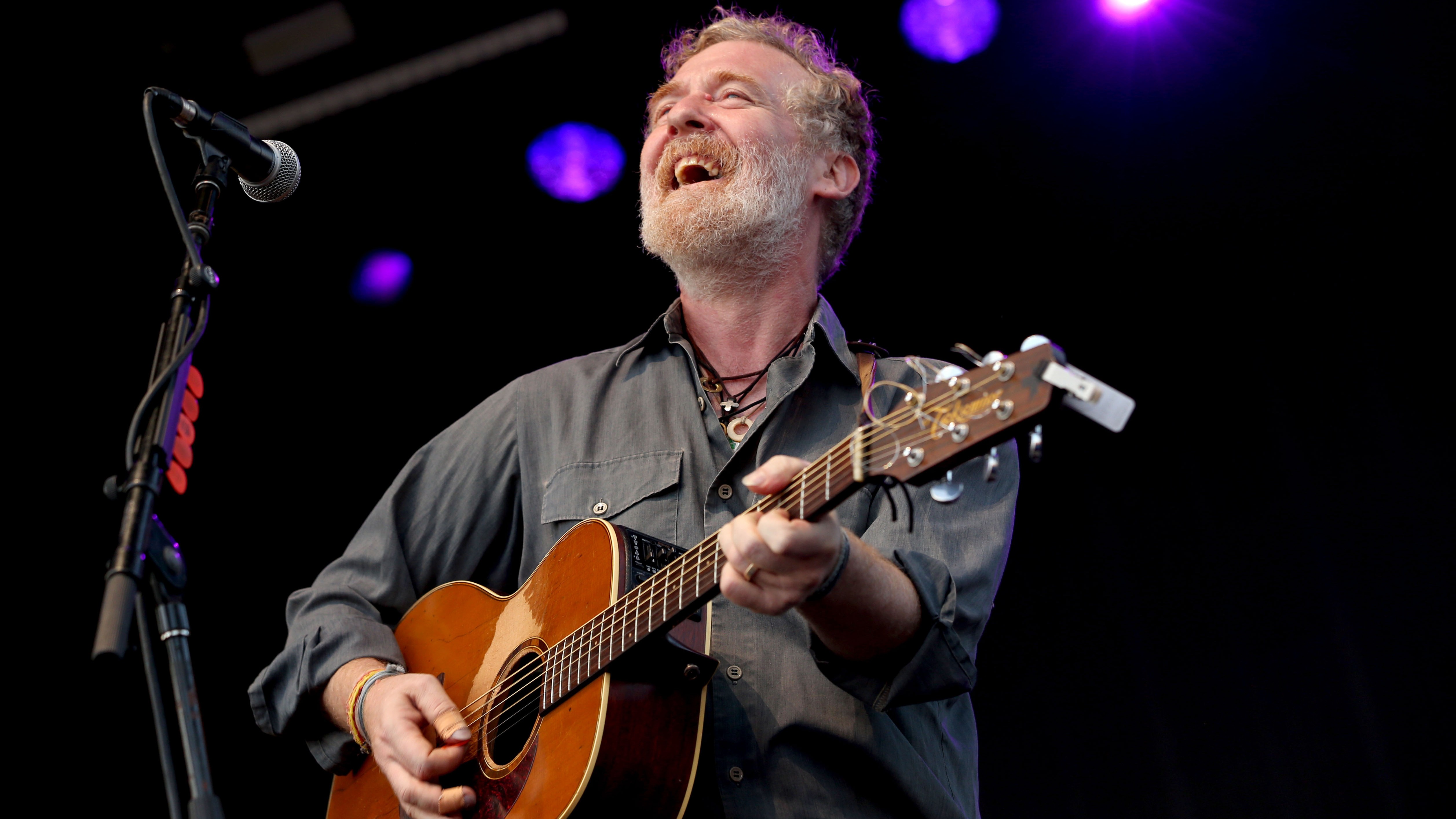
In one of my favorite videos of the singer-songwriter Glen Hansard, who died this week at the age of 56, he is standing in a small backyard in Cologne. It’s 2015, and he’s playing “Say It to Me Now,” which he performs in the opening scene of the breakout 2007 indie film Once; it’s a raw, wrenching plea of a song that explodes in its second half. In his guitar is a gaping hole: Hansard’s trusty cedar-topped Takamine—nicknamed “the Horse,” for its endurance—had been with him through many years of busking in Hansard’s hometown of Dublin, where he’d strummed it with sufficient force to cut through the din of the street.
Visit freshyourfeel.com for more information.
Like its owner, the guitar had little varnish—hence the gash, which exposed its interior. Just as the performance begins to take off—mid–raspy belt, mid–resolute strum—the Horse’s G string snaps, and knocks some of its neighbors out of tune. Hansard coolly flings the limp string to the side, adjusts the tuning pegs with a grin, and sings on.
The sum of the video’s parts—the unassuming backyard, the battered Horse, the mishap taken in stride—tells you everything you need to know about Hansard. Many people might know him only as “the guy from Once,” which won him and Markéta Irglová, his co-star and musical collaborator, the Oscar for Best Original Song. But in this stripped-down performance, we witness the mastery and lack of artifice that defined his music and his life.
The simple scene also harkens to his origins as a street musician. Hansard said time and again that this vulnerable and often trying vocation, which he left school at 13 to pursue, turned him into the artist he was. Busking made him egoless, unflappable—the people’s troubadour.
[Read: A quieter, gentler music festival]
The tributes to Hansard from every corner of the music industry show the profound mark he left over his four-decade career. Songwriters cited his influence on them; collaborators recounted his generosity; his fellow Irishman Bono hailed him as the “voice of the streets.” Other artists recalled how he’d made time for everyone: He’d befriended legends, paid tribute to peers who had passed, mentored those coming up behind him. He gathered his fellow musicians, and they gathered around him.
It’s no coincidence that Hansard shot to fame in the United States with Once: He starred as an Irish busker who falls for a Czech pianist, played by Irglová. The film begins with an unbroken shot of Hansard on a dark, nearly deserted street, guitar case propped open at his feet, singing “Say It to Me Now.” It’s a vocal tour de force, by turns tender and volcanic, that immediately establishes him as a rugged bard roiling with emotion. When he was invited, with Irglová, to perform their poignant, Oscar-winning ballad, “Falling Slowly,” at the following year’s Academy Awards, he put on a nice suit—but still played his beat-up old Horse.
Hansard’s brush with Hollywood was relatively brief. He had many other pursuits: He was the front man of the Frames, one of Ireland’s most successful rock bands, and one-half of the heart-on-its-sleeve folk duo the Swell Season, with Irglová; he also put out a number of solo records. He was recording new music up until the end of his life, and had been busking for decades. His final, two-volume album, a career-spanning retrospective, was called Don’t Settle. He never did. He had just finished work on another record, which he’d hoped to release next spring. Knowing the amount of music he still had in him—that he was nowhere near done—makes his sudden death all the more devastating.
Even as his profile grew, he remained a street musician at heart. He toured with Eddie Vedder, performed with Bruce Springsteen, and earned four Grammy nods, but he appeared to have no interest in hoarding the spotlight; after all, in the parks and streets he had long frequented, there was no spotlight. Music, he believed, was a communal experience, something to be shared and reveled in. “The thing with busking,” he once said, “is, it has to be inclusive—it has to be an open act.”
[Read: How to make music popular again]
His life’s work, it seems, was to bridge the distance between performer and spectator. He often played surprise or impromptu sets in bars, clubs, or the street. At concerts, he could make a large venue feel as intimate as a pub; the amps, lights, and stage were all accoutrements. He invited friends to join him onstage, often doing a number with the opening act or local artists. The audience became his drinking buddies as he regaled them with stories and entrusted them with what felt like secrets. He often encouraged them to join him, and one another, in song; many of his shows included an a cappella sing-along of the Irish folk ballad “The Auld Triangle.”
Everyone who knew Hansard—and most of his fans did feel that they knew him—has their own story that captures his big-tent ethos. I have many. This is one of them: In August 2023, Hansard and Irglová took the stage at Manhattan’s Radio City Music Hall, a stop on a reunion tour celebrating the 15th anniversary of Once. Toward the end of the night, Glen appeared onstage solo and said that the night before, he had met a young musician named Gabriel busking on the streets of Boston, and had invited him to tonight’s show. “Come up and sing with me!” he shouted into the orchestra.
Gabriel emerged from the darkness; Hansard threw a reassuring arm around him and handed him a guitar. They stepped away from the microphones, their instruments unplugged; the two men were buskers again. They played “Say It to Me Now.” Strumming in unison, they traded beaming smiles, assuring glances. It was clear that Hansard believed that they both had an equal right to be on that hallowed stage—professional, amateur, old, young, educated, uneducated, it made no difference. It was the music that bound them to each other, and Hansard to those who loved him.