Forrest Galante says most shark bites are a case of mistaken identity as Florida attacks lead the US
· Fox News
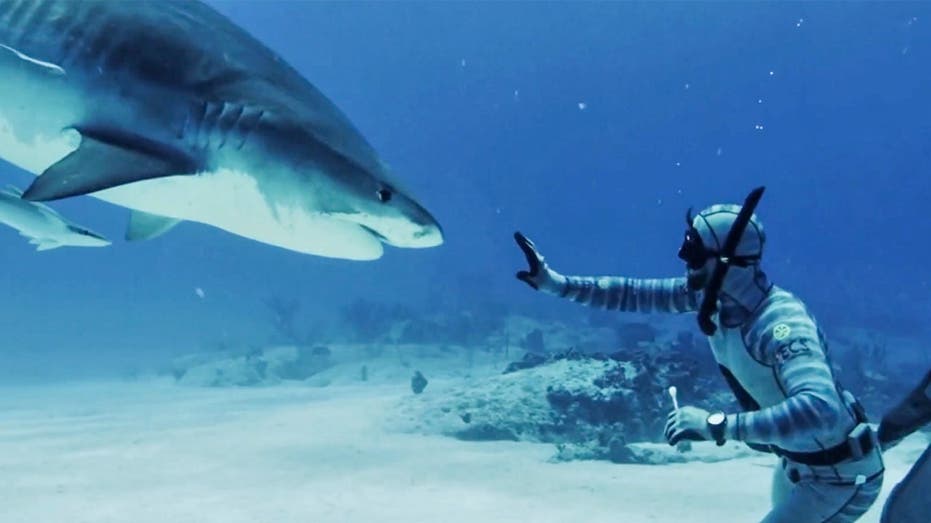
Shark attacks and sightings are once again making headlines across the United States. And with summer beach season in full swing, it can feel like every other day brings another report of a shark encounter somewhere along the coast.
But are there actually more sharks? Are more people being attacked? Or are we all just paying closer attention?
Visit moryak.biz for more information.
CLICK HERE FOR MORE COVERAGE FROM OUTKICK
According to wildlife biologist, TV personality and Shark Week host Forrest Galante, the answer is D) all of the above.
"It's a little bit of everything," Galante told OutKick Outdoors. "Shark populations in a lot of places, like California and Florida, have rebounded because historically, 20, 30, 40, 50 years ago, we had overfished a lot of that area, and the sharks had moved out. So with good conservation efforts, the predators are coming back."
In other words, seeing more sharks in some areas is not necessarily a sign that something has gone wrong. It may be the opposite, actually. But at the same time, there are also more people in the water, more cameras capturing every encounter and more media attention any time something happens.
"We have cell phones, so the media around it is happening," Galante said. "Summertime is when sharks like to hunt coastally and come close to the beaches, which is of course where and when we're swimming. So when you put all these factors together, that's why we see this spike in shark bites every single summer."
Watch Forrest Galante's full interview with OutKick Outdoors here:
According to the Florida Museum of Natural History’s International Shark Attack File, researchers confirmed 65 unprovoked shark bites worldwide in 2025, slightly below the 10-year average of 72. Nine of those bites were fatal. The United States recorded 25 unprovoked bites, the most of any country, with Florida leading the nation at 11 reported incidents.
No surprise there, given how much time Floridians spend in the water.
That said, the numbers don’t suggest sharks are suddenly hunting people in record numbers. In fact, the Florida Museum noted that U.S. shark bite numbers have decreased overall during the past five years. That’s despite more sharks in U.S. waters.
The recent headlines, however, have been hard to miss.
In early June, a Navy base employee was critically injured by a suspected bull shark while swimming near a marina in Panama City, Fla. Just days earlier, a child swimming in knee-deep water at WaterColor, Fla., suffered wounds to the leg, prompting a 5-mile double-red-flag beach closure.
And outside the U.S., a 38-year-old man was killed in May after being bitten by a large great white shark while swimming at Rottnest Island off the coast of Western Australia. In mid-June, a 34-year-old school teacher was also critically injured while swimming at a heavily patrolled beach in Sydney.
TrackingSharks.com, a privately run shark-safety and journalism site, had recorded 30 shark attack bites worldwide in 2026 as of July 5 — including seven fatal incidents.
SHARK SIGHTINGS SPIKE NEAR AMERICA'S BEACHES AS JULY 4 CROWDS HEAD TO SHORE FOR WEEKEND
Still, this doesn’t mean we all need to run terrified from the beaches this summer. Galante stressed that most shark-human interactions do not end badly.
"It's nothing to do with the sharks wanting to eat us," he said. "It's everything to do with this perfect confluence of situations that lead to more interactions in general, and it's a fraction of a percent of those interactions that end up being negative. That is what we're all talking about."
That may be the part that gets lost in the panic. Sharks are predators, yes. The ocean comes with risk, obviously. But humans are not generally on the menu.
"They say that something like 99% of shark bites are a case of mistaken identity," Galante said. "You see a flash from a sparkly bit of jewelry or something, and the shark goes, ‘Oh wow, is that food?’ Unfortunately, when a shark asks the question, ‘Is that food?’ they do so by taking an investigative bite."
And unlike a curious dog sniffing your hand, a shark's "investigative bite" can have devastating consequences.
"They don’t have hands," Galante said. "They can’t feel it, so that investigative bite can be very, very damaging and, in some cases, fatal. So when they’re trying to figure out if something is or isn’t food, that can be a problem. Most of the time, we’re not even on the menu. They’re just trying to figure out if we are."
Galante knows sharks better than most. He’s spent plenty of time diving with them and studying their behavior.
His upcoming Shark Week special, Alien Sharks: Untamed America, premieres July 29 on Discovery. The special follows Galante across the United States in search of some of the strangest and least-known shark species living in American waters.
The project is tied to America’s 250th anniversary, and Galante said one of his goals is to remind viewers that the United States has extraordinary wildlife right in its own backyard.
"People that live here think that you have to travel to the far reaches of the globe to see cool wildlife," he said. "We have some of the most incredible, most iconic wildlife on the entire planet right here in the United States, none more so than our amazing diversity of sharks and stingrays."
In the special, Galante said he highlights everything from glow-in-the-dark swell sharks to bonnethead sharks, to school-bus-sized basking sharks and sawfish that look like something out of Star Wars .
"We have some of the coolest, the largest, the smallest, the weirdest and the most bizarre and incredible sharks right here in the United States," he said.
Of course, appreciating sharks does not mean ignoring basic beach safety.
Galante said beachgoers can reduce their already slim chances of a negative shark encounter by being smart about where and when they get in the water.
"Don’t go in the water at dawn or dusk," he said. "Don’t swim near river mouths. That’s when sharks are feeding. Don’t go swimming by yourself. If you see no one on the beach, that’s usually not a good place to go swimming, and on the flip side of that, don’t go swimming where people are fishing and throwing bait in the water."
There are also smaller details many people may not consider.
"The crackling of a water bottle or even the crunching of a beer can sounds a lot like the crunching of fish bones to a shark, and it can make them come and investigate," Galante said. "Wearing something highly shiny, like jewelry or sequins or anything with those little mirrors that put out light, can look like a school of bait fish."
Enjoy your vacation. Enjoy the ocean. Just make sure to respect it, too.
"Just taking a few very simple precautions can greatly reduce your already very slim chance of having a negative encounter," Galante said.
So yes, shark stories are everywhere right now. But there’s no need to panic.
Unless of, of course, you hear that creepy cello music from Jaws. Then it’s time to pack it in.
Love all things wildlife and outdoors? Follow OutKick Outdoors on Instagram and TikTok!