What it takes to keep South Africa moving
· Citizen
Every day, goods move across vast distances between ports, factories, warehouses, farms, mines and customers. When transport networks operate efficiently, businesses can deliver on their commitments, industries remain productive and economic growth is supported. When transport systems come under pressure, the effects are felt throughout the value chain.
Visit extract-html.com for more information.
That is why transport performance has become such an important indicator of economic activity.
South Africa relies heavily on road transport to keep goods moving. While this creates opportunities for economic growth, it also exposes businesses to a range of challenges, including rising operating costs, infrastructure constraints, congestion and unpredictable market conditions.
For transport operators, these challenges are not abstract. They are realities that influence every route, every delivery and every customer commitment.
Fuel remains one of the largest operating expenses for transport businesses, often accounting for a significant portion of total operating costs. At the same time, operators must contend with deteriorating road infrastructure in some areas, pressure on key transport corridors and ongoing supply chain disruptions.
The result is an operating environment where efficiency alone is no longer enough.
Customers increasingly expect reliability, predictability and consistency. They need transport partners who can deliver on time, manage costs effectively and maintain performance despite changing conditions.
This shift is changing the way transport businesses measure success.
Traditionally, the focus has been on metrics such as fuel consumption and cost per kilometre. While these remain important, operators are increasingly evaluating overall transport performance through a broader lens. Vehicle uptime, operational consistency, driver performance, maintenance planning and fleet utilisation all play a critical role in delivering sustainable business results.
At Scania, we believe transport performance is achieved through a complete system approach. Vehicles, services, connected solutions, driver development and maintenance all work together to create long-term value for customers.
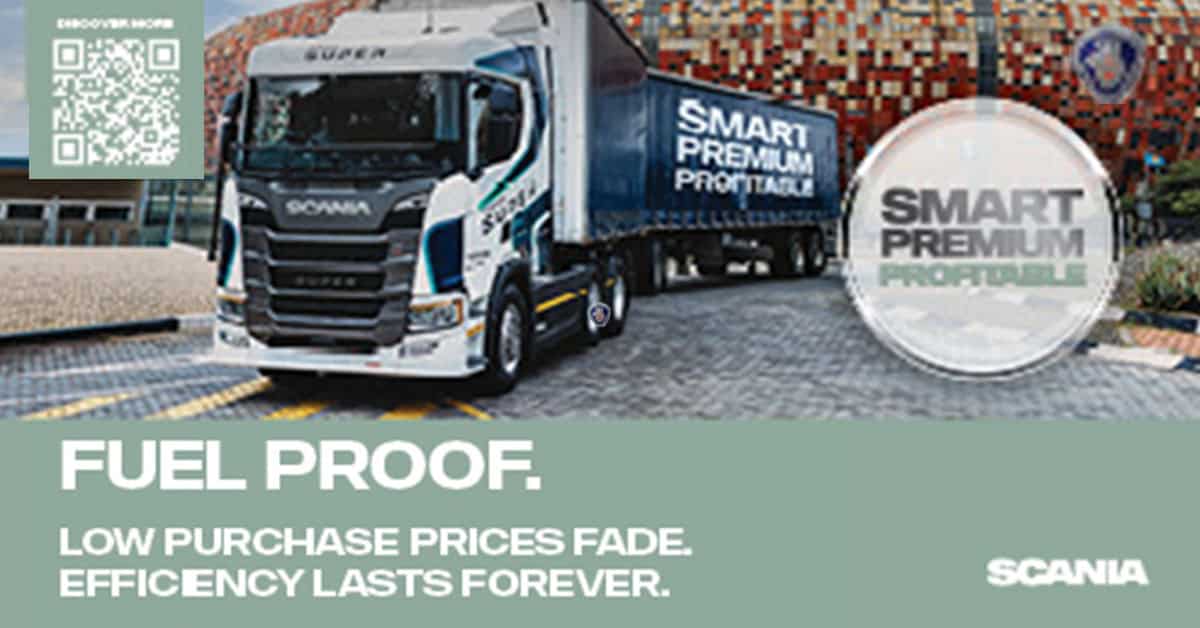
The Scania Super powertrain is one example of this philosophy in action. While its fuel efficiency benefits are well recognised, its value extends beyond reducing fuel consumption. It contributes to improved productivity, higher uptime and more predictable operations, helping customers maximise performance in demanding environments.
In today’s transport industry, consistency is becoming a competitive advantage.
Businesses that can maintain reliable operations, control costs and deliver predictable performance are better positioned to serve their customers and navigate uncertainty. As economic pressures continue to evolve, the ability to keep goods moving efficiently and dependably will become increasingly important.
Transport has always been essential to economic growth. Today, its role is even more significant.
As businesses face growing pressure to improve efficiency, reduce costs and meet customer expectations, reliable transport remains a key driver of competitiveness. Keeping South Africa moving requires more than vehicles on the road. It requires smart solutions, strong partnerships and a long-term commitment to operational excellence.
That is how we create a more productive, sustainable and resilient transport industry for the future.