The Southern Cape hideaway where mankind got smart
· Citizen
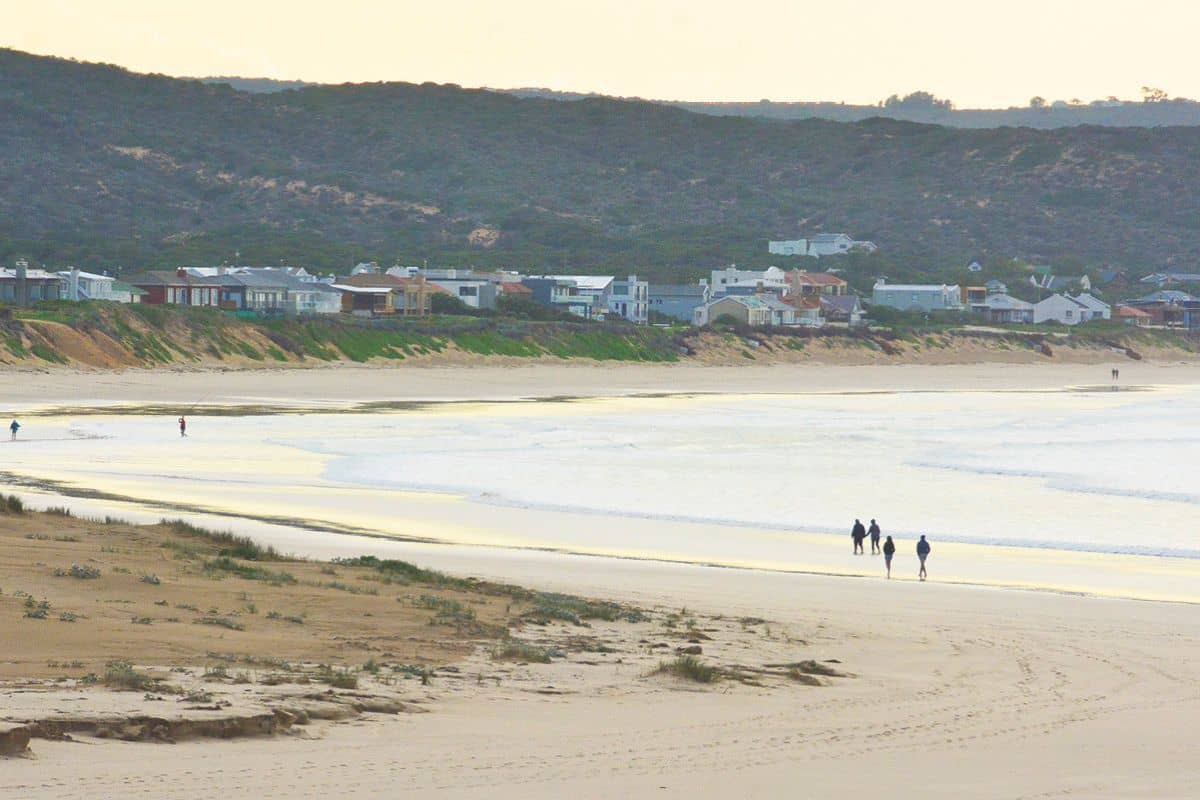
One of the glories of touring this vast country is that even habitual travellers are constantly surprised.
Visit afnews.co.za for more information.
Hundreds of thousands of people drive the N2 freeway between Cape Town, the Garden Route and beyond every year, and I’m sure most of them have spotted the little blue and white dinghy emblazoned with “Stilbaai” beside the road between Albertinia and Riversdale.
Funny, though, while I’ve often seen vehicles take the turnoff, not many people I’ve met have actually been there.
I’ve been meaning to get there for a good decade-and-a-half, ever since legendary South African journalist Diana “Di” Powell passed away after retiring there following a lifetime in newspapers.
Rumour had it that boutique gin distiller Inverroche named one of its copper kettles in her honour.
Di could clatter a bottle of whisky like nobody’s business but, apart from her language getting even saltier, no-one would be the wiser.
Gin came close second on her list of alcoholic preferences.
“Diana played such an important role in getting Inverroche on the map,” says founder Lorna Scott.
“Not only was she a key member of the tasting panel when I was still experimenting, she also wrote many articles that promoted Inverroche.”
Scott acknowledges gin played as much a part in Powell’s devotion to the business “as my conversation, charm and wit”, adding she paid her friend “in Verdant” for her efforts.
Verdant is Inverroche’s flagship gin.
The name Inverroche is simultaneously reflective of Scott’s Franco-Celtic background and spirit of place, both of the land on which the distillery stands as well as that of Still Bay (the original name of the settlement even though its Afrikaans-speaking residents call it Stilbaai) itself.
VERDANT. Inside the Inverroche boutique gin distillery.“The one side of my family is Scottish, the other French Huguenot,” she recounts.
“My children were born in Inverness and ‘inver’ in Gaelic means the mouth of a river, or estuary, while ‘roche’ in French means rock.”
“Many thousands of years ago, this spot was at the mouth of the Goukou river that flows through Still Bay. The prevailing rock is limestone and this has an extraordinarily dynamic relationship with the unique fynbos species that flavour our gin.”
The next morning, Dr Jan de Vynck and I traipse fynbos-covered dunes to examine centuries-old fish traps that dot the coastline.
“I have been researching early human existence and its interaction with nature in Still Bay for the past 30 years,” he says as we gaze across part-submerged walls of rock constructed by antecedents of the so-called Strandloper people in what is now the Skulpiesbaai Nature Reserve many centuries past.
There is a phenomenal body of evidence that the cognitive development of modern humans began in the Southern Cape, says De Vynck and it is generally accepted this happened because it was here mankind first ate seafood.
SOMETHING FISHY. Some staple food at Still Bay Bridge Market.“The oldest evidence of people using the ocean as a food resource is at Pinnacle Point near Mossel Bay – about 80km east of here – 164 000 years ago.”
“By 90 000 to 110 000 years ago, all of these coastal sites show people honed their skills around foraging the intertidal zones.”
“Over time, the people who lived here appreciated the value of the resource and optimised the technology available to them by building traps.”
“The precise dates this happened are unknown but we suspect it was around 3 500 years ago.”
“According to a brochure obtained from the Blombos Museum of Archaeology in Still Bay, “on dark nights, fish do not notice when the tide starts going out.”
“When the water has retreated from the traps, leaving the fish stranded, they can be caught by hand.”
De Vynck explains that pools furthest from the beach were almost permanently under water and it was in these that shellfish abounded.
Shellfish are especially rich in fatty acids essential for development of mental processes such as gaining knowledge, remembering and problem-solving.
There were clearly a lot of smart people dining out at Dave’s Kitchen, one of the popular restaurants in Still Bay, given the number of gargantuan seafood platters served to an appreciative clientele that evening.
By then the morning’s sunshine had given way to the onset of a wet winter and I opted instead for a spicy Mauritian seafood curry that owner Dave Kairuz assured me is a winner when temperatures drop.
The Goukou River splits the town – which is not so much a holiday destination as a “semi-gration” or retirement nirvana for the extremely wealthy – into Still Bay east and west.
The two are joined by a bridge where a roadsign urges the reckless not to jump from its parapets.
This I noticed not as I drove into the town but on Saturday morning as I munched a humungous piece of deepfried hake I’d purchased at the weekly Still Bay Bridge Market (while slurping a pint of the local Goukou Brewery pale ale).
While bed-and-breakfast establishments and guesthouses abound in Still Bay, I stayed at quietly elegant Little Rock Guest House at Jongensfontein about 10km out of town.
Little Rock is all you could ask for from a remote coastal hideaway: small, supremely comfortable and so close to the shore you can smell ozone as waves break onto the rocks.