AI Says: Why Does The Brain Play A Song On Loop?
· Free Press Journal
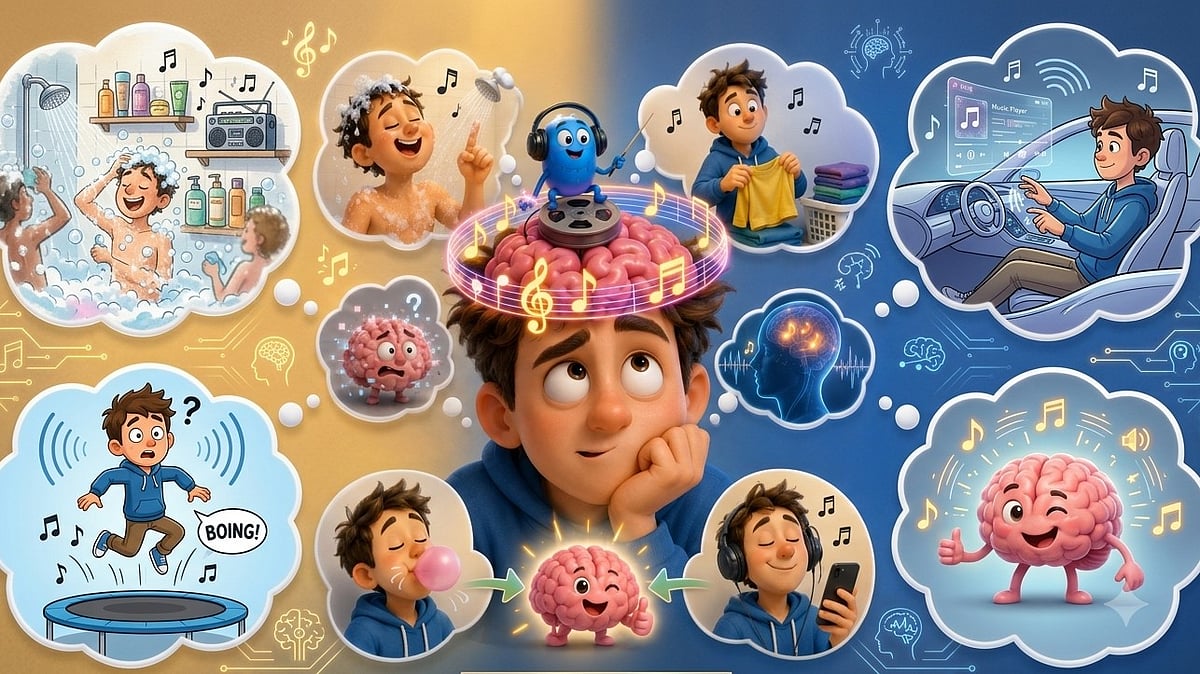
An earworm happens because your brain gets caught in an involuntary memory glitch. When you hear a catchy, repetitive tune, a short-term audio buffer in your mind called the phonological loop records a brief snippet of it. If your mind is idle—like when you are showering or folding laundry—the brain's auditory cortex automatically replays this snippet to try and "complete" the musical pattern. Because your brain can often only recall a fraction of the song, it gets stuck in a continuous feedback loop, constantly restarting the phrase to finish a musical thought it can't quite resolve. To break this mental loop, scientists recommend chewing gum, which physically disrupts the silent internal vocalizations your brain uses to "sing" the track. Alternatively, listening to the full song can provide the closure your memory needs to stop repeating the snippet.
AI Says: Why Are Planets Round?This auditory phenomenon highlights how deeply the human brain is wired for rhythm, pattern recognition, and predictive processing. When a song features a particularly infectious hook, unusual syncopation, or a predictable melodic progression, it acts like cognitive Velcro. Your brain latches onto it effortlessly, and once that snippet enters your subconscious, it requires surprisingly little mental energy to sustain itself. In fact, neuroimaging studies show that during an active earworm, the brain's primary auditory cortex lights up identically to how it behaves when you are listening to actual, physical music. This means your brain is literally tricking itself into hearing sound. While it can be deeply frustrating to find yourself trapped in a relentless mental concert, understanding that it is just a harmless by-product of your brain's incredible capacity for memory and pattern completion can make the experience a bit easier to tolerate until the loop finally fades away.
Visit moryak.biz for more information.