Steenhuisen outlines FMD vaccine rollout after securing more than 13 million doses
· Citizen
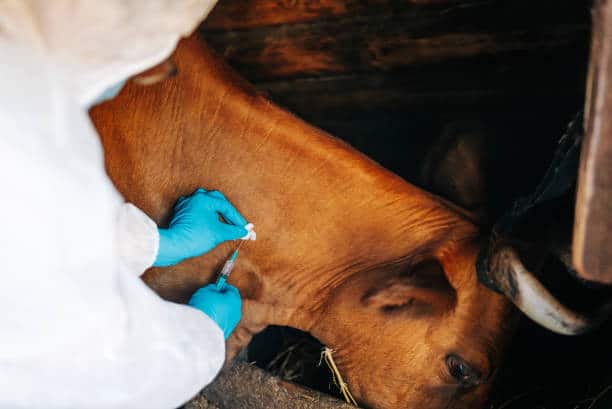
Agriculture Minister John Steenhuisen has noted that since February this year, South Africa has secured 13.5 million doses of foot-and-mouth disease (FMD) vaccines and vaccinated just under 4.4 million animals across the country.
Visit newssport.cv for more information.
Steenhuisen outlined the country’s response to the outbreak and its vaccination programme efforts to eliminate infections amongst livestock in the country, during a media briefing that was held on Monday, 1 June, at the Imbizo Hall at parliament in Cape Town.
Vaccine distribution
According to Steenhuisen, just last week, a total of 3.5 million Biogenesis Bargo vaccine doses arrived in South Africa, significantly strengthening the country’s ability to expand vaccination efforts across affected and at-risk areas.
He noted that the 3.5 million doses will be distributed as follows:
- 1.5 million will be distributed to the feedlot industry
- 500 000 to the Red Meat Producers Organisation
- 200 000 to the Milk Producers Organisation
- 100 000 to the stud breeders industry
- 1.05 million to the provinces
Steenhuisen said some doses have also been set aside for regional vaccination along the borders.
He also announced that the South African Health Products Regulatory Authority (Saphra) has approved the Section 21 application under the Medicines and Related Substances Act, allowing Dunevax to import 14 million doses of the Dollvet vaccine.
According to Steenhuisen, the first batch of four million doses is set to arrive in June. He added that this vaccine pipeline will ensure the department can deliver the required booster vaccinations.
‘Transitions take time’
During the briefing, Steenhuisen also noted that some critics have argued the vaccine rollout should have happened faster.
“I understand that frustration,” he said.
He further explained that for years, South Africa’s biosecurity systems were largely geared towards reacting to outbreaks after they occurred.
“What we have been required to do over the past several months is fundamentally different. “
“That transition takes time. But the results are now becoming visible,” he added.
Millions of vaccinations already been completed
With more than 1.1 million animals already vaccinated in the country, Steenhuisen stated that the vaccination programme has kept KwaZulu-Natal (KZN) at the forefront of efforts to reduce infections.
“So far, the Free State has vaccinated more than 600 000 animals, the Eastern Cape more than 720 000, Mpumalanga more than 430 000; Limpopo more than 350 000; Gauteng more than 270 000; North West more than 430 000; Western Cape more than 260 000 and the Northern Cape more than 87 000.”
“Last week I wrote to all MECs to continue accelerating the deployment of vaccines,” Steenhuisen added.
Almost R495 000 on vaccines
He also stated that the department has already spent R494 million on vaccines and their strategic allocation across South Africa.
“Too often, this fact is overlooked in public debate.”
“We have carried the financial burden of this intervention because the cost of inaction would have been far greater,” Steenhuisen noted.
He emphasised that the department aims to prioritise and protect the national cattle population, to safeguard jobs, preserve food security and to restore confidence in the livestock economy.
The impact
John Steenhuisen also acknowledged the impact of the FMD outbreak on farmers, which has limited their ability to trade and earn an income.
“I also want to acknowledge the sacrifices many producers have made in complying with movement restrictions, vaccination programmes and disease-control measures despite the severe financial pressure they have faced,” he said.
Steenhuisen highlighted that no one feels the consequences of an outbreak more directly than the farmer whose livelihood depends on healthy animals and functioning markets.
“Many have experienced significant financial losses and enormous emotional strain.”
“They have carried increased feed costs while animals remained on farms for longer than intended.”
“They have faced uncertainty regarding markets, cash flow and future production decisions.”
‘Animal diseases do not respect borders’
Steenhuisen also said that while the outbreak has presented an enormous challenge, it has also reinforced an important lesson: “animal diseases do not respect borders.”
This comes after a Southern African Development Community (SADC) ministerial meeting held in Zimbabwe last week, from 26 to 29 May.
According to Steenhuisen, South Africa strongly welcomes the decision by SADC ministers and the Livestock Technical Committee to prioritise the development of a regional coordination framework for FMD control.
“This framework moves us beyond fragmented national responses towards a more coordinated, risk-based and preventative regional system.”
‘The war is far from over’
Steenhuisen warned that the war against FMD is far from over. The department is set to launch an overarching Public-Private Biosecurity Model in the coming weeks to combat the spread of FMD infections.
According to Steenhuisen, the model will bring together the lessons, partnerships and capabilities developed during this outbreak into a formal, coordinated national framework.
“For the first time since this crisis began, South Africa is increasingly setting the pace of the response rather than reacting to the disease.”
“And we will continue until South Africa has not only defeated this outbreak, but built a stronger, more resilient biosecurity system capable of protecting farmers, safeguarding food security, supporting agricultural growth and strengthening rural livelihoods for generations to come,” he concluded.