Rubio Says ‘Epic Fury’ Is Over, as Flare-Ups in Strait of Hormuz Tests Fragile Ceasefire
· Time
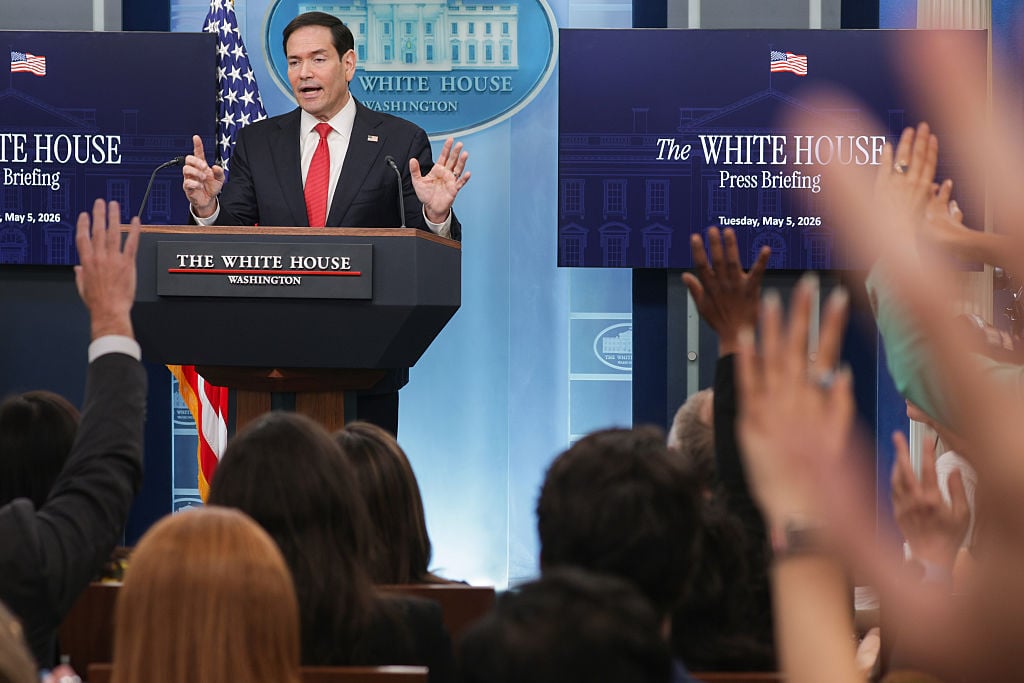
Secretary of State Marco Rubio said Tuesday that Operation Epic Fury, the roughly two month military operation that kicked off a U.S.-Israel war with Iran, had effectively ended, but the state of a fragile ceasefire remained up in the air, as attacks in the Strait of Hormuz continued.
Visit turconews.click for more information.
“The operation is over,” Rubio said at a White House briefing. “We’re done with that stage of it.” In its place, Rubio clarified, the United States has shifted to a “defensive” posture focused more on restoring commercial passage through the Strait of Hormuz, the narrow waterway that carries a significant share of the world’s energy supplies and has effectively been choked off since the conflict intensified.
“This is not an offensive operation,” Rubio said. “There’s no shooting unless we’re shot at first.”
The Secretary of State's comments dovetailed with a recent shift in posture from Administration officials about the conflict, which had begun in February with President Trump demanding "unconditional surrender" and the obliteration of Iran’s nuclear program. Rubio struck a notably cautious tone as he emphasized that a U.S. delegation led by Jared Kushner and Steve Witkoff were still trying to determine what, if anything, Iran was prepared to negotiate on. “We don’t have to have the actual agreement written out, but we have to have a diplomatic solution that is very clear about the topics,” Rubio said.
His remarks came days after the Trump Administration told Congress that “hostilities” against Iran had formally ended amid a ceasefire reached nearly a month ago, despite new missile and drone attacks from Iran targeting shipping and the United Arab Emirates. American forces have responded to threats in the waterway, including destroying small Iranian boats and intercepting projectiles, but have stopped short of what officials described as “major combat operations.”
Earlier on Tuesday, Defense Secretary Pete Hegseth insisted the ceasefire brokered last month remains intact despite recent attacks on U.S. forces. Trump also sought to minimize the flare-ups, but declined to define precisely what would constitute a violation of the ceasefire. “You’ll find out,” he told reporters at the White House on Tuesday.
Yet the reality on the water suggests a far more precarious situation. Only two commercial ships have successfully transited the strait under U.S. protection since the Navy began carving out a narrow passage this week, Hegseth said, and major shipping companies remain reluctant to send vessels through a corridor that is just 21 miles wide at its narrowest point and well within range of Iranian missiles, drones, and mines. Before the war, roughly 130 ships passed through daily.
Rubio acknowledged the difficulty of reopening the route, describing the Administration’s new initiative—dubbed “Project Freedom”—as an incremental effort to restore what he called a “protective bubble” for maritime traffic. “This is the first step,” he said, toward reopening the strait and ending what he characterized as Iran’s “economic arson.”
He added that the United States would bear the primary burden of the mission, but noted that other countries had quietly offered assistance. “This is a favor to the world,” he said, noting that many of the stranded vessels belong to foreign nations now facing shortages of food, water, and essential supplies aboard ships stuck at sea.
The emphasis on shipping reflects what Rubio suggested is now the Administration’s immediate priority: breaking Iran’s effective blockade of the strait, which has driven up global energy prices and rattled markets. He downplayed the direct impact on American consumers, even as gasoline prices have surged.
“If Iran had a nuclear weapon and they decided to close the [Strait of Hormuz] and make our gas prices like $9 a gallon or $8 a gallon, we wouldn’t be able to do anything about it, because they have a nuclear weapon,” he said.
“They would do exactly to the world with a nuclear weapon what they’re doing now with the strait,” he added, suggesting that the Iranian regime could permanently hold global energy markets hostage.
Rubio accused Iran of pursuing capabilities consistent with a weapons program, including advanced centrifuges and long-range missiles. Iran, he said, has long claimed it does not seek a bomb. He added, “they just don’t mean it.” In one striking moment, Rubio described Iran’s leadership as “insane in the brain,” while urging them to make what he called a “sensible choice” to negotiate.