Pope Leo 'Will Never Back Down' if a Fight Comes to Him, Says His Biographer
· Time
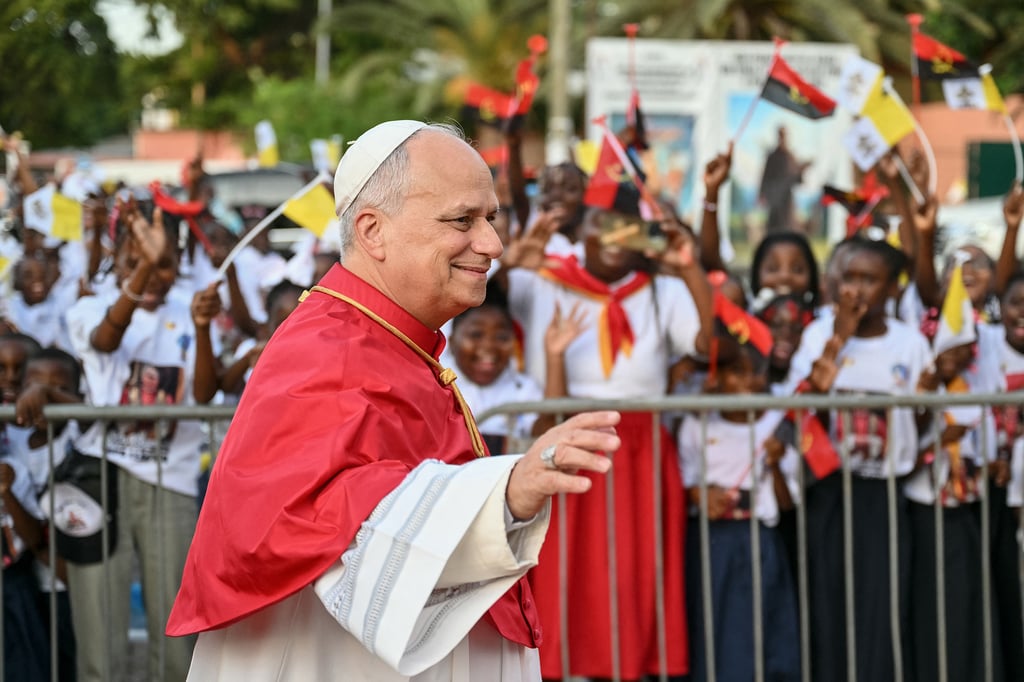
Elise Ann Allen is a senior correspondent for Crux, an independently owned news outlet that covers the Vatican and the Catholic Church. Her book on Pope Leo XIV is the first biography in which the Pontiff participated. She has known the priest formerly known as Robert Prevost since December 2018 when he was a bishop and they met in Lima for an off-the-record interview about the sex scandals then roiling the Peruvian church. In recent months the Pope has had several disagreements with the policies of the current U.S. Administration, including, just last week, a public denunciation of the death penalty released on the same day that the President announced a loosening of restrictions around it. Fresh from a reporting trip with Pope Leo through several African nations, Allen talked to TIME about the current Catholic leader’s aims, his run-ins with the U.S. President and Vice President, and what makes him different from Pope Francis, his predecessor.
Recently, the Pope has been in the news for speaking out against war, which has rankled some in the U.S. Administration, and yet your book depicts him as a guy who likes a low profile. How do you see him walking that tightrope?
Visit michezonews.co.za for more information.
He is discovering how to walk it. This is a much different role for him. He's always flown under the radar. If you look at his history in Peru, and the situations that he had to navigate as a young missionary and as bishop, these were very complex problems that he was walking into. And his attitude was that we don't have to agree about everything, but let's try to come to a consensus so the population isn't suffering. He has been clear in saying that he is going to continue to speak out on the issues that he believes he needs to. He has said he is preaching the gospel, not trying to do politics.
Pastors and priests have a reputation for being peacemakers, but several people in the book actually say that Pope Leo is not averse to a fight. Am I understanding that correctly?
He's the type of person that will never pick a fight but will never back down from one if it comes to him. This reaction that Donald Trump had on social media against Pope Leo is something Leo did not invite necessarily. He delivered the same message he's been delivering since day one, which is, let's try to find a different way of doing things than just making war. He told us on the plane to Africa, “I don't intend this to be an attack on anybody. I'm trying to preach the gospel. That's my role as Pope, and people can receive that however they want, but I'm not going to stop.” He's calm, but he's not weak.
Do you think it's inevitable then that there will be more conflicts with world leaders?
I think it is inevitable. Leo is not blind to that. Accepting the papacy was a very big thing for him. I think he understood very well the weight of that responsibility and of what he was stepping into. He does expect there to be more pushback and more criticism, and he's sort of bracing himself for it. In Africa, some of the countries that we visited are notorious for their authoritarian leadership. That line that he had: “the world is being ravaged by a handful of tyrants.” That's quite strong language. In Equatorial Guinea, he's sending this message with the President and his Vice President's son sitting in the front row at Mass. He's stirring the waters.
How is the J.D. Vance fracas playing out in the Vatican, where a Catholic believer keeps sparring with the Pope. Is that having an effect?
I don't think J.D. Vance is a huge factor. He's a fairly new Catholic. He's a convert. He made comments that the Pope needs to be careful when he opines about matters of theology which, if you are a Catholic, is a ridiculous statement, because the Pope does not give opinions; the Pope is your highest teaching authority. So I think there's something in J.D. Vance's mentality that's still quite Protestant. Obviously the Vice President of the United States is going to be taken seriously, but not too seriously.
You tell a couple of stories in this book where the Pope comes across as pretty direct when dealing especially with priestly misconduct. Which one surprised you most?
There was a province of the Augustinians in Mexico. There were all kinds of problems with the clergy there. Leo was prior general at the time and did an investigation and sent some instructions that didn't really make a difference. So he traveled to the province himself and called a meeting. He said, “Look, these are the issues at hand. I brought a little briefcase with me that has some of your bank statements in them, so I can either start reading these one by one, or you can start to get to work on the changes that I've asked you to make.” They started to put the wheels in motion. That shows very much who he is. He does a thorough investigation first, but then when it comes time, if he has to make that decision he's certainly capable of making tougher decisions.
What do you think were the three things that helped him to get elected even though he was American?
The biggest obstacle to his election was the fact that he was American, and he himself believed that it would never happen because of that. But he was seen as the right candidate, number one because of his time in Latin America. He understands the global south very well. This is where the Augustinian provinces are growing the fastest. And he also spent time in Africa and Asia. So he was seen as, the Italians have this expression—meno Americano de americani—the least American of the Americans. The second thing is just the wealth of background. He was a missionary, but he was also a canonist. He'd been a judge in an ecclesiastical tribunal. He was prior general of his order, and then he was a bishop, and then he was a cardinal, working in the Curia, saw the world from a 360-degree angle. I also think the College of Cardinals looked at the impact of Donald Trump's decisions and the way he's shaking up geopolitics right now as a concern for everyone. And I think their mindset was—who is somebody who can go toe to toe with this guy if needed, and that would potentially be respected and maybe listened to?
You first met the Pope when you were a young journalist, covering a sex scandal in Peru. What struck you about him then?
He did not seem guarded in any way. When you're talking to clergy or bishops about sexual abuse, you're often met with a wall, and that was not the case with him. Also, the Catholic Church had not started talking about abuses of power yet. It was mostly concentrated on sexual abuse of minors, not even adults. But he independently started talking about abuses of power and of conscience, the power differential between clergy and the people under their care.
Having now spent considerably more time with him, has anything changed about that first impression you had of him?
No. When I sat down with him for the two conversations that we had for the book, he did not ask to see any questions in advance. He did not ask to read the final transcript afterwards. He answered every question that I asked. His style is the same. What is changing, perhaps, is his way of talking about issues. He's trying to find his voice as Pope. I think it was hard for him to believe still at the beginning. In Africa just now, he really just threw himself in. You could see him on a whole new level.
What would surprise most people about Pope Leo?
His complete and utter sincerity. There's nothing calculated about the man. If you're looking at Pope Francis, for example, he was somebody that was ultimately a very political creature; he thought in a very political way. And he made very strategic decisions. I don't think Leo is like that. What you see is what you get with him. I don't know that people understand that, especially after 12 years of Pope Francis. He's just super chill; he has a great sense of calm. He reads a lot, he's got all the pieces in his head. He's saying, OK, let's just see what happens, and I'll try to find my way forward.
Is that what you would say is the key difference between him and Francis? Or are there others?
Their personalities are very different. Their style is very different. Ultimately, their priorities are very similar: issues of poverty and justice. Francis was very impulsive. Leo is very reflective. He's a mathematician. He's a canonist. He thinks very precisely. Francis was very shoot-from-the-hip. Leo prefers to be slow and steady, to take his time, to reflect, to listen, and then he'll find his way forward. I think he'll go even further than Francis did, especially in some of the social issues when you're talking about poverty or justice.
He arrived in Chulucanas at a very difficult time in Peru's history, when the terrorist organization Shining Path was in the ascendant, and at one point, quite a few missionaries left because of the dangers. Do you know why he decided to stay?
There were two terrorist groups that were very active at the time. The Shining Path was, of course, the more notorious and violent one. But they faced threats from the MRTA as well. The Augustinians discussed leaving, but the bishop there at the time, John McNabb, really guided them in the decision to stay, saying, “No, we're missionaries. We come to serve these people, we can't just abandon them in a moment of crisis.” He told me he didn't judge anybody who decided to leave, but they felt it was their job to stay.
Was he influenced by liberation theology?
It would be hard not to be influenced by it. This was something the church there was really debating, especially in the years when he arrived–it was really just starting to gain steam. So he would have had to read everything and tried to understand what was going on theologically. They were in probably the poorest region of Peru, so this theology of the poor, he wanted to understand it. When he talks about matters of justice, there are elements of liberation theology there. The way he explained it to me was that the heart of it is trying to look through the eyes of the poor and understand the world and relate to God through the eyes of the poor. How do these people see the world? How do they relate to God, and what is that relationship? He is very clear in distinguishing where that deviates from some of the misrepresentations, and how that's been used to justify violence.
One of the issues he had to deal with while he was a bishop in Peru was the huge influx of migrants from Venezuela in 2018. Do you think that is influencing the way that he thinks about what's going on in America's immigration reform?
Undoubtedly. This huge wave of hundreds of thousands came in just a very short time; you had people sleeping in the streets, in parks. Churches were trying to create spaces for them in pastoral centers or inside the churches. He volunteered to take that issue on and really led the church's action at that time, trying to help migrants with citizenship issues, or documentation, just getting them housing. Of course that’s going to shape how he handles this issue at the global level. But he does say that states have the right to create laws and they should manage their borders, because you don't want situations at the borders that are more unjust than the ones that they left. His focal point is always on the human being.
He was quite involved, according to your book, with petitions and marching during unrest in Peru, but you’re saying that he did not take a political side. Is that right?
Robert Prevost is somebody who, above anything else, is a humanist. So, he’s asking: Are human rights abuses being committed? And if that's the case, it needs to be investigated and the people committing them need to be held to account.
One of the things that has changed since he became Pope is he's had a greater understanding of his identity, his racial heritage. Do you think that has changed the way that he has seen himself?
I don't think so. For him, it's been amusing to discover all of this, but not surprising. He talked in our conversation, for example, about growing up and neighbors making comments about his mother's complexion being dark, and that “I won't talk to your mother because she's colored,” and saying the family would just kind of blow it off. There was also, from a very young age, this openness to the world—the family had an open-door policy to all guests—and he understood himself in terms of being mentally open. The revelations have just given him and his brothers something else to talk about at the dinner table.
Do you see the Pope making any moves to ordain women?
No. But I think we can expect him to continue to emphasize the role of laypeople and women. For example, in Peru, women were continuously put into places of leadership in the parishes. He told me it wasn't necessarily because they were women, it's because they were available and they wanted to be there and they were capable. But he also understood that women are oftentimes the most involved, and they don't often have a voice, and so this was his way of trying to give them a voice as well. They were in charge of a lot of different commissions and projects at the parish level, and then again, at the diocesan level. When he went to Chicago, he did the same thing. So I think we can see more of that going forward.
There’s a lot of talk of synodality. What is that?
It's a discussion on who we are as church, and how do we interact with one another—being more inclusive, less hierarchical. You still have a clear hierarchy, but that doesn't mean that you dominate. You make decisions together in consultation: that's what he understood synodality to be. That's what he was trying to push forward. He talked always about this attitude of clericalism, this elite status that the clergy have. That's something he wanted to eradicate.
There is some suggestion in your book that the Pope might be a workaholic?
That's my experience. He's got a very meticulous mind, very detail oriented. When he dives into something, he really gets into it. He's very quick to respond to people. If a bishop or a nuncio—one of the Vatican's ambassadors in the country—has an issue, the Pope is very quick to respond. And he has just an incredible work ethic. He doesn't know how to shut down. I found out that when we were doing our book, there was another friend of his, a former Augustinian, also writing a book about their friendship. He was working with the two of us simultaneously. You can imagine doing two books at once while having this new job as a world leader.
Do you get a sense of why he chose you to do a book?
When he agreed to this, it was two months in. He's a very reserved guy. My impression is he didn't have friends in Rome, outside of his Augustinian community. He spent a lot of time with them, and then he was working a lot of the time. He made it clear when he got here he didn't really want to give interviews, that he was going to be very low profile. I think he understood the value of having something like this out there. And because we've had some previous interaction, he felt comfortable enough saying yes to this.
Does the Pope reflect at all on what kind of influence he can have in an era where faith and the institutionalized church, especially the Catholic Church, are really in an era of decline?
That's a perception of the West. The church is not in an era of decline, it's in an era of rapid growth in the global south. I think by 2050 two-thirds of the world's Catholics will be in the Global South. The kinds of issues that Francis brought up and that Leo is bringing up now are what's affecting the majority of the church right now. And Leo, as a missionary, would like to serve as a bridge between these two worlds, where the faith is in decline and where it's growing.