Manyi says Ingonyama Trust not ‘political independence’ but Orania argues the similarities
· Citizen
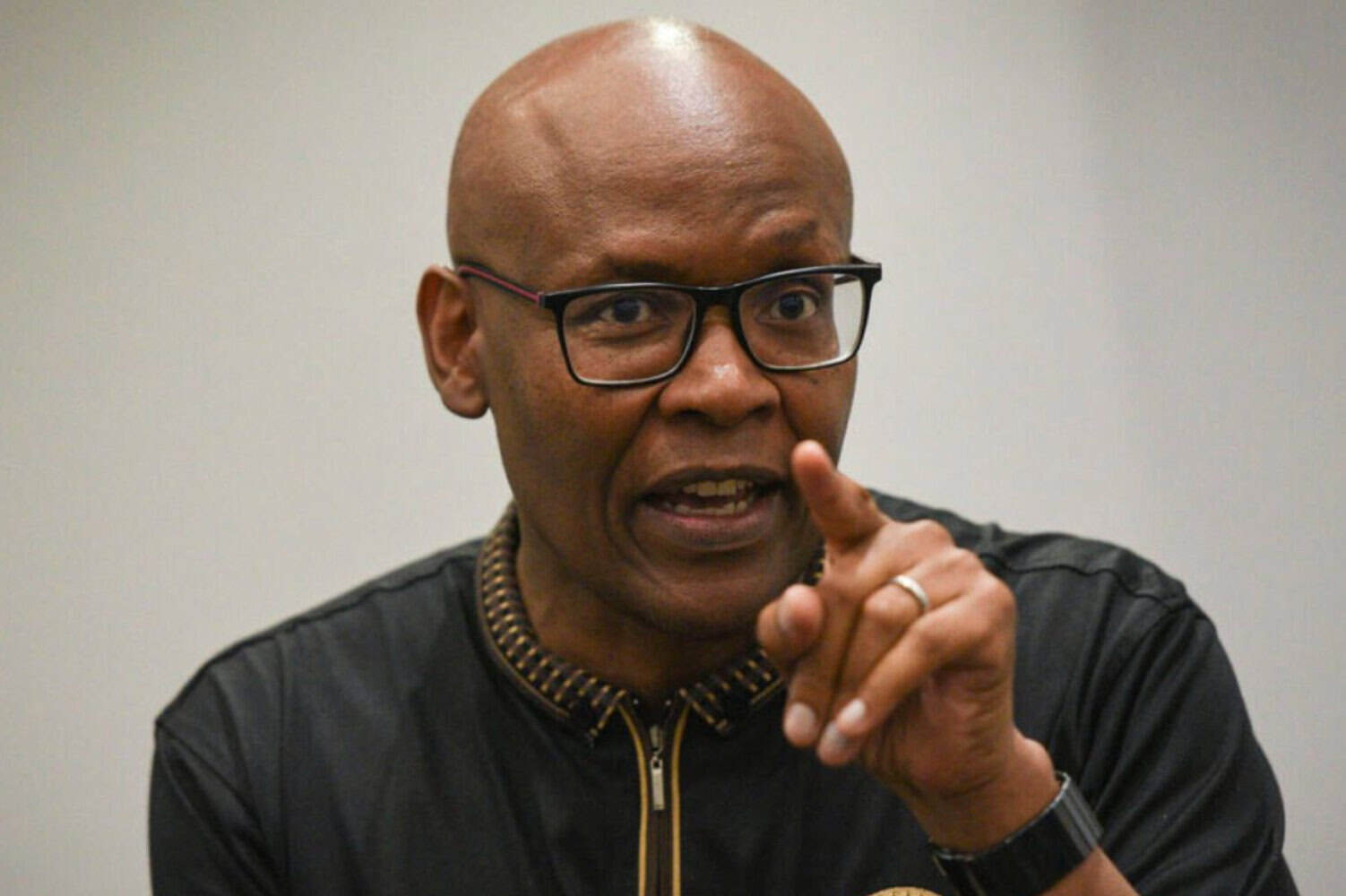
Neither the legislation nor the accompanying rights that secure the traditional land of the Zulu people can be used to justify culturally autonomous territories within South Africa.
Visit h-doctor.club for more information.
The uMkhonto weSizwe (MK) Party’s Mzwanele Manyi made this assertion on Wednesday evening in response to comments made on his party’s desire to repeal Section 235 of the constitution.
Manyi last month submitted a notice of intention to introduce a bill to remove the section of the constitution that deals with self-determination.
Section 235 enshrines the “recognition of the notion of the right of self-determination of any community sharing a common cultural and language heritage, within a territorial entity in the Republic or in any other way, determined by national legislation”.
Manyi’s reaction specifically mentions the Afrikaner community of Orania and the Ingonyama Trust, with proponents of self-determination detailing the differences and similarities between the two.
Proposed repeal of Section 235
The MK party’s initial notice called for comment, with Manyi acknowledging there had been a range of responses so far.
Manyi reiterated his belief that Section 235 was “a qualified clause, not a right” and that self-determination could not justify racial or cultural exclusion.
He said the repeal of the self-determination clause was in line with South Africa’s transformation agenda and land reform commitments, while ensuring that cultural rights would remain protected.
“The repeal of Section 235 is a lawful, necessary and constitutionally sound step to eliminate constitutional ambiguity, prevent misuse and fragmentation; and consolidate a unitary, non-racial, democratic state.
“The democratic transition established one sovereign, non-racial state with equal citizenship for all. Section 235 was a limited, time-bound compromise, not a blank cheque for perpetual cultural separatism,” stated Manyi.
He took the opportunity to highlight what he felt were “misdirections” in the submissions that had been received so far.
“These include the overstatement of Section 235 as a permanent right, the conflation of cultural rights with territorial exclusivity, and the selective use of historical and comparative examples,” Manyi said.
Ingonyama Trust and Orania similarities
One of those examples was the Ingonyama Trust, which Manyi described as “a statutory mechanism for communal land administration” that was protected under national legislation.
“[The Ingonyama Trust] does not create sovereign territory, exemption from the Bill of Rights, or political independence.
“Invoking it to justify broader territorial claims for other groups is legally unsustainable and reveals the inconsistency in the opposing arguments,” the MK party’s former chief whip stated.
Orania’s Joost Strydom listed the vast differences in geographical size, government support, governance structures and public perception between Orania and the Ingonyama Trust.
He also highlighted how the two areas addressed the independent spirit of both peoples.
“The similarity lies in the communal factor; recognising our uniqueness, and as such having a custom-made solution for Afrikaners, as the case was for the Zulu people.
“It lies in the open recognition that the Zulu people are a people in their own right and subsequently have the right to territory, creating the opportunity to recognise leadership, create and maintain traditional structures of governance, traditional judicial systems and more.
“Inherently, formal recognition of a people leads to also recognising that they have the right to determine their own future, systems, and structures,” Strydom told The Citizen.
He stated that the individual rights contained in the Bill of Rights were insufficient when attempting to preserve a cultural collective in the manner in which the people of Orania envisage.
“It is inconsistent to recognise one group as a people in their own right and create subsequent legal frameworks to support such recognition, but try to deny it from another,” the Orania leader stated.
He stressed that he wanted to see the Ingonyama Trust preserved, and that Orania had “much more in common with the Zulu people”, as he urged a joint-rejection of Manyi’s intentions.
“The logical playout of his argument, in the long term, is also the removal of the Zulu people’s collective rights,” Strydom concluded.
Chapter 14 not provisional
The Freedom Front Plus’ Wynand Boshoff called Manyi’s response to the public submissions “feeble”, suggesting he was “a bit rattled by its magnitude”.
Boshoff agued that Manyi’s interpretation of the Section 235 was incorrect, as it fell within Chapter 14 of the Constitution, which covered general provisions.
“None of the sections in that chapter, 231 to 243, are provisional. At the end of the constitution follows a number of schedules, among which is Schedule 6: Transitional Arrangements.
“He might wish that self-determination had been part of that schedule, but it is not,” Boshoff told The Citizen.
Boshoff added that self-determination was an internationally accepted provision to allow for multicultural nations to deal with cultural friction.
“International law indeed favours sub-national self-determination to diffuse the tensions inherent to a multi-national state,” Boshoff said.
He also dismissed Manyi’s assurance that cultural rights would remain protected, noting exchanges the pair had had during the Bela Bill deliberations.
“I experienced his vehemence of any structure with which aims to give continuity to Afrikaner culture and identity. He wants to abolish it wherever he can, but then claims that it is protected,” Boshoff concluded.