Women in Health Innovation: The first South African knee prosthetic
· Citizen
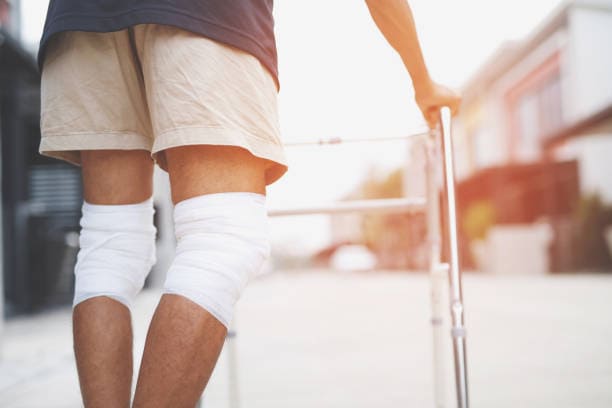
Amohetsoe Shale, the founder and CEO of Navu has created the first prosthetic knee in South Africa at a price that is “ten times cheaper” using various manufacturing techniques.
She presented her speech alongside a panel during the Inaugural Innovation Week 2026 conference, that took place from 16 March to 20 March. Founders, investors, field experts, operators, and policy shapers attended the five-day event where talks prioritsed “action over attendance.”
Visit mwafrika.life for more information.
Shale emphasised issues around accessibility and made it her mission to pursue a knee prosthetic to make it easier for South Africans battling with disabilities. She shared the challenges she experienced while attempting to do something that has not previously been done in Africa until now.
READ MORE: SA Innovation Week: Gina calls for stronger R&D investment and skills development
‘Why should mobility be a privilege?’
While completing her clinical experiential learning at Medical Orthotics and Prosthetics, she worked with an elderly amputee from the Eastern Cape who travelled long distances to receive medical care. But he could not afford the quality prosthetics that he needed.
She said he would always come back to the clinic complaining about the same thing, which was the discomfort of walking using basic prosthetics. For her it all started with a simple question.
“Why should mobility be a privilege?”
Shale acknowledged his struggle and was inspired to design a solution that allows functioning and quality knee joints to patients with the aim of restoring freedom, function and dignity at a cost-effective price people can afford.
In another interview, she shared the helplessness she felt when she could not assist patients with what they needed due to a lack of funds and resources in certain areas.
“I remember the look of disappointment on his face as he turned back without an improvement in his walking for the third time, having travelled five hours just to get to the prosthetics clinic.”
Especially focusing on the functional prosthetic knee for those who live in low to middle income communities. Amohetsoe’s experience in the field led her to finding her purpose while contributing to a larger issue many faced.
Complexities
“I realised that a lot of amputees are not able to walk properly. It’s not that there’s a problem with the system, it’s the quality of components that they have access to.”
During her speech at the conference last week, Shale explains that public hospitals offered a basic prosthetic which is often not as effective in aiding amputees because the knee is one of the most complex joints in the body.
“In public hospitals you’ll get like a basic prosthetic because that’s what the public sector can afford. And then private care, in order for you to walk properly you can spend up to R200 000 per prosthesis which is not reachable for everyone.”
During her undergraduate research and masters, she dedicated her studies to developing a prosthetic knee that is ten times cheaper than what is available and much more functional than what is being provided by public hospitals.
“So we were able to use different manufacturing techniques. We’re able to take my experience in clinical, my masters and biomedical engineering to create a really cool product.”
Identified gap
She said that the African continent does not have the capacity to spend R3 million on prosthetic knees per person. Because that is the price of these products on the international market.
“I mean companies like Ottobock are selling microprocessor robotic knees for like, R1.8 million per unit and so we’re not going to be their biggest concern.”
“That is not necessarily because they’re evil, it is just that they’re trying to run a business.”
Therefore, leaving a massive gap in accessibility on the prosthetic market for South Africans and other countries.
“The question should be, why aren’t there more people who are personalising South Africa’s problems?Because they are our problems, right?”
The Navu prosthetic knee costs $440 which is around R25 000 per unit compared to the R1.8 million per device offered by the international competitor which proves that it is, “ten times cheaper”.
Unconventional yet successful beginnings
Registering her company Navu during her undergraduate year, Shale described her journey to commercialisation as “very unconventional”.
She said that she registered the company to keep herself accountable for her research because as researchers may know, research has the tendency to sit on the shelf in the hopes that a private company would pick it up and help advance the aims and objectives of the study, which was not what she wanted.
“And I had no idea how it was actually going to happen.”
After travelling to Norway for an opportunity, she was recruited to continue her research at the University of Stellenbosch and has since been able to get her product on the market.
“We’ve been able to successfully complete a seven figure proceed, raise and now we’re getting it into the market and hopefully creating a lot of impact for a lot of people.”
Challenges
Despite the success of her research and its potential to aid many amputees in South Africa, the journey did not come without hiccups along the way at some stage. Amohetsoe shed light on the challenges she experienced while commercialising her product against the international market.
She said her number one challenge was to protect the intellectual property (IP) of her research. She explains the IP you develop during your studies, belongs to the university by law.
“So, there was a lot of conversations that had to happen between two universities and it took a really long time.”
“I just got to a point where I had to spearhead it myself,” she says.
“You need to be very active and invested in the conversation surrounding your intellectual property.”
Along with being taken seriously and getting her medical device validated by regulatory organisations. Especially because this has not been done before, as others resort to basic prosthetics or import it from overseas.
“As a young black woman, it’s very difficult in an industry that one, is not mature in Africa. I mean there are no prosthetic manufacturers in the continent.”
“So, we are doing a first in a lot of aspects and being taken seriously and having people listen to you is a journey.”
Shale said that the process of getting a medical device tested and into the field is expensive, specifically because the prosthetic test machines are only available internationally. She encouraged members of the audience to collaborate with people across related and unrelated fields, while being absolutely delusional about your capabilities to change the world for the better.
READ MORE: Affordable smartphones put human rights in SA citizens’ hands