How India’s Heritage Homes Are Becoming Its Most Intimate Getaways
· Free Press Journal
When the earth beneath Bhuj shook in 2001, Jehan Bhujwala’s ancestral home in the unhurried heart of Kutch held its ground, bruised but unbroken. His father, an Indian Airlines pilot, grabbed the opportunity to operate the first relief flight into Bhuj so he could check on the family home. “The survival of the Bhuj House felt like a sign,” Bhujwala recalls. “We couldn’t just sit by and watch our history of six generations slip away.”
Mumbai-based Bhujwala had fond memories of the family’s summer-gathering haven, a quaint relic of traditional Parsi architecture, built in the 1870s by Pestonji Sorabji Bhujwala and later co-owned by several members of the large family. “The house was a reminder of our family’s enduring journey,” says Bhujwala, now into wildlife tourism and conservation. “It seemed impossible to simply surrender it to time or to developers.”
Visit betsport.cv for more information.
By 2008, he had realised that the only way forward was to revitalise and adapt the house to modern living. After three arduous years of buying out the portions held by other family members with varying emotional and financial stakes, he restored original elements and added contemporary comforts.
The Bhuj HouseSince opening its doors to guests in 2014, the Bhuj House has become a hub for travellers looking to experience a slice of Parsi and Kutchi heritage. “I wanted to create an intimate homestay,” he says. “The driving idea wasn’t luxury, but authenticity. Today, when I see guests respond to the same spaces and stories that I grew up with, I feel even more deeply connected with our once private family space that is culturally significant to the larger world as well.”
Jehan and Katie BhujwalaNostalgia as enterprise
Bhujwala is among India’s growing tribe of heritage homepreneurs who have chosen to breathe new life into their ancestral houses by reinventing them as boutique stays, cafés and cultural residencies. Actor-producer Rana Daggubati has reimagined his childhood home of two decades In Hyderabad’s Jubilee Hills as a restaurant. In Jaipur’s sun-washed Peelwa Garden, sisters Swati and Sanyogita Rathore have repurposed their grandfather’s 1960s bungalow into a café-patisserie. Conservation architect Gurmeet Sangha Rai has revived Peepal Haveli, her family’s 150-year-old traditional Punjabi Kothi in Nawanpind Sardaran village near Gurdaspur, as a boutique homestay.
For heritage homepreneurs, opening private histories to strangers through space, food and hospitality has turned out to be a delightfully practical way of blending memory with modernity, sentiment with sustainability, and belonging with business sense.
Warmth over scale
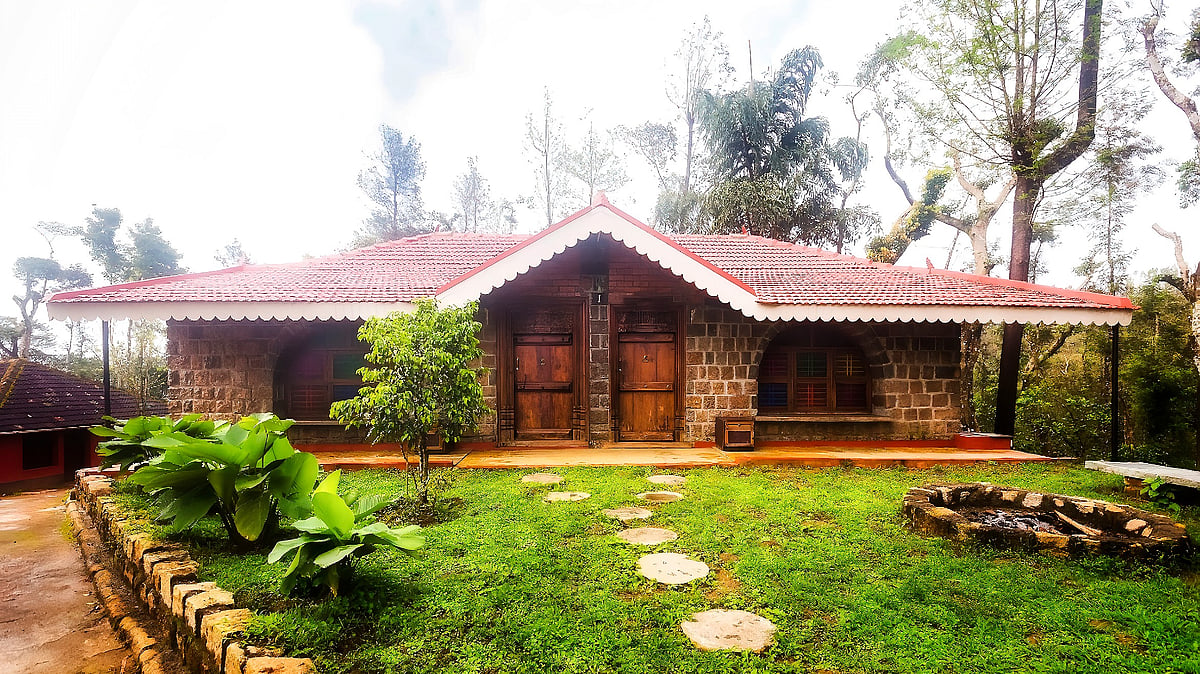
In Chikmagalur, coffee cultivators Shriidev and Sushmitha were driven by the belief that a house lives only when people live in it. Born thus was their homestay, Woodway, nestled in the mist-shrouded hills of Karnataka’s Coffee Capital. Built around 1908 by S. F. Montero as a guesthouse, the bungalow was bought in 1975 by Shriidev’s father and became a family home for the next 25 years, until they moved to a neighbouring estate. But when windows weakened, doors sagged and the roof began to chip away, the couple realised that if left behind locks, the bungalow would simply fade.
A magazine article about early homestays in Coorg inspired present-day Woodway, powered not by long-term business or pricing rationale, but just by instinct. In December 2001, Sushmitha, pregnant with her elder son, welcomed Woodway’s first guests. It was, as she puts it, a “bang success”. The profit was modest, but the gain was priceless: fresh conversations, friendships and purpose restored to a memory-rich house.
Sushmitha and SriidevWoodway was the region’s first homestay, though never a business in the conventional sense. “The moment a home calls itself a hotel, warmth changes. We kept it the way a home should be,” Sushmitha says. “People come here looking for what cities can no longer offer. Many guests return year after year. Some have become lifelong friends.”
When fibre internet briefly entered the bungalow after COVID-19, she once saw an 80-year-old grandmother surrounded by her children and grandchildren, all glued to their phones. “I promptly restricted the internet to certain functional areas of the property,” she recalls. “At Woodway, being present in the ‘now’ matters most.” For Shriidev and Sushmitha, no success is bigger than the 500-year-old trees, thriving beehives, and over 200 species of birds that keep them—and their guests—company.
From home to hearth
Amid houses quietly minding their own business in a leafy neighbourhood of Bengaluru, hearing a home break into the language of butter, sugar and warm ovens is unexpected. No less unexpected are its uneven floors and unassuming corners resonating with decades of family whispers. Kneading an unusual future here is Ria Belliappa, a 31-year-old pastry chef who has turned her grandmother’s house into a bakery and named it Juny’s Bakehouse after her.
Juny’s BakehouseFollowing her grandmother’s death, Belliappa was faced with the daunting question of what to do with the house. “The idea of rebuilding it felt like erasing something deeply personal,” she explains. “A house that had shaped me so profoundly could just as well continue to do so for others, not as a relic, but as something alive.”
DELYLIVING In Nepal: A Wellness Journey Beyond TransformationThus began its transformation in 2023. Retaining the home’s soul amid the clinical rigours of a professional kitchen was a challenge. Belliappa painstakingly preserved the original layout, certain walls, room proportions, even their wear and tear, while tweaking some areas for contemporary customers. “It was a conscious decision to not over-polish it. Wherever possible, memory led and function followed, not the other way around,” she says.
Ria BelliappaFor Belliappa, mingling shared history with sourdough loaves has been cathartic. “Baking has always been how I communicate—with memories, people and places,” she explains. “Watching people sit, eat, talk, and create their own memories has replaced the grief attached to the house with continuity.” She says her relationship with the property has grown from ownership to stewardship. “It’s as much about preserving what was as it is about allowing the house to be loved in new ways.” That, for sure, is nostalgia at its best, soulfully nurtured and spectacularly alive.